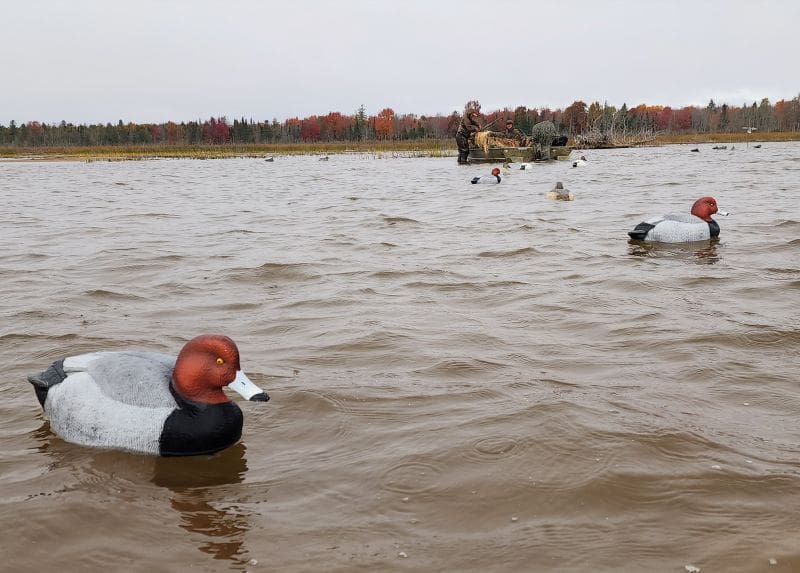
Hardcore™ Waterfowl’s Rugged Series Redhead Duck Decoys open the diver season with the boldest arrival on the water

Every crowd’s got one. The one who walks in, and the room quietly rearranges itself around her, the one nobody planned on noticing but nobody can stop watching, either. Ducks have one, too, though in this case, it’s the guy.
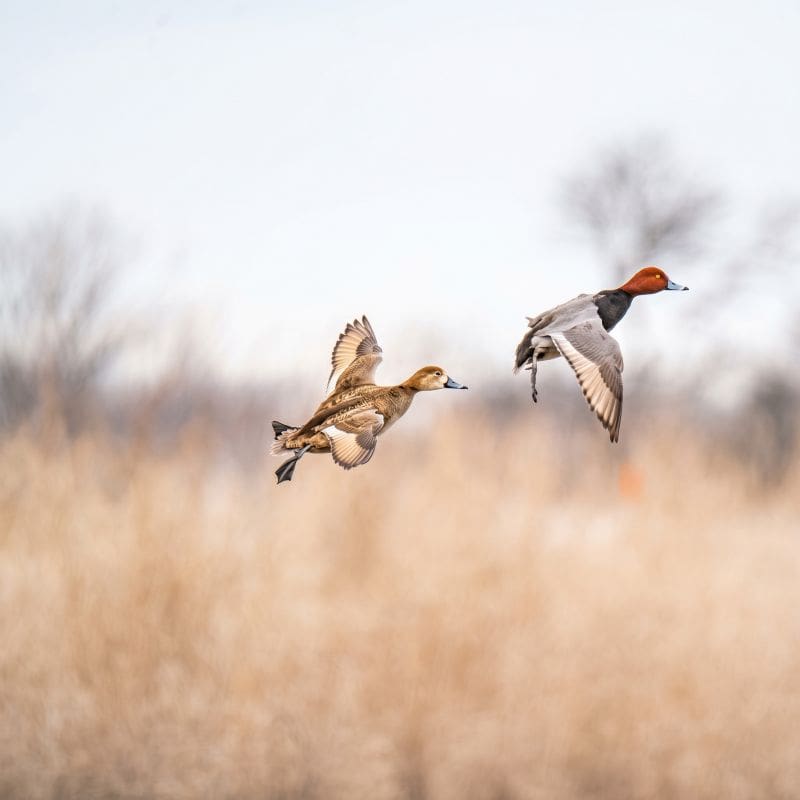
The redhead duck earns the comparison honestly, just with the roles reversed from what you’d expect. It’s the drake carrying the color, a rufous head bright enough to catch light on a flat gray morning, while the hen sits back in plain brown and lets him have the room. He backs it up with the temperament to match too, loud, gregarious, and about as boisterous as a duck gets.
Redheads travel in packed, noisy rafts, they’re some of the first divers to push south each fall, and they’ll work a decoy spread with an eagerness most puddle ducks never bother with. However you want to say it, he shows up and he gets noticed. That’s the duck Hardcore’s opening this diver series with, and for good reason. Before the canvasbacks show up fashionably late and the bluebills trickle through mid-fall, the redheads are already on the move.
Prairie Roots, Rising Numbers
Redheads are known to breed and nest all over North America, but the vast majority do their thing across the prairie pothole region, where the shallow, grass-ringed wetlands of the Dakotas, Montana, and the Canadian prairies pump out the bulk of the birds that end up further south during hunting season. Smaller pockets nest in western valleys, boreal river deltas farther north, and the vast marshes of the western Great Lakes.
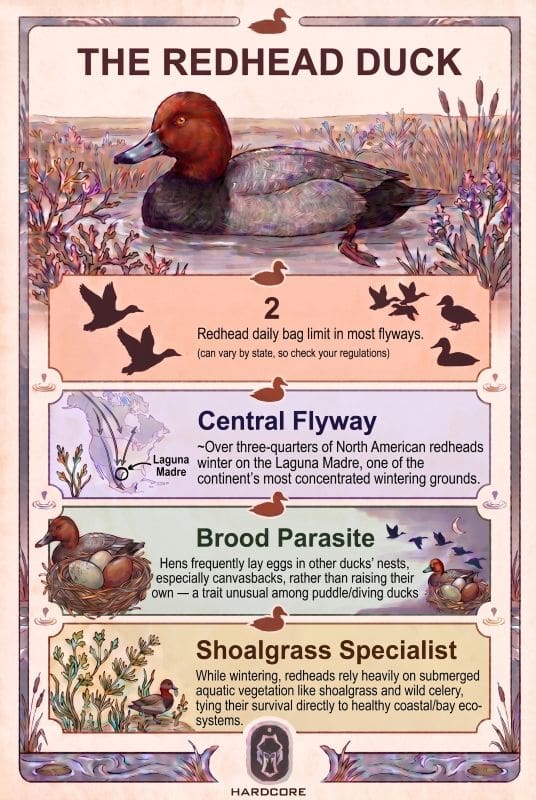
And those breeding grounds are producing. The U.S. Fish and Wildlife Service’s 2025 Waterfowl Population Status Report puts the breeding redhead population at 918,000 birds, up 17 percent from 2024 and a full 25 percent above the long-term average. Not every diver can say that. It’s the kind of number that turns a decoy decision from a maybe into a yes.
Redheads also have a bizarre habit of putting their eggs in other ducks’ baskets, quite literally. Hens regularly lay in the nests of other ducks, sometimes their own species, sometimes not, in a strategy called brood parasitism. It’s common enough among waterfowl, but redheads take it further than most: dump nests holding dozens of eggs from multiple hens have been documented.
It’s a strange footnote for a bird that otherwise reads as bold and in-your-face, proof that a redhead’s confidence doesn’t always extend to raising the kids herself. “I’ve flushed dump nests with two dozen eggs in them before,” said Jay Anglin, a guide and long-time Ducks Unlimited contributor. “It looks like chaos, but it works. Redheads have been doing it long enough that it clearly doesn’t hurt them.”
Down the Flyway to the Laguna Madre
That prairie-bred population doesn’t stay put for long once the weather turns.
“Come fall, that prairie-bred population fans out across the whole country,” said Anglin. “They’re pouring into the Pacific, Central, Mississippi, and Atlantic flyways all at once. The Great Lakes hold tens of thousands of them during migration, and there’s always a surprising number that grit out the whole winter on open water and the big rivers that drain out of the lakes. You’ll find some wintering along the coast up north, too, but the real show is the Gulf Coast. That’s where the numbers pile up, especially the Florida Panhandle and on into Alabama, Louisiana, Texas, and down into Mexico.” “Once you get into the Gulf, it gets even more specific than that,” Anglin continued. “Something like three-quarters of every redhead in North America winters in one place: the Laguna Madre, this shallow, hypersaline lagoon that straddles South Texas and northeastern Mexico. They’re up there feeding almost exclusively on one type of seagrass, shoal grass, tipping and diving for the rhizomes all winter long. None of that history matters much once a flock turns toward your spread, though. Redheads love other redheads. The more natural your decoys move, the more it looks like a happy raft down there, the more likely they are to pile right in and join the party.”
Built to Match the Rush
Hardcore’s Rugged Series Redhead Duck Decoys are built for exactly the bird described above: early, loud, and eager to commit. Redheads don’t need much convincing, and they don’t demand the same wariness-beating realism as a black duck or a pintail does. What they need is a spread that reads right at speed, because a bird moving this early and working this hard often doesn’t give you long to second-guess the setup. “Redheads aren’t a bird you have to finesse,” said Doug Veldhuizen, Hardcore Merchandise Manager. “They want to commit. Our job with this decoy was making sure nothing in the spread gives them a reason not to.”
Foam-Filled and Built to Hold Up
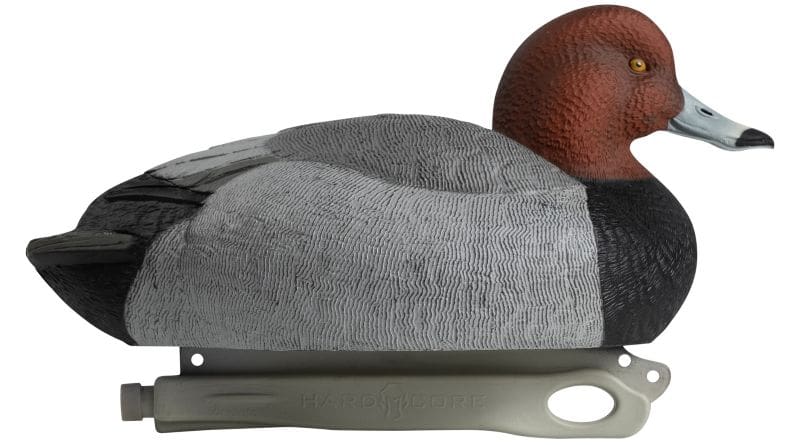
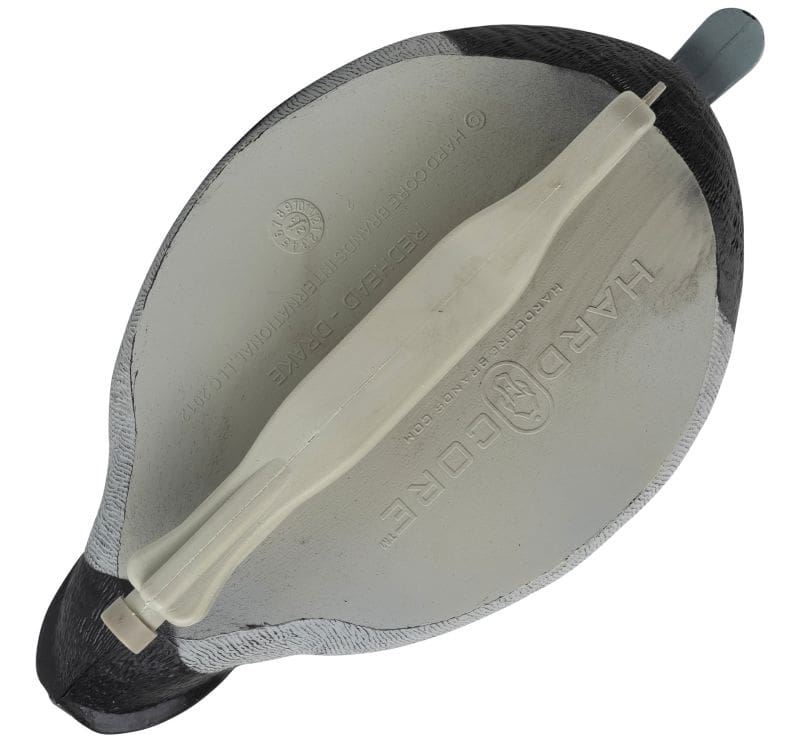
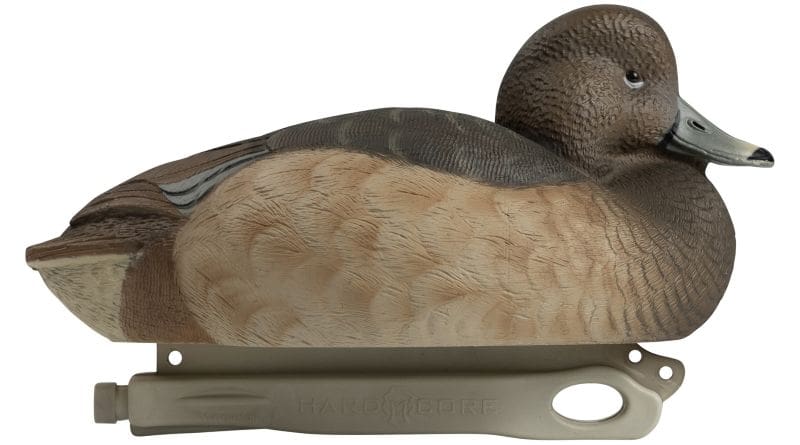
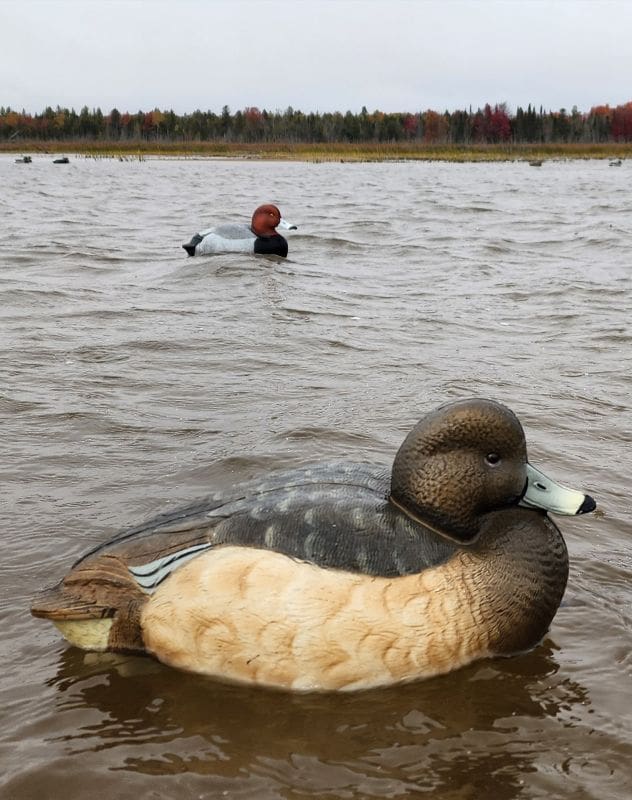
The Rugged Series Redhead Duck Decoy is a foam-filled, one-piece build, solid rather than hollow, so it holds its shape and paint through a season of loading, unloading, and getting tossed into a blind bag without complaint. Paired with the WhaleTail™ Keel, which is designed to catch even the slightest current and translate it into a natural swimming motion, the spread keeps moving even on the flat, current-less water redheads tend to favor on lakes and reservoirs.
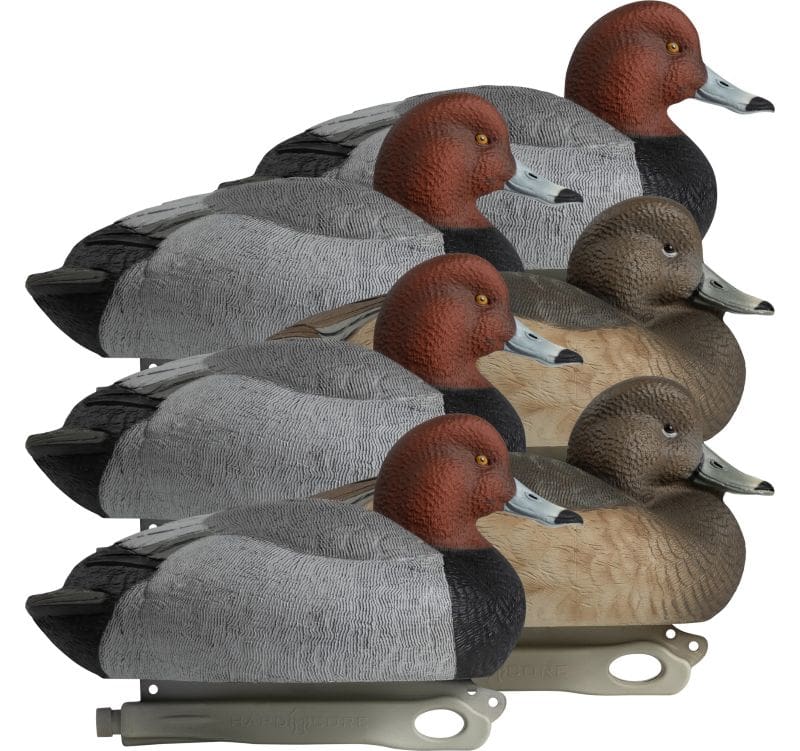
“Redheads are showy birds, and the drake is the whole show, so getting the color balance right matters,” Veldhuizen said. “Four drakes and two hens gives you that mix right out of the box, and the WhaleTail Keel keeps them moving on the water the way live birds do.”
“We wanted a decoy that could take a beating and still look right season after season,” Veldhuizen said. “Redheads raft up in big numbers, so the spread needs to hold together, not just the individual decoy.”
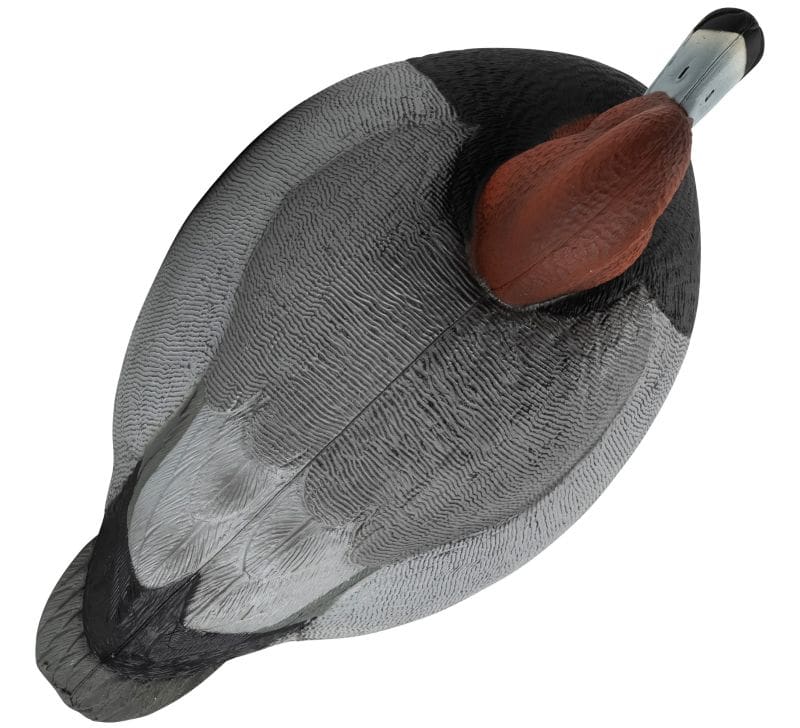
The set includes 4 Drakes and 2 Hens, measuring 15″ L x 8″ W, finished with true-to-life drake and hen paint schemes that carry the bird’s high-contrast color into the water. Redheads don’t ask for much strategy. They ask for a spread that’s ready when they are, and this one is.
Rugged Series Redhead Duck Decoys FEATURES:
- Foam-Filled One-Piece Decoys
- True-To-Life Drake and Hen Paint Schemes
- WhaleTail™ Keel Creates Lifelike Movement With Little Current
- 6-Pack Includes: 4 Drakes & 2 Hens
- Over-Size Decoys are 15″ L x 8″ W
MSRP $119.99