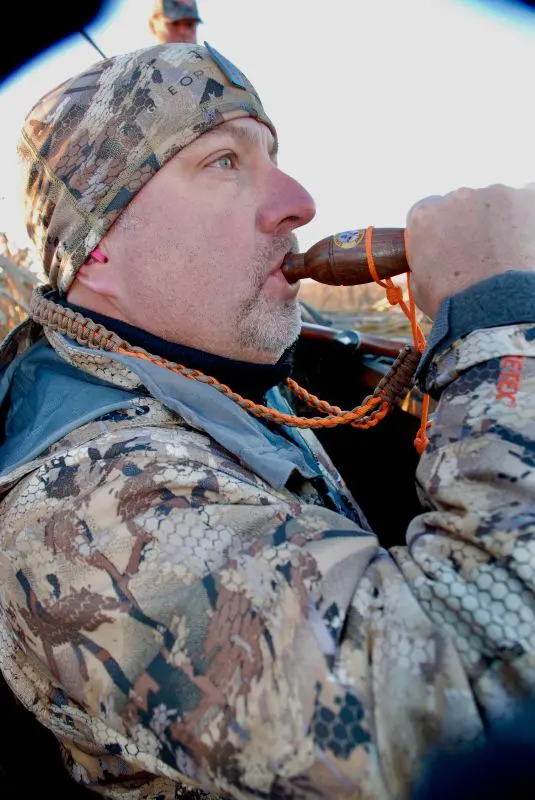
Late summer and early fall are the perfect times to purchase a new call, especially if you’re a novice waterfowler. It’s also a good time for veteran waterfowlers who want to pick up a new call and get some practice in before the season starts.
According to world championship caller Shawn Stahl, there are four things waterfowlers should look for when purchasing a new call. “The four things you want to consider when choosing a call are budget, style, material, and skill level,” said Stahl. “Spend as much as you can afford on your first call. A quality call will cost you between $40 and $200. It’s pretty much the same whether it’s a duck or goose call.”
I recall 30-odd years ago, hunting on the Texas Gulf Coast with the legendary guide Mike Ladnier. Ladnier was a past Texas state duck calling champion.
There was a driving rain, and ducks and geese were pouring in from the gulf to the newly flooded inland where we were hunting. Some of the ducks were mottled ducks. Their calls sound just like a mallard. I asked Ladnier if it was okay to call, and he said, “Sure.” I let loose on a series of greeting calls, quacks, and chuckles.
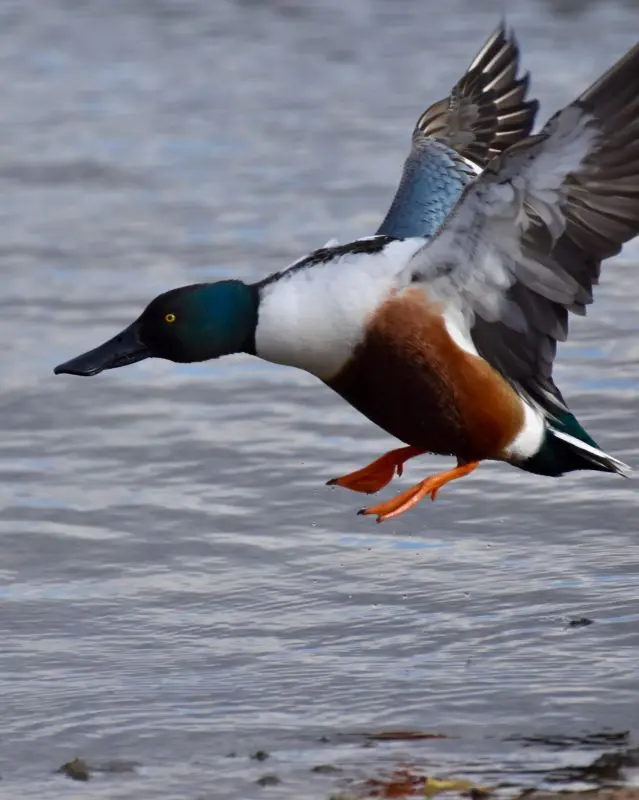
- Shovelers make a guttural call that can be imitated with a mallard call.
“Wow! That sounds pretty good. What kind of call is that?” he queried.
“It’s a Buck Gardner call. I paid $15 for it.” I replied. He was kind of shocked.
When it comes to calls, I always said, “It’s the singer, not the song.”
“One of the biggest choices will be single reed or double reed. There are advantages and disadvantages to each, and it largely comes down to a matter of personal preference,” said Stahl. “In general, a single-reed call will have more range and is a little more versatile than a double-reed call. Single reed calls can be a little more difficult to master, so beginners might want to lean towards a double reed for their first call.”
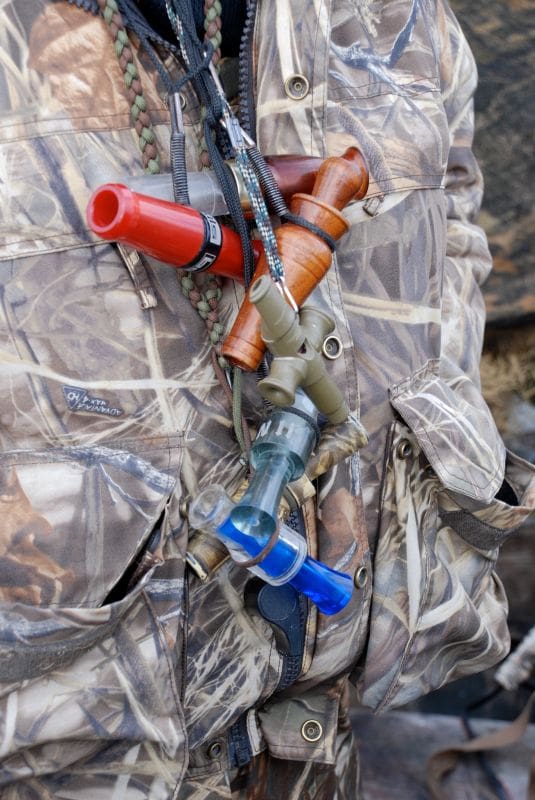
- Calls for waterfowl come in three materials- wood, polycarbonate, and acrylic
Call selection can significantly impact where you plan to hunt. Louder, higher-pitched calls are preferred when hunting in wide-open spaces, such as reservoirs, larger rivers, and massive inland lakes. If you’re hunting in flooded timber, targeting smaller potholes, and modest marshes, a call that produces subtle, glutaral quacks and raspy greeting calls excels. Double-reed calls take a little more air or back pressure to operate, and most experts will tell you that double-reed calls don’t have the range a single-reed call does. “Double-reed calls tend to be more forgiving,” said Stahl, “but more limited when it comes to making sounds.”
Buying two calls is not a bad idea when starting out. Buy a single reed and a double reed to see which one suits you best. As you become more proficient, your skill level may lead you to prefer one over another, and as your skill level improves, you’ll be better able to utilize and master the attributes of both. The same goes for goose calls. It’s always good to have multiple calls anyway, in case one freezes up or malfunctions.
Choices in call materials come down to wood, polycarbonate, and acrylic. “Poly versus acrylic cones down to the process more than anything,” shared Stahl. “Polycarbonate calls are injection molded, whereas acrylic calls are turned on a lathe. So, acrylic calls are more labor-intensive and generally cost more.” Wood calls generally can’t produce the volume that polycarbonate or acrylic calls can, but excel for close-in work where a rasp, reedy tone is preferred. I have a diminutive Faulk wooden call that I have had for decades that comes out when I’m trying to imitate a laughing teal, or I know gadwall are in the area.
Meaningful practice will go a long way to becoming a better caller, and opening day is not the time to begin practicing. There a plenty of YouTube videos that can get you pointed in the right direction. “The most important thing is to develop the proper mechanics,” advised Stahl. “An open bore is going to be easier to blow. It’s kind of like having a stock muffler on your car versus a high-performance one.” Stahl said kids catch on quickly. Adults sometimes have preconceived ideas about how to call and must overcome bad habits. “With a goose call, it’s all about learning to cluck, how to break the call over, and learning to honk. Once you master it, it’s like riding a bike- you never forget,” said Stahl.

- Calls made of acrylic are preferred when hunting big rivers, where loud calling is often necessary.
Late summer or early fall is the perfect time to get a new call because there are plenty of waterfowl festivals and waterfowling days at big box stores where you can try out a bunch of calls and meet a variety of call manufacturers. Not only can you get some hands-on instruction and guidance on which call to pick, but you can also try out different calls that match your ability and calling style.