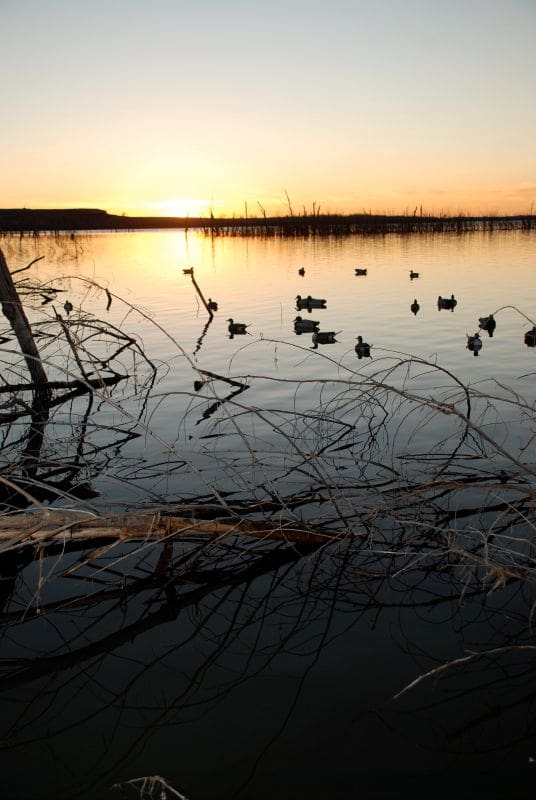
“The Atlantic Flyway is the home of North American waterfowling,” stated DU Director of Conservation Planning Dr. John Coluccy. “The glory days of waterfowl hunting occurred in the Atlantic Flyway, and it was culturally important.” Waterfowl hunting was a way of life in those days.
Modern waterfowl hunting dates back to the 17th century in the Atlantic Flyway, but it wasn’t until the 20th century that the concept of flyways was born and recognized. Biologists realized that the corridors waterfowl used during spring and fall migrations to breeding and wintering grounds were strongly influenced by climate, topography, and the availability of food and habitat.
The Migratory Bird Treaty Act of 1918 was a catalyst for protecting migratory bird species. Scientific research and monitoring of banded birds allowed biologists to recognize migration patterns and survival rates, customize regulations to specific flyways, and establish flyway boundaries.
The Atlantic Flyway’s origins begin in Greenland and follow the coast of Canada from the tundra of Quebec to Chesapeake Bay and Virginia’s Back Bay and the James River through North and South Carolina, Georgia, and Florida. Venues like the Saint Lawrence River, the coast of Maine, Barnegat Bay, Great Egg Harbor, Absecon Bay, Delaware Bay, Chesapeake Bay, Virginia’s Eastern Shore, and Back Bay are legendary waterfowl hunting destinations where market hunters plied their trade and aristocrats and heads of state visited exclusive duck clubs.
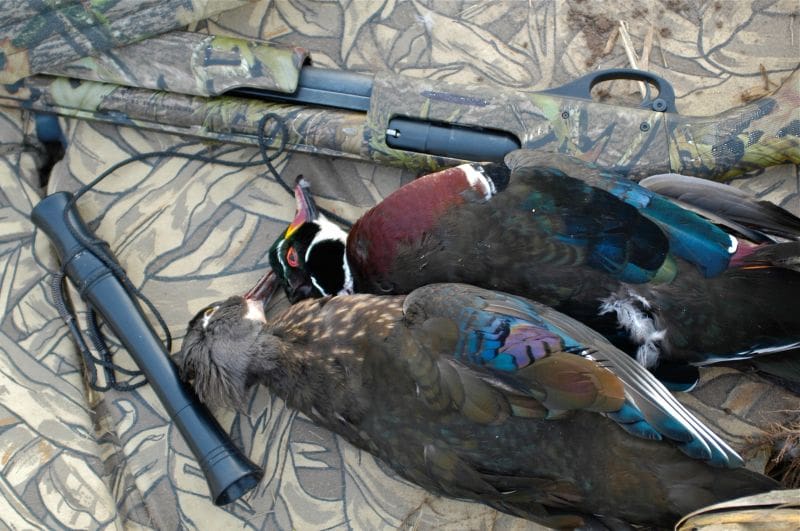
“Prior to European settlement, mallards were common visitors to the Atlantic flyaway during fall and winter, but we’re rarely found breeding there. To supplement declining wild, mallard populations, captive mallards were raised and released by public and private interest. Later in 1935 the use of live decoys was banned, and many hunters release their mallard flocks. Coupled with land changes because of farming in urbanization, a mallard breeding population became established from the mid Atlantic states north. The Atlantic Flyway was the epicenter of the introduction of game-farm mallards and releases continue to occur today,” said Dr. John Coluccy. “Releases of resulted in a preponderance of game farm mallard genes in mallards harvested in Atlantic flyway. Genetic analysis from our duck DNA research suggested that 75% of the mallard harvested in the flyway have game farm ancestry. Game for James have been linked to a reduction in daily movement, lower probability of migration, and increase use of urban environments in the Great Lakes mallards”
“Mallards never had a significant impact on waterfowl hunting in the Atlantic Flyway. The mallard harvest totaled a meager 169,537 in 2022, 272,028 in 2023, and 307,955, and 305,000 in 2025, plus an additional 3,346 domestic mallards in 2024 and 2,300 in 2025. Mallard/black duck hybrids in added another 4,206 birds in 2024 and 4,700 in 2025.
“The Atlantic Flyway is black duck country,“ stated John Coluccy. “Black duck limits were increased from one to two in the 2017/2018 season and their breeding population are stable to slightly increasing.” The flyway harvest total for Atlantic Flyway black ducks was 49,551 in 2022, 89,197 in 2023,149,448 in 2024 and 127,000 in 2025. Total duck harvest in the Atlantic Flyway for 2022 was approximately 1,090,300. In 2023, the harvest jumped to approximately 2,153,000 ducks, and 2,405,300 in 2024. In 2025, the Atlantic Flyway harvest remained nearly the same at 2,395,700.
Flyway-wide, the most commonly harvested species in the Atlantic Flyway are mallards, green-winged teal, and wood ducks. Ring-necks contributed another 243,100 birds in 2024 and 153,500 in 2025 to the harvest, up significantly from the 10-year average of 124.400. Buffleheads showed an increase from eh 10-year average of 87,700 to 126,600 in 2024 and 136,00 in 2025.
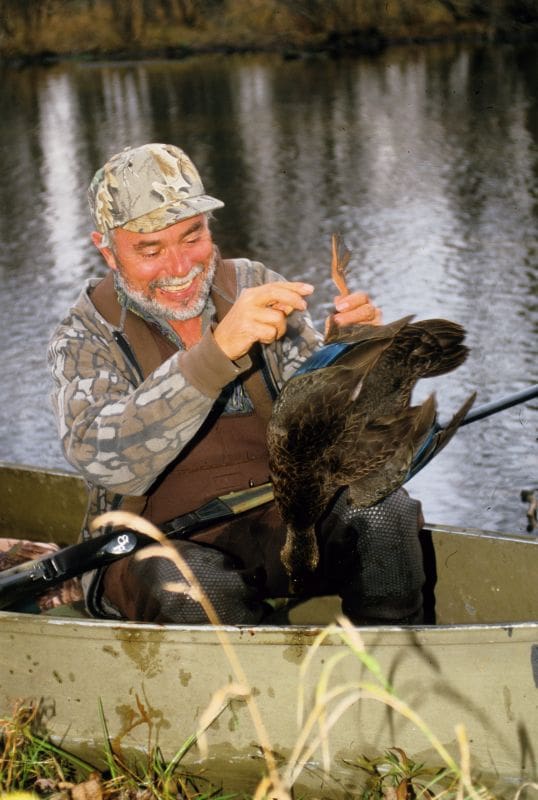
“The Atlantic Flyway has wonderful habitat despite population infringement. Pockets of quality habitat still exist,” offered Coluccy. “The Atlantic Flyway has always been the “redheaded stepchild” when it comes to flyways. But precipitation and habitat conditions tend to be more consistent versus the other breeding areas like the Prairie Pothole Region, which is true of the Great Lakes, too.” It’s surreal to hunt salt marshes for black ducks knowing that market hunters plied the same waters without the skyscrapers in the background.
New Jersey Puddlers
Waterfowlers don’t associate duck hunting with The Garden State. It’s understandable. New Jersey conjures up images of skyscrapers and the big city. But it also has miles of bayshore and ocean coast and an abundance of ponds, wetlands, lakes and salt water marshes where waterfowl, including black ducks winter.
One thing waterfowlers don’t realize is that there’s great hunting for wood ducks to be found in the forests and beaver ponds in the northern part of the state. Significant numbers of greater snow geese frequent the salt marshes of Delaware Bay on their fall migration. It might be surreal hunting black ducks against the backdrop of Atlantic City, but more than a third of the black ducks in the Atlantic Flyway can be found in New Jersey. New Jersey is a can’t miss destination if you have an Atlantic brant on your bucket list. More than two-thirds of the country’s Atlantic brant winer in the coastal marshes of New Jersey.
New Jersey hunters harvest more than 23,000 buffleheads during the 2023 and 2024 seasons. The number of black ducks harvest in The Garden State doubled between 2023 and 2024 and will likely be even higher when the 2025 data is available. Sea ducks aficionados experience a significant jump in the scoter harvest from 1,668 in 2023 to 7,194 in 2024 in New Jersey.
Chesapeake Bay Divers
Legendary Chesapeake Bay is known for extraordinary gunning for a myriad of divers that includes canvasbacks, bluebills, long-tails and scoters. What most don’t realize is that mallards dominate the harvest in Maryland and accounts for a major portion of the 305,000 greenheads harvest in the Atlantic Flyway in 2025. In 2024, Maryland hunters harvested 44,064 mallards and 27,614 black ducks many on Chesapeake Bay and the Delmarva Peninsula. Green-wing teal were the next most harvest duck in Maryland at 25,998 in 2024. Fishing Bay Wildlife Management Area encompasses nearly 29,000 acres of prime waterfowl habitat in southeastern Dorchester County and represents the largest public holding of tidal wetlands in the state.
Adjacent to Chesapeake Bay is the Delmarva Peninsula. Once renowned for its Canada goose hunting, Canada goose numbers have rebounded from the edge of disaster early in the decade. The number of wintering geese peaked in 1981 at 955,000 and declined to 569,000 by 1993. “The population crashed in the 1990’s. Breeding populations of Atlantic Population Canada geese in 1995 were estimated at a mere 29,000 pairs resulting in the season closure. Prior to 1988, Canada goose populations were tracked on wintering areas and with the surge of resident Canada geese, population declines in migratory subarctic and Arctic breeding populations went unnoticed. The tumble in numbers has been attributed to a combination of factors including poor production due to ill-timed weather events on the breeding grounds, increasing resident Canada goose populations in the Atlantic Flyway that masked the AP population decline and over-harvest,” said Coluccy.
Researchers estimate that the population of AFRP (Atlantic Flyway Resident Population) of Canada geese tripled between 1990 and 2010 and the trend has continued to today producing incredible sport in states like Pennsylvania and New York.
Atlantic Flyway hunters harvested 630,386 Canada geese in 2023, 549,931 in 2024 and 537,400 in 2025. 2,011 Cacklers were added to the total in 2024, but that number exploded to 8,000 in 2025. The Greater Snow Goose harvest showed a substantial increase in 2024 to 14,899 from the 8,097 total in 2023. Blue and Ross’ geese are relatively rare in the Atlantic Flyway. Hunters bagged 1,502 Blue-phase snow geese in 2024 and 596 Ross’ geese. The harvest number for brant rose to 10,141 in 2024, up from 7,904 in 2023.
Chesapeake Bay has been a bright spot in recent years. “Water quality on Chesapeake Bay has improved tremendously in recent years,” said Coluccy. “The improvement in water quality has resulted in the reestablishment of submergent aquatic vegetation that is so critical to diving ducks.” Clearer, cleaner water has allowed expansive beds of vegetation like eelgrass, widgeon grass and wild celery to replenish and take hold in deeper water.
Carolina Woodies
Wood ducks are especially important in states like North and South Carolina. “Forested wetlands of the Carolinas provide important breeding, migration, and wintering habitat for wood ducks,” said Coluccy. “ Despite significant historic deforestation and extinction, wood duck populations today are thriving and are considered a wildlife management success story.”
In 2023, wood ducks were the most commonly harvested duck in South Carolina (145,841) and North Carolina (137,807). Flyway-wide, waterfowlers harvested 669,555 woodies in 2023, 579,400 in 2024 and a whopping 791,100 in 2025 making them the most commonly harvested duck in the Atlantic Flyway. Wood ducks are difficult to survey due to the habitat they frequent. Researchers estimate the wood duck breeding population in the Atlantic Flyway to be about 900,000 in 2025, similar to the previous year.
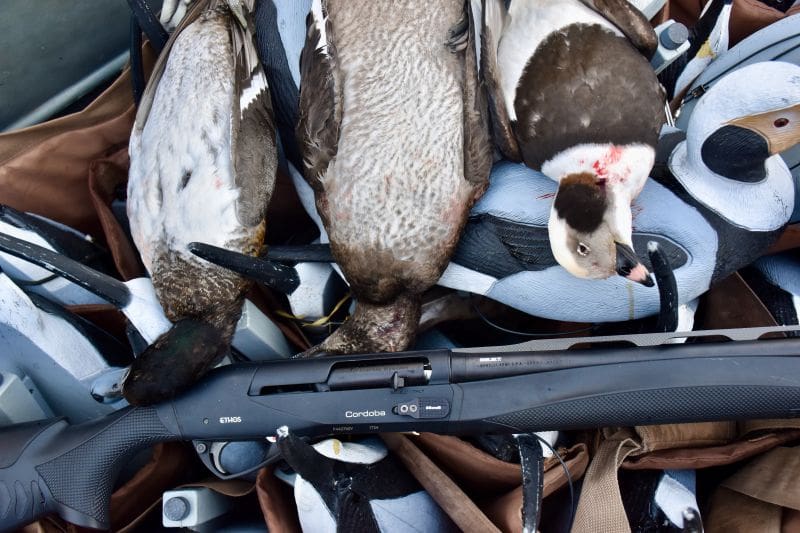
“New England, and Maine in particular, have some exceptional waterfowl habitat and hunting opportunities,” offered Coluccy. New England is a mecca for sea duck hunting and still is today. Diehard fowlers from Maine to New Jersey harvested in excess of 82,000 scoters, eiders, and long-tailed ducks in 2023, and 101,754 in 2024 and 73,900 in 2025.
The Atlantic Flyway may not get the notoriety that the other flyways do, but it comforting to know that opportunities still exist in the birthplace of North American waterfowling.