September 1 · Resident birds · No pressure
Early Season
Goose Hunting
The first Canada geese of the year have never seen a decoy. Scout them right, set on them right, and a small spread of good decoys will finish birds all September long. Here is how it works, and what to put in the field.
Up To 20% off Decoys
Bulk pricing kicks in at 10 or more of the same decoy.
Free shipping over $399
Continental US only.
Free shipping on singles
Buy one decoy, hold it, then commit to the spread.
FowlFlex™ Rugged Series
Built to survive years of hard hunting.
The Season Before the Season
Early Geese Are Not Late Geese
Early season targets resident Canada geese, the birds that nest on golf courses, retention ponds and park lawns and never leave. Wildlife managers built the September season decades ago to keep those numbers in check, which is why limits are generous and the pressure is close to zero.
3.6M
Resident Canada geese in North America, per Ducks Unlimited: 1.3M Mississippi Flyway, 1.1M Atlantic, 1.1M Central, 0.1M Pacific.
80%
Of an early-season flock has never been hunted. It is the two adults you have to fool, not the brood.
6-10
Decoys per pod. Early birds hold in family groups, so a spread of pods beats a wall of decoys.
Scouting
The Field Changes Every Day
Wheat comes off, corn gets chopped for silage, and the buffet moves with it. Geese switch fields constantly through September. Scout right up to the evening before and go where you saw them last.
Timing
They Feed Late
Early geese are in no hurry. It is often mid-morning before they leave the roost pond and get to the field. Set early, then be patient. The first hour of light is rarely the best hour.
Where to Set
Water Matters More Than Usual
Most crops are still standing on opening week, so dry field options are thin. Roost ponds, pasture, cut wheat and chopped silage are the early-season plays. That is why floaters earn a spot in a September rig.
Calling
Say Less
September geese are not vocal. What calling you hear is short and defensive, usually a matriarch telling other family groups to keep their distance. Match that. Heavy calling on naive birds does more harm than good.
Heat
Plan for 80 Degrees, Not 30
Layout blinds bake in September sun. Bring water for the dog, work the cooler ends of the day, and get birds cooled down fast after the shoot.
Mid-September
Molt Migrants Show Up
Non-breeding birds that spent the summer north filter back in through the middle of the month. They arrive fresh and unpressured too, which is why the back half of the early season is often better than opening day.
Spread Setups
Three Setups That Work In September
You do not need a trailer load. Since you are running fewer decoys, run your best ones and put them where the birds expect to see them.
The Field Spread: Family Pods
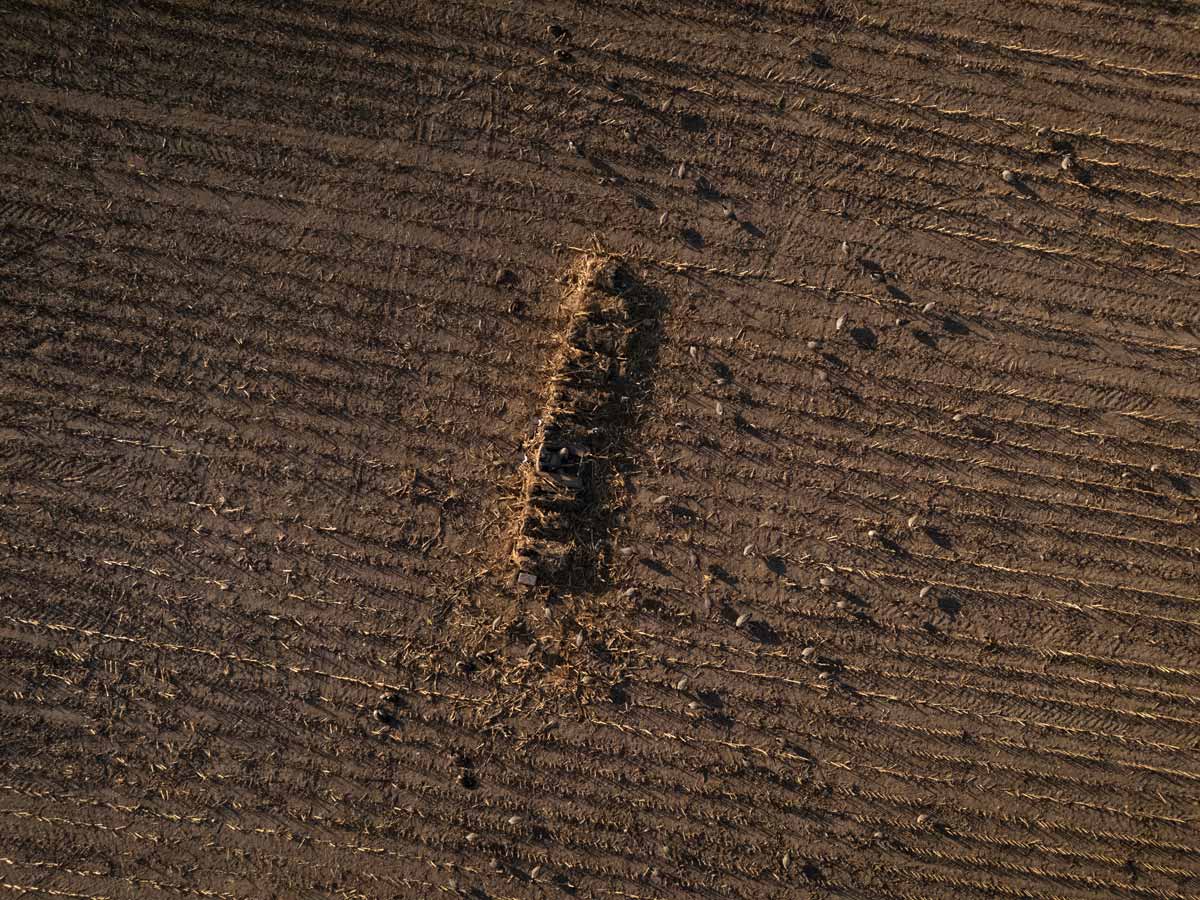
Roughly three dozen decoys is plenty. Break them into pods of six to ten and leave 20 to 30 yards between groups, because early geese are not social with anyone outside their own family. Blinds sit upwind with the pocket open in front of them, so circling birds have somewhere obvious to land.
Pod Anatomy: Get the Ratio Right
An early flock is two adults and this year’s brood. The young birds have their heads down eating; the adults stand up and watch. Build every pod that way and space decoys 10 to 15 feet apart so the group reads as relaxed rather than crowded.
Small Water: Roost Ponds and Cut-Field Puddles
When the crops are still standing, water is the play. A dozen to eighteen goose floaters in three loose groups reads right on a small pond. Add a jerk string for the mornings with no wind, because a still spread on flat water is the fastest way to flare a family group that has committed.

Build the Spread
Four Steps to an Early Season Rig
Fewer decoys means every one of them is doing more work. Start with the core pack, fix the ratio, add the postures that say relaxed, then cover the water days.
1
Start with the Core Pack
The Touchdown 6-pack is built as a complete pod out of the bag: 1 Super Sentry, 1 Relaxed Sentry, 1 Stubby Sentry, 2 Active Feeders, 1 Hungry Feeder, plus 6 TruMotion™ 2.0 bases and field stakes. Flocked heads, 22″ long.
Two packs gets you two pods and a real spread.
Rugged Series
Full Body Canada Goose Touchdown Decoys, Flocked Head
$259.99
4.8 out of 5 · 78 reviews
2
Fix the Feeder Ratio
The core pack runs three sentries to three feeders. Early birds want the opposite. Adding a Feeder pack pushes you toward the 3 or 4 to 1 look that a real family group has when the brood is head-down in cut wheat.
This is the single cheapest change that makes a spread look right.
Rugged Series
Full Body Canada Goose Feeder Decoys, Flocked Head
$259.99
5.0 out of 5 · 2 reviews
3
Add the Resting Birds
Sleepers and shells are what a contented flock looks like from 200 yards up. They also fill space cheaply and pack flat, which matters when you are walking decoys into a pasture in the dark in September heat.
Two or three per pod is enough. Do not overdo it.
Rugged Series
Flocked Head Full Body Canada Sleeper Decoys, 4-Pack
$179.99
Sleeper Shell 6-Pack also available at $149.99
4
Cover the Water Days
Opening week usually means standing corn and a roost pond hunt. Lesser Canada Floaters ride on the WhaleTail™ keel, which keeps them moving in almost no current, so a small water spread never sits dead flat.
A dozen floaters opens up hunts a field-only rig cannot touch.
Rugged Series
Lesser Canada Floaters Decoys, Flocked Head
$189.99
4.7 out of 5 · 49 reviews
Why These Decoys
Durability, Motion, Realism
Early season is the start of a long year. The decoys you buy in September get loaded, stacked, stepped on and frozen from now through the spring snow goose conservation order. Ours are built for that.
Rugged Series
FowlFlex™
Built into every Rugged Series decoy. Flexes under impact instead of cracking, so decoys survive trailer loads, tailgates and the dark-morning boot.
- Resists cracking and breakage
- Holds up in harsh weather
- One-piece construction
Field decoys
TruMotion™ 2.0
The base and field stake system that catches the light September breeze most days give you. Decoys pivot and sway instead of standing frozen.
- Works in light wind
- Visible from a distance
- Included with full body packs
Floaters
WhaleTail™ Keel
Creates lifelike movement in minimal current, which is exactly the problem on a flat roost pond at first light.
- Moves in almost no current
- Self-righting in the spread
- Reads as feeding, not parked
Every decoy
True-to-life paint
Feather detail and contrast matched to live birds, with flocked heads on the Canada line. Naive birds still look, and September light is unforgiving.
- Flocked heads kill shine
- Natural feather detail
- Works in flat and low light
The Lineup
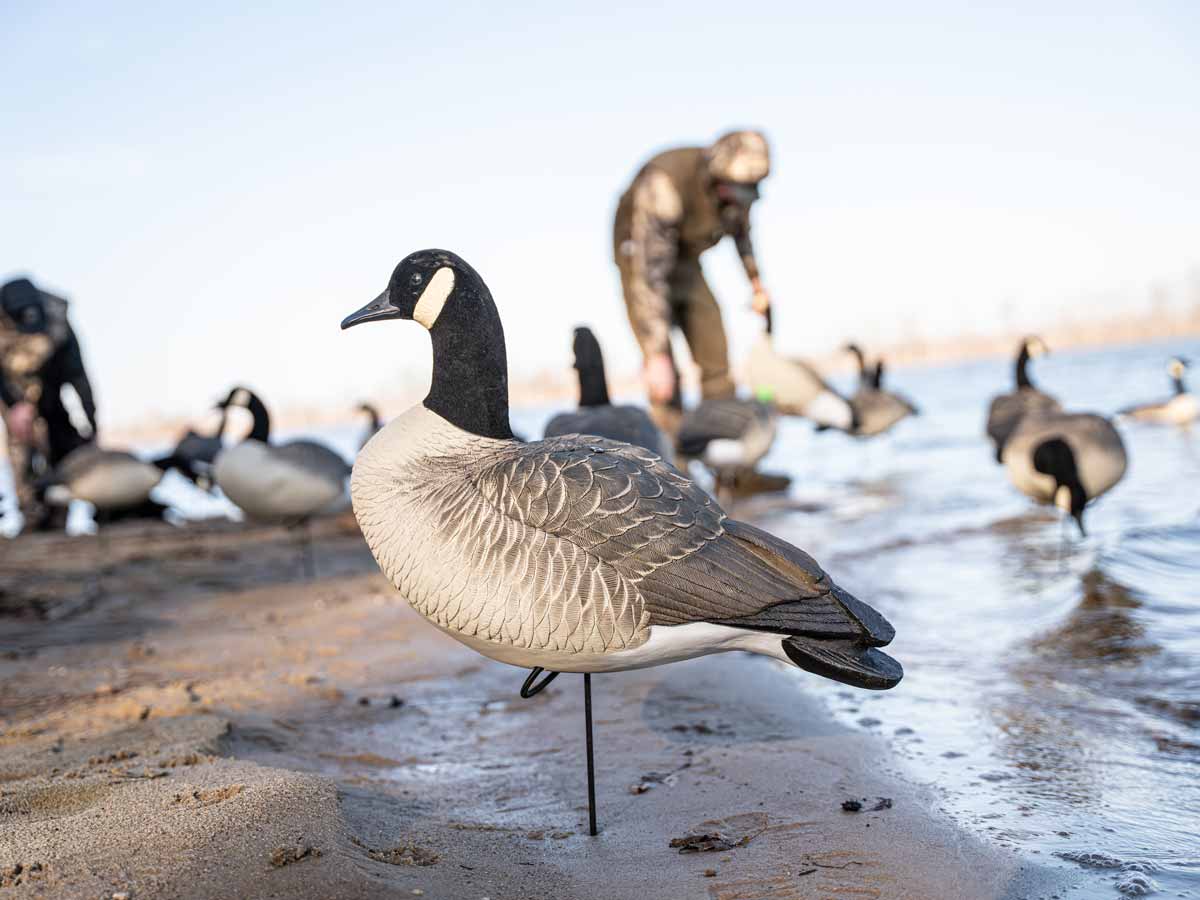
Canada Goose Decoys
Every posture you need for a September spread, plus the specklebelly pack for the flyways where they overlap.
Finish The Rig
The stuff that makes the day easier
Bags, rigging and motion. None of it is exciting until you are hauling six dozen decoys across a bean field in the dark.
Buying a spread, not a pack
Bulk pricing is standing, not a sale. It applies per decoy model, so the quantity has to be the same decoy rather than a mixed cart. Guides and outfitters running multiple rigs should start with the Outfitters Program instead.
Free shipping on orders over $399, Continental US only. Free shipping on single decoys. One promo code per order, no stacking.
Example: Full Body Canada Goose Touchdown, $259.99
| Quantity | Your price | Save |
|---|---|---|
| 1 to 9 | $259.99 | — |
| 10 to 19 | $233.99 | 10% |
| 20 or more | $207.99 | 20% |
Early Season, Answered
When does early canada goose season open?
Most states open an early Canada goose season on or around September 1 and run it through mid to late September. Dates, zones and bag limits are set state by state and change every year, so check your state wildlife agency’s current migratory bird regulations before you hunt. We are not going to publish dates here that go stale.
How many decoys do i need for early season geese?
Roughly three dozen is plenty, and plenty of birds get killed over less. Early geese travel in family groups rather than big flocks, so a spread of small pods reads more naturally than a large block of decoys. Two Touchdown 6-packs and a Feeder 6-pack gets you three convincing pods.
Full body or floaters for the early season?
Both, if you can. Most crops are still standing on opening week, so a lot of early hunting happens on roost ponds, pasture and cut wheat. Full bodies cover the field hunts, floaters cover the water hunts, and having both means you hunt where the birds actually are instead of where your decoys work.
Do flocked heads matter on early birds?
They help. Flocking kills the shine that a painted head throws in flat September light, and the whole Hardcore Canada goose line ships with flocked heads. When you are running a small spread, every decoy in it is under more scrutiny.
How should I set the spread?
Pods of six to ten, 20 to 30 yards apart, decoys spaced 10 to 15 feet inside each pod. Feeders should outnumber uprights three or four to one. Put the blinds upwind and leave an obvious open pocket in front of them, because birds finish into the wind and need somewhere to land.
Is there a discount if I am buying a full spread?
Yes. Bulk pricing is standing on decoys: 10 or more of the same decoy takes 10% off, 20 or more of the same decoy takes 20% off. It applies per decoy model, so the quantity has to be the same decoy rather than a mixed cart. Guides and outfitters should look at the Outfitters Program instead.
What if I want to see one before buying a spread?
Buy a single decoy. Shipping on single decoys is free, so you can hold one, look at the paint and the flocking, and decide from there.
Get the spread built before the birds show up
Fewer decoys, better decoys, set the way a family group actually sits. That is the whole early season game.
Hardcore™ Waterfowl uses cookies to improve your shopping experience. View our Privacy Policy to learn more.
Use your body measurements to find your perfect fit. See our How to Measure info and diagram below the size charts.
If you measure between sizes, or prefer a loose or roomy fit, we recommend upsizing.
| Size | Chest | Sleeve |
|---|---|---|
| Small | 34"-36" | 33" |
| Medium | 38"-40" | 34" |
| Large | 42"-44" | 35" |
| X-Large | 46"-48" | 36" |
| 2X-Large | 50"-52" | 37" |
| 3X-Large | 54"-56" | 38" |
| Size | Waist | Inseam |
|---|---|---|
| 30 Reg | 30" | 34" |
| 32 Reg | 32" | 34" |
| 34 Reg | 34" | 34" |
| 36 Reg | 36" | 34" |
| 38 Reg | 38" | 34" |
| 40 Reg | 40" | 34" |
| 42 Reg | 42" | 34" |
| Size | Waist | Inseam |
|---|---|---|
| Small | 28"-30" | 32" |
| Medium | 32"-34" | 32" |
| Large | 36"-38" | 32" |
| X-Large | 40"-42" | 32" |
| 2XL | 44"-46" | 32" |
| 3XL | 48"-50" | 32" |
| Size | Palm Circ | Length |
|---|---|---|
| Medium | 8-8.5" | 7.25-7.75" |
| Large | 8.75-9.28" | 7.75-8.25" |
| X-Large | 9.25-10" | 8.25-9" |
| Size | Waist | Inseam |
|---|---|---|
| 30 Reg | 30" | 32" |
| 32 Reg | 32" | 32" |
| 34 Reg | 34" | 32" |
| 36 Reg | 36" | 32" |
| 38 Reg | 38" | 32" |
| 40 Reg | 40" | 32" |
| 42 Reg | 42" | 32" |
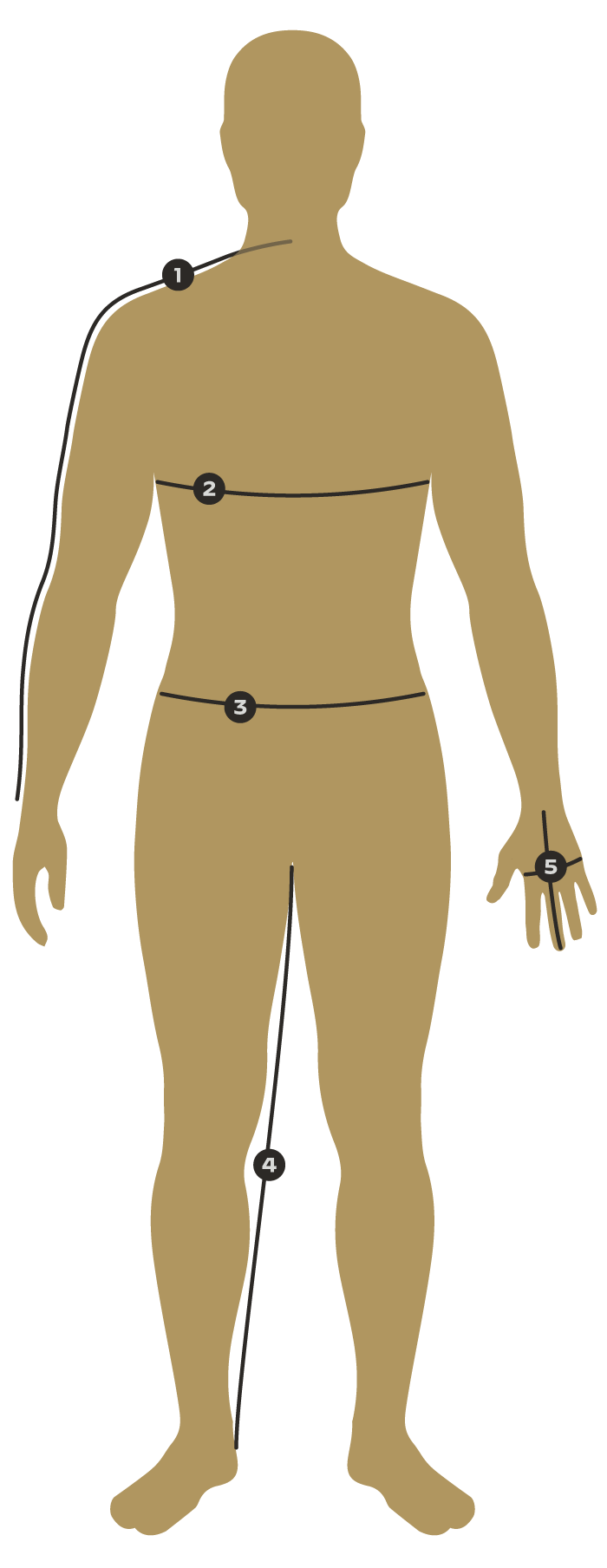
Bend your elbow and put your hand on your hip. Measure from the center of the back of your neck, along the shoulder and down the elbow to the wrist bone.
Measure around the fullest part of your chest while keeping the measuring tape horizontal.
Measure around your waist where your pants typically sit while keeping the tape horizontal.
Measure from the crotch down to your leg where you like your pants to fit. Typically around the ankle.
With hand partially closed, measure over the knuckles, around the hand, excluding the thumb.