Please ensure Javascript is enabled for purposes of website accessibility

November to January · Migrators · Cold, snow and ice

Late Season
Goose Hunting

Late season goose hunting comes down to three things: find the feed, find the open water, and put out a spread that doesn't look like every other spread they've flown over since Canada. Here's how late geese behave, four setups that finish them, and the Hardcore™ decoys built to take a winter of abuse.

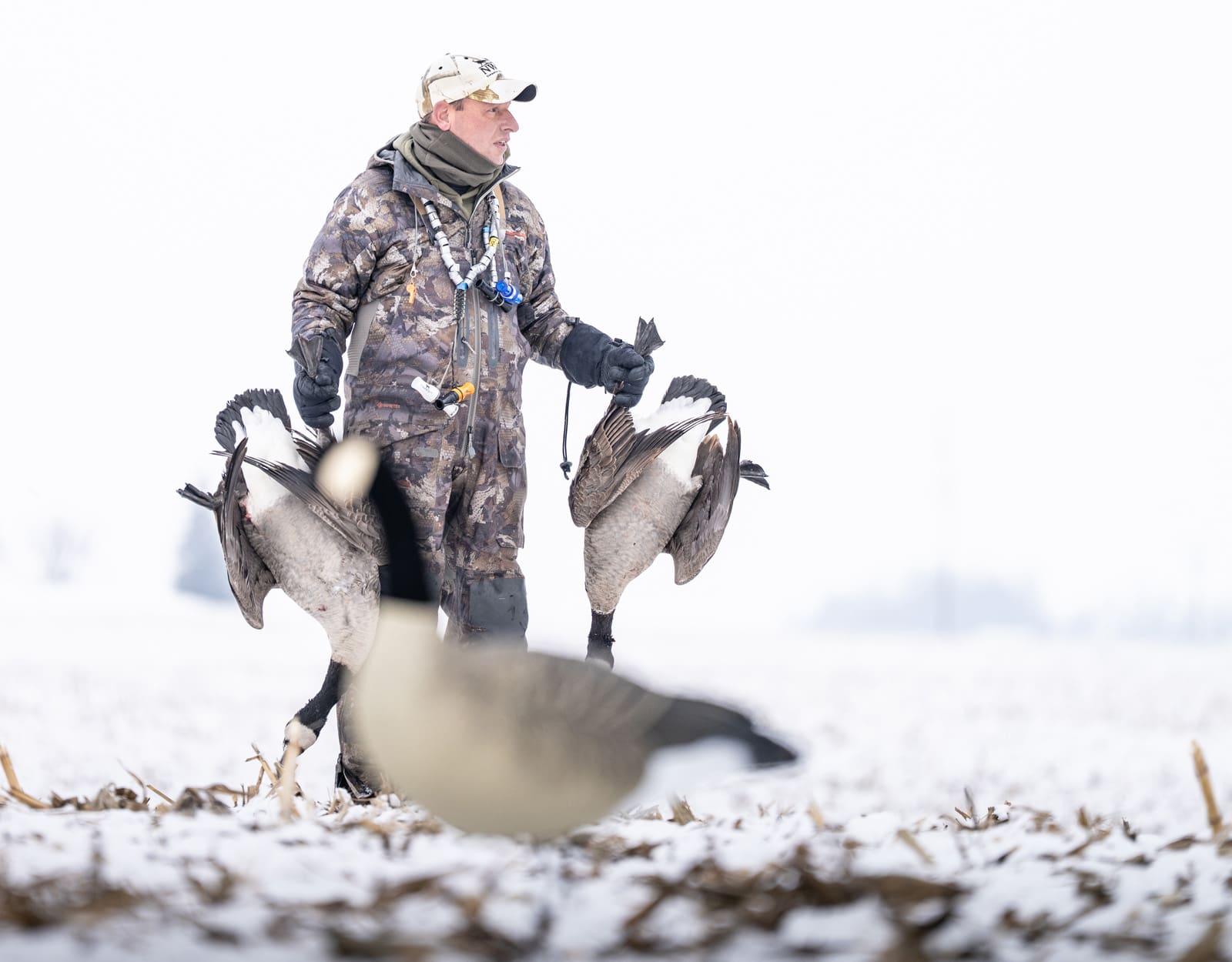
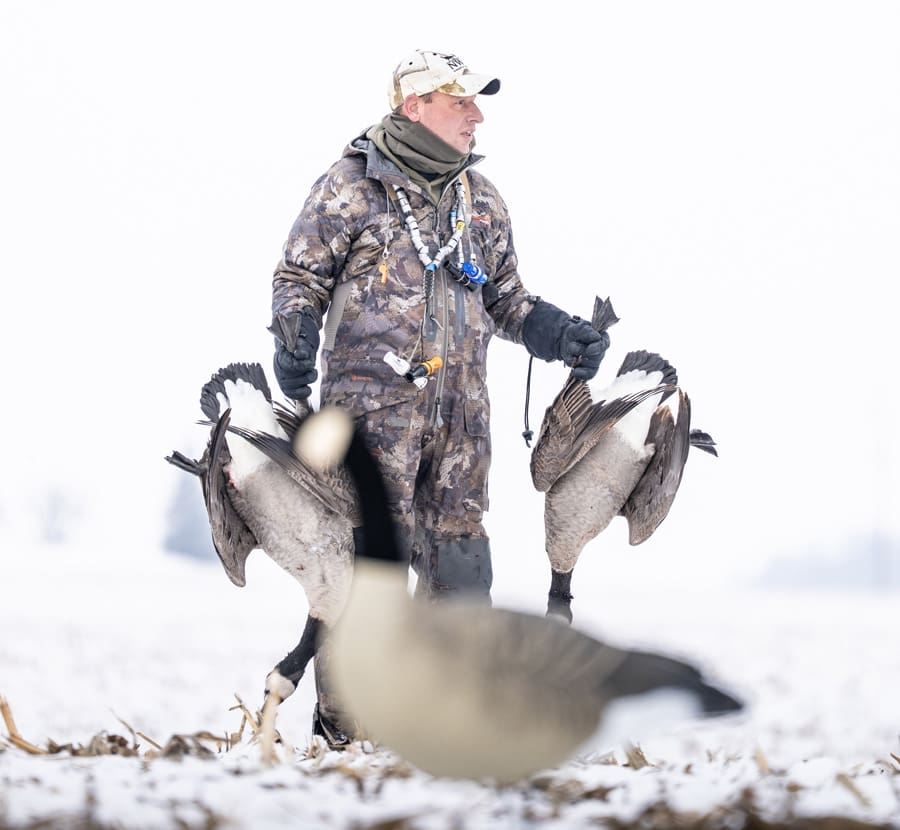
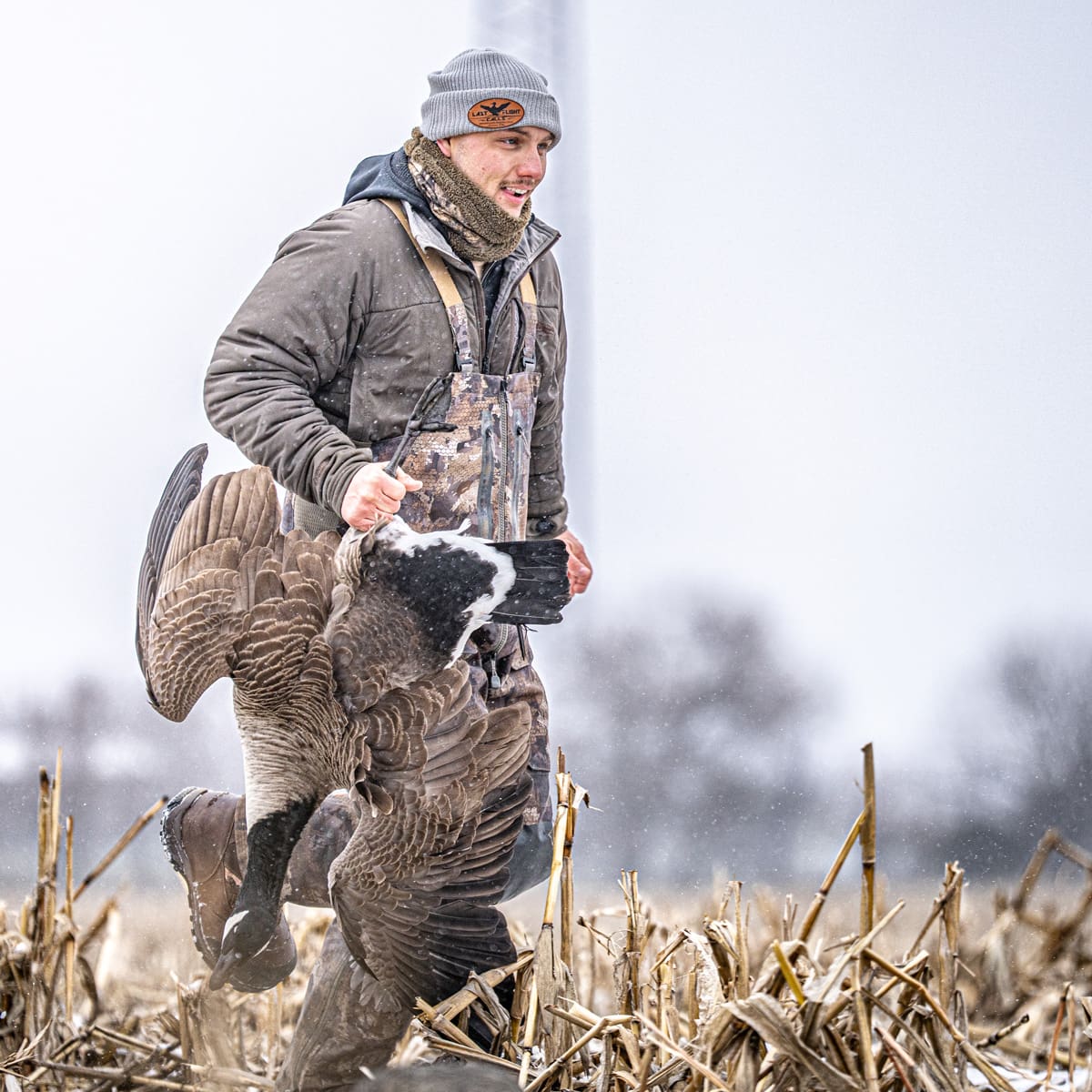
Hunter carrying two Canada geese through snow covered corn stubble with a Hardcore full body decoy in the foreground Hardcore Late Season Goose Hero A Snow Field Mobile

Up to 20% off decoys

Bulk pricing on 10 or more of the same decoy.

Free shipping over $399

Continental US only.

Pay in 4

Split your order into 4 payments with Afterpay or PayPal.

FowlFlex™ Rugged Series

Built for frozen fields and hard use.

Know the bird

Late geese are not early geese

Early season is local birds that have never seen a decoy. Late season is a different animal. Migrators ride the cold fronts down the flyway, the local birds have been shot at for months, and the cold puts every goose on a tight schedule of food, water and rest. Hunt the schedule and late geese get a lot more predictable.

20°F

Below this, geese need high-energy grain like corn to stay warm, and they seldom fly far from the roost to get it.

Source: Ducks Unlimited

10 to 11 a.m.

On bitter cold days, geese often sit on the roost until mid-morning before they head to the field.

Source: Ducks Unlimited

1 to 2 days

A few inches of fresh snow can make for great hunting if you get out within a couple of days. A foot of it usually doesn't.

Source: Ducks Unlimited

Food

Corn is king when it's cold

Below 20 degrees, geese want high-energy grain, and cut corn near open water is the late season jackpot. When they eat out the middle of a field, they shift to the edges and the corners where the combine turned. Scout where they're actually feeding and set there.

Timing

Sleep in, sit through lunch

On cold, clear days, geese wait on the roost until the sun takes the edge off, and some days they only fly once. Be set by daylight anyway, then plan to stay. Late morning and midday is often when it happens.

Water

Open water is the magnet

When everything freezes, the open water that's left on rivers, spring holes and aerated ponds holds the birds. Leave the roost alone. Hunt the loafing water and the fields they fly to from it.

Pressure

They've seen every spread

By January, geese have been hunted for months. Go bigger or smaller than the hunters around you, change your setup often, and keep the decoys clean. A muddy, shiny decoy is the first thing a wary goose picks out.

Calling

Read the birds

Fresh migrators on a windy day can take more calling. Geese that have been around for weeks usually want a few clucks and moans, then quiet. Overcalling on a calm day just sends them wide.

Snow

Snow resets the season

Fresh snow pushes geese to feed and can take the edge off them for a day or two. It also shows anything that doesn't belong: dark blinds, boot tracks, and decoys with snow piled on their backs. Brush the decoys off, bury the blinds in real snow, and keep traffic away from the hide.

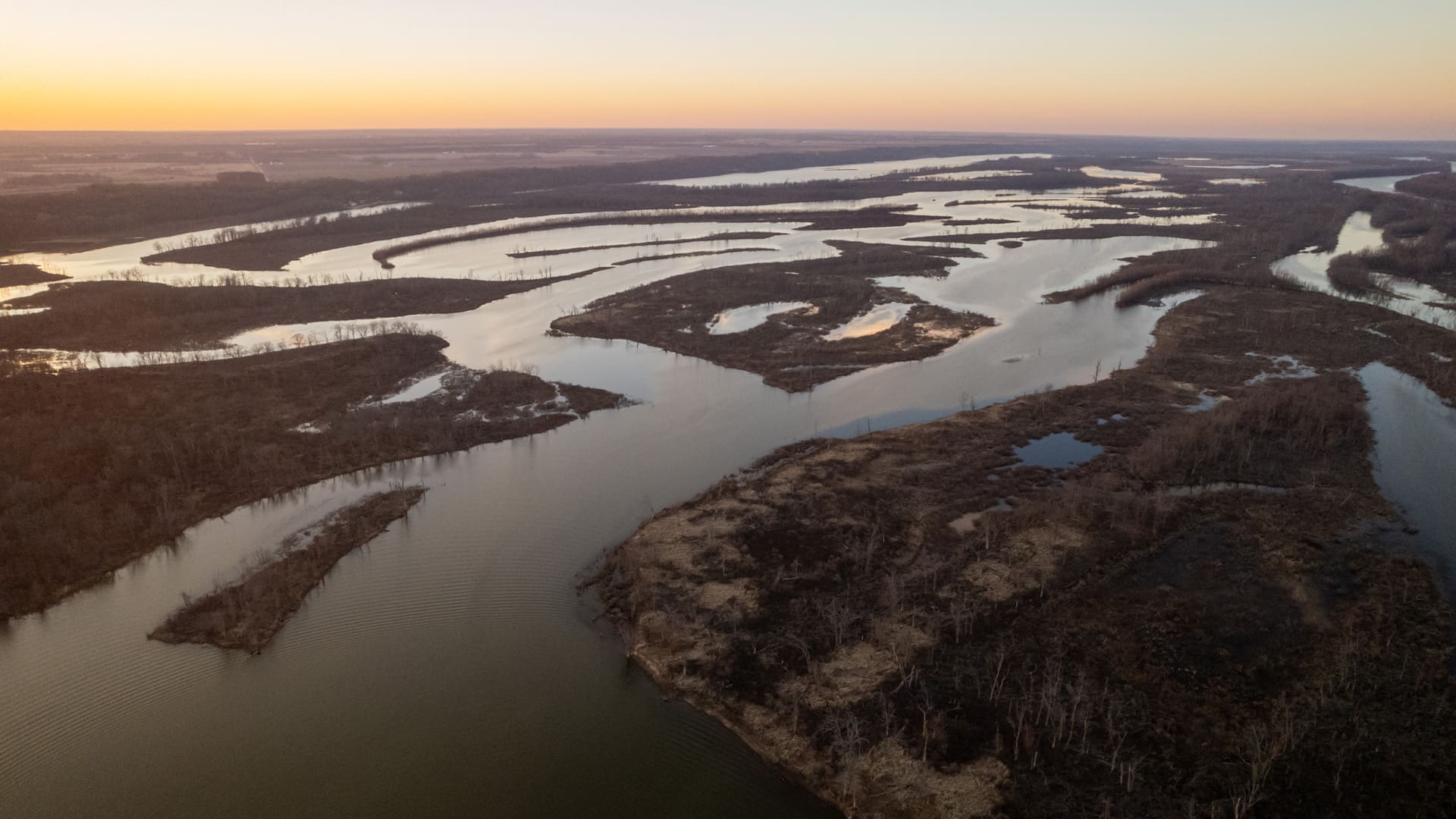
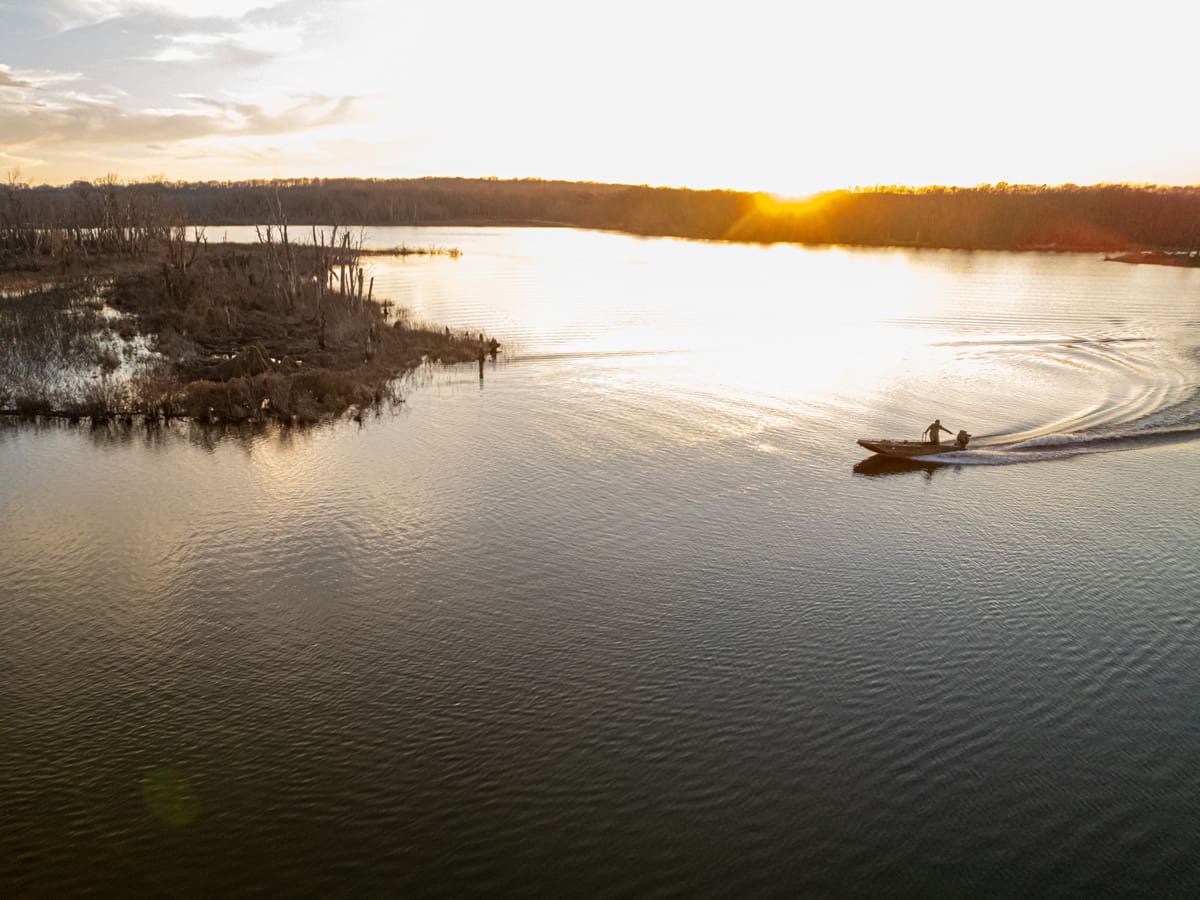
Aerial view of river backwaters and islands at sunset in December

November to January

One late season, three different hunts

Late season isn't one thing. The birds, the weather and the spread all change from the first big push to the last week.

November

The push

Cold fronts push migrators down the flyway, mixed in with the local birds. In the Central and Mississippi flyways, specks come with them. Fresh birds are looking for food and company, so go big and visible in cut corn and on the water.

Put out

Touchdown and Feeder full bodies, Canada floaters, a few specks where they fly.

December

The freeze

Ice locks up the small water and snow covers the fields. Geese bunch up, feed hard on whatever grain they can reach, and loaf on the last open water. Tighten the spread, add resting birds, and hunt the high ground where the wind blows the snow off.

Put out

Sleepers, Sleeper Shells, Lesser Canada Floaters, full bodies set tight.

January

The survivors

The birds that are left have seen everything. Watch for a warming trend a day or so after a hard cold snap, when birds can finally get to the grain. Scout hard, find a field nobody else is hunting, and run a smaller, cleaner, more realistic spread.

Put out

Your best flocked head full bodies, feeders and resters, a few floaters on the open water.

Spread setups

Four late season setups that finish geese

Same rules in every one. Geese land into the wind, they need a hole to land in, and in the cold they want to see birds that are feeding and resting, not standing around on alert.

FENCE LINEWINDLAYOUT BLINDSLANDING HOLEOpen, 20 to 30 yards outFEEDERS CLOSE TO THE HOLEHeads down, eating.Keep them tight tothe landing hole.SENTRIES FACETHE FENCE LINESOPEN END FACES DOWNWINDA few specks where they flyBIRDS FINISH INTO THE WINDapprox. 30 yards
. .
Feeder
. .
Sentry
. .
Specklebelly
.
Blind
Hardcore Late Season Goose Setup Cut Corn 2

Setup 1

Cut corn: the feed field

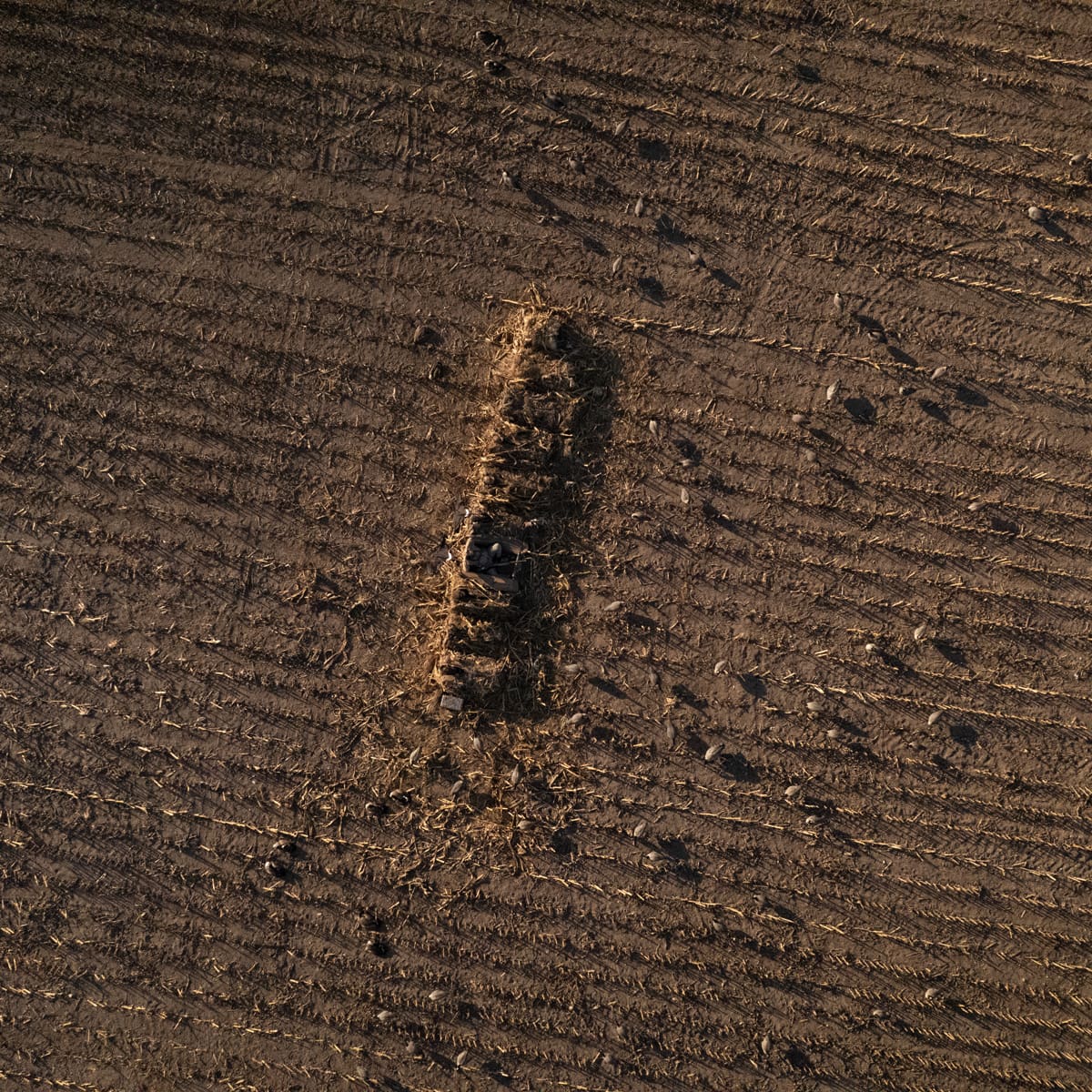
Match the spread to what you scouted. If you watched a few hundred birds work a cut corn field, 100 to 150 decoys isn't too many. Run them in a loose U or V that opens downwind, with layout blinds at the closed end. Keep feeders close to the landing hole and face your few sentries toward the fence lines. On tough days or small groups, a dozen or two good full bodies can work better.

Two Touchdown 6-packs and two Feeder 6-packs gets you 24 flocked head full bodies: 18 feeders and 6 sentries. Add packs as the birds tell you to.

HIGH GROUNDWind clears the snow off the grainWINDBLINDS BURIED IN REAL SNOWLANDING HOLEBrush the snow off every decoyTIGHT GROUPS, MORE SLEEPERSBunch them up. Coldgeese sit close andrest a lot.KEEP TRACKS OUTWalk in from behind theblinds. Truck out of sight.BIRDS FINISH INTO THE WINDapprox. 30 yards
. .
Feeder
. .
Sentry
. .
Sleeper
. .
Sleeper shell
.
Blind buried in snow
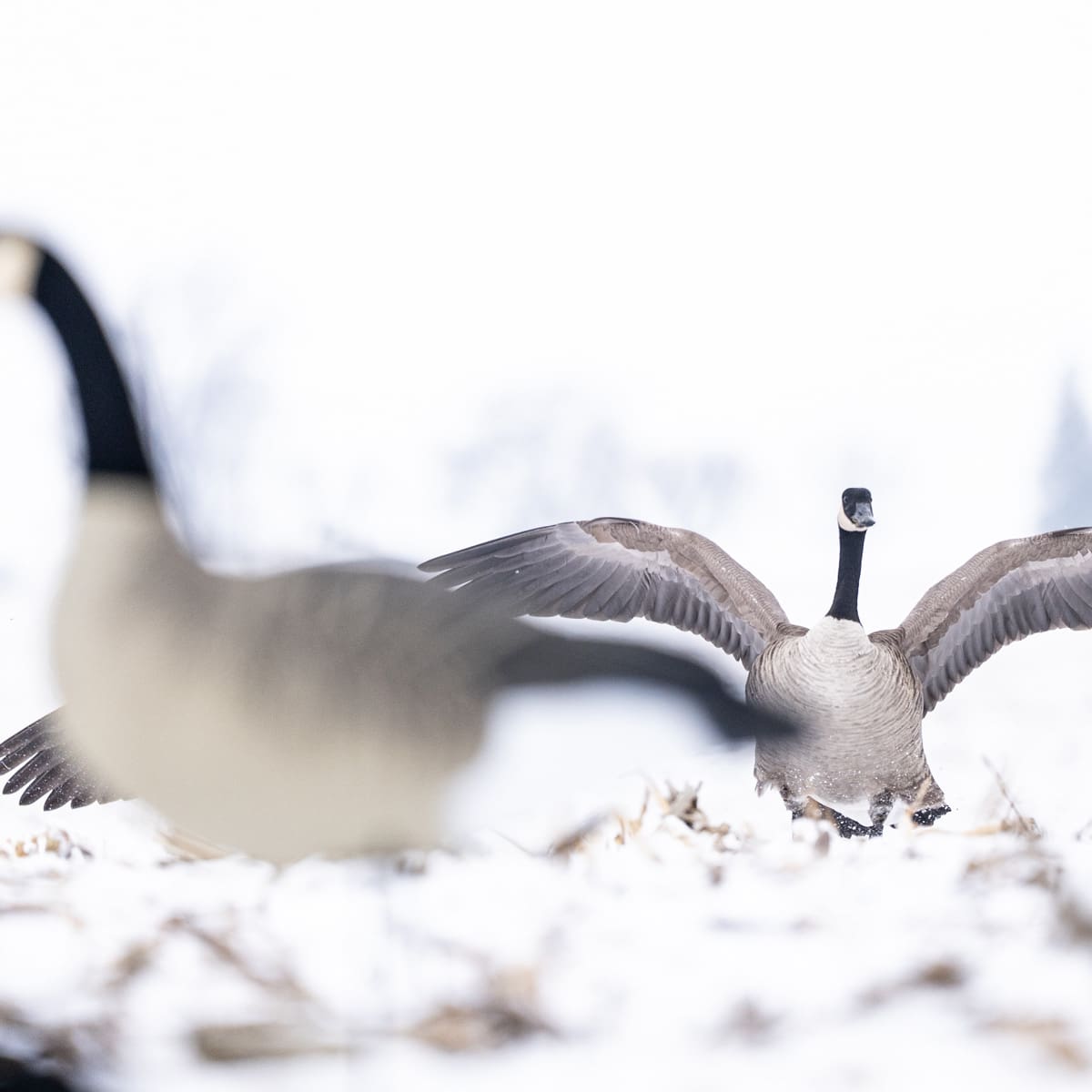
Canada goose with its wings out over snow-covered corn stubble with a full body decoy in the foreground

Setup 2

Snow cover: tight and resting

Cold geese bunch up. With snow on the ground, set the decoys tighter than you did in November and add plenty of sleepers and resting birds. When it's bitter cold, some hunters set full bodies right on their bellies with the stakes pulled. Hunt the high spots where the wind clears the snow off the grain. Bury the blinds in real snow, brush off the decoys, and keep your tracks out of the spread. A trampled path looks like a bullseye from the air.

A Sleeper 4-pack and a Sleeper Shell 6-pack add 10 resting birds to a full body spread.

OPEN WATERSHOREBLIND IN THE CATTAILSWINDBIRDS FINISH INTO THE WINDLANDING ZONEKeep the open water clearFLOATERS IN THE WATERBirds swimming?Set floaters in the hole.SHELLS ON THE ICE EDGEBirds up on the ice?Set shells on the edge.BE CAREFUL ON ICEDon't send the dog out unless you know the depth.approx. 30 yards
. .
Floater
. .
Sleeper shell
.
Blind
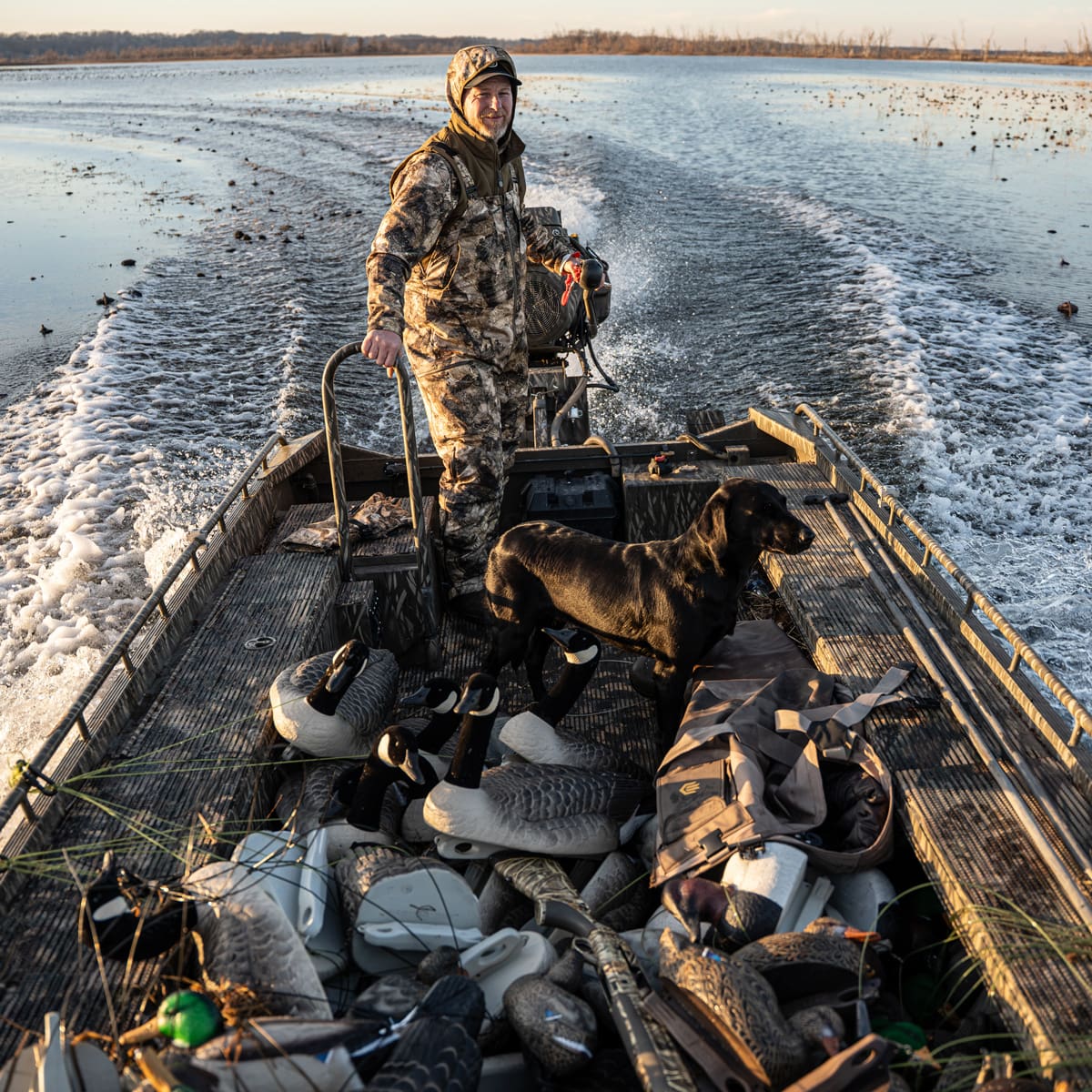
Hunter riding a boat with Hardcore Canada goose floater decoys on a cold river backwater

Setup 3

Open water and ice: the loafing hole

When the small water freezes, geese pile into what's left open. Watch what they're doing and copy it. If they're swimming in the hole, set floaters. If they're resting up on the ice, set Sleeper Shells along the ice edge. Keep the open water in front of the blind clear as the landing zone. A loafing spot can give you several hunts. A roost burns out after one or two, so leave it alone. Be careful on ice, and don't send the dog out unless you know the depth.

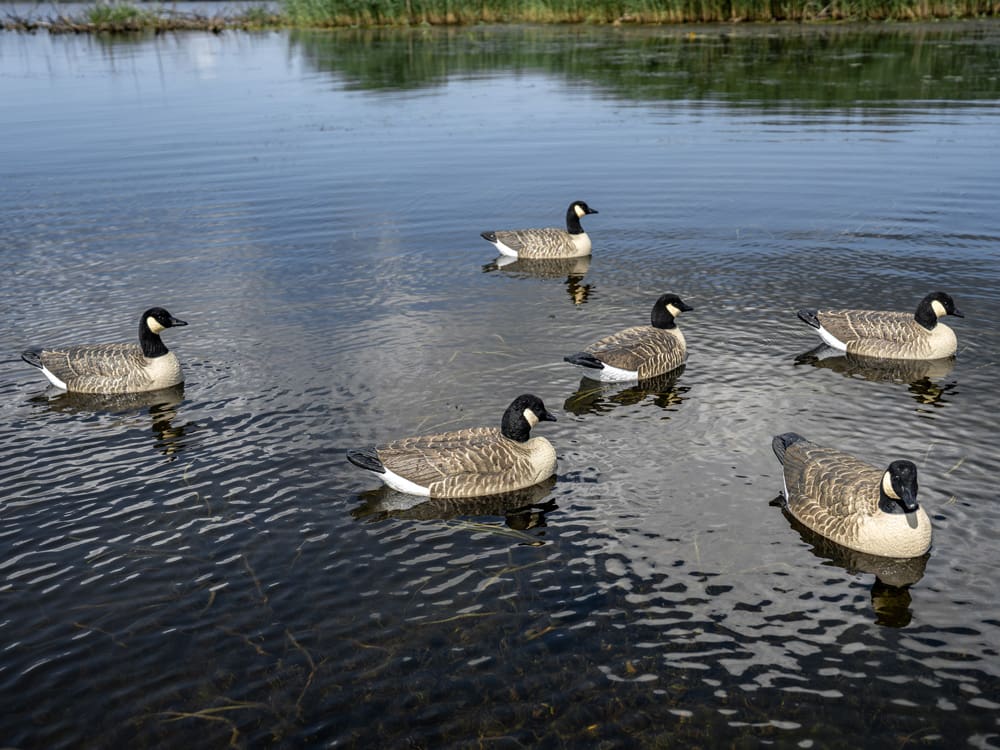
A dozen Lesser Canada Floaters on WhaleTail™ keels and a Sleeper Shell 6-pack covers most ice holes.

SANDBARHIDE IN THE DRIFTWOODUpwind end of the barWINDCURRENTLANDING ZONEIn front of the hideON THE BARFull bodies standing,sleepers mixed in.FLOATERS OFF THE EDGESpread reads from thewater and from the air.BIRDS FINISH INTO THE WINDapprox. 30 yards
. .
Feeder
. .
Sentry
. .
Sleeper
. .
Floater
.
Blind
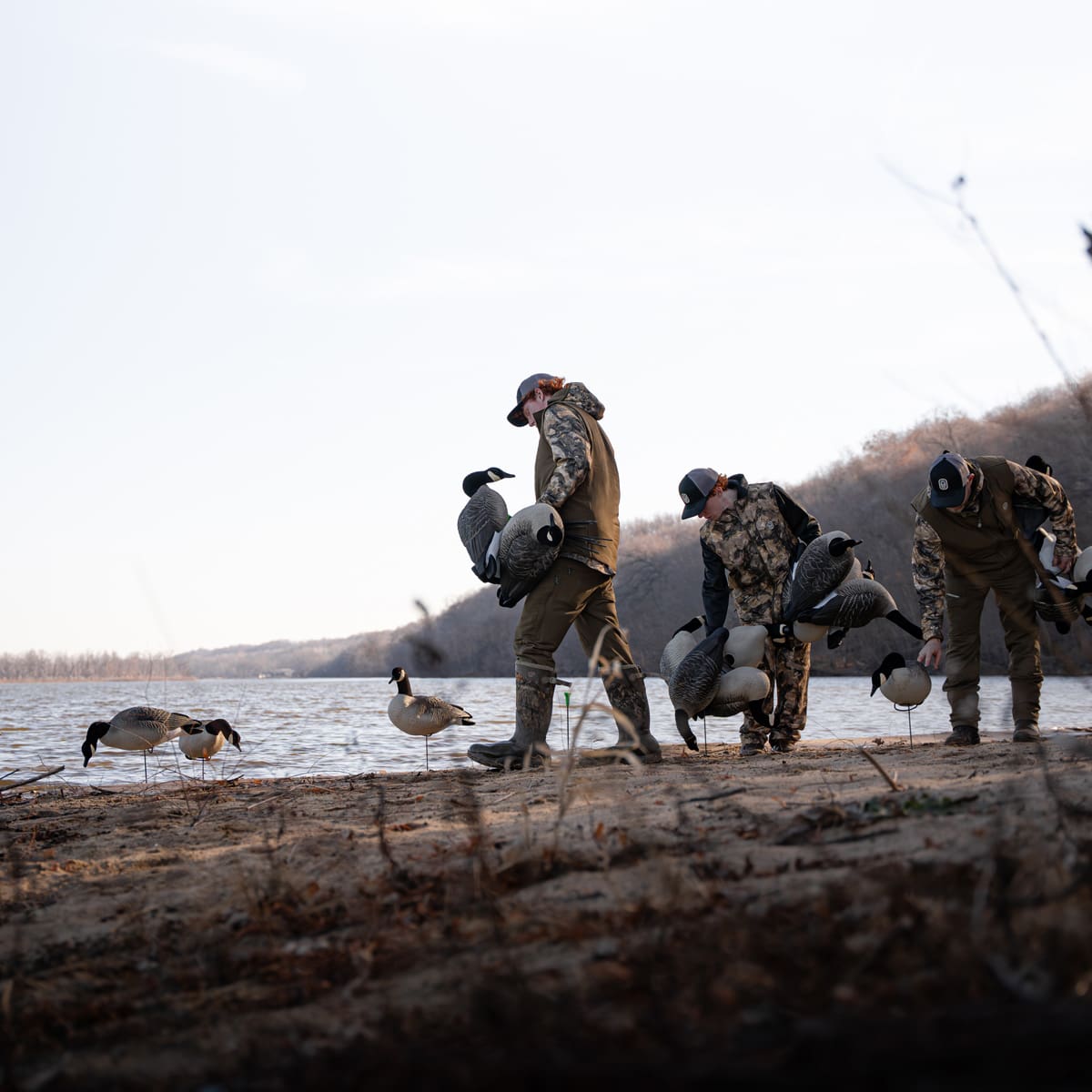
Hunters setting Hardcore full body Canada goose decoys on a river sandbar

Setup 4

River sandbar: the loafing bar

Between feeds, late geese loaf on river sandbars, and a good bar can hold birds all day. Stand full bodies on the bar with sleepers mixed in, and run floaters off the edge so the spread reads from the water and the air. Hide in the driftwood or brush on the upwind end of the bar with the landing zone open in front of you.

The Canada Goose Floaters Touchdown 6-pack gives you sentries, a rester and a surface feeder to match the full bodies on the bar.

Build the spread

Five steps to a late season goose spread

Start with a core of good full bodies, push the ratio toward feeders, add the resting birds the cold calls for, then cover the open water and the specks.

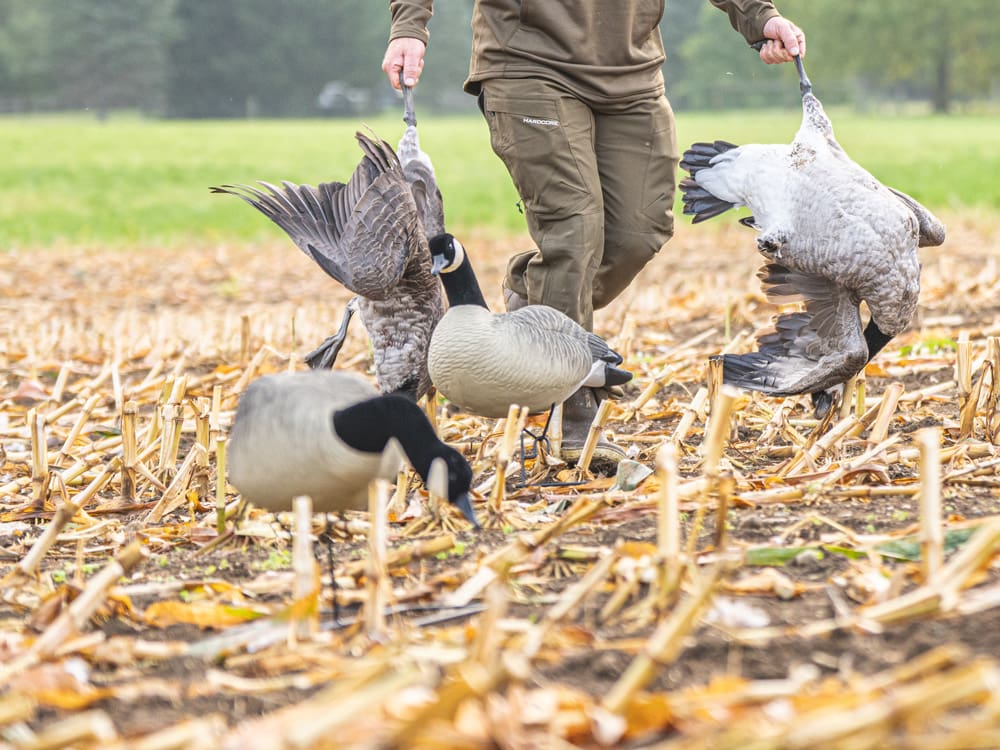
Hunter walking a harvested Canada goose through cut corn stubble with full body decoys in the foreground

1

Start with the core pack

The Touchdown 6-pack is a full family group out of the box: 3 sentries (super, relaxed and stubby) and 3 feeders (2 active, 1 hungry), with flocked heads, 22" long, on 6 TruMotion™ 2.0 bases and field stakes.

Our most-reviewed goose decoy. 4.8 stars across 78 reviews.

Rugged Series

Full Body Canada Goose Touchdown Decoys, Flocked Head

$259.99

★ 4.8 (78)

Shop now

2

Push the ratio toward feeders

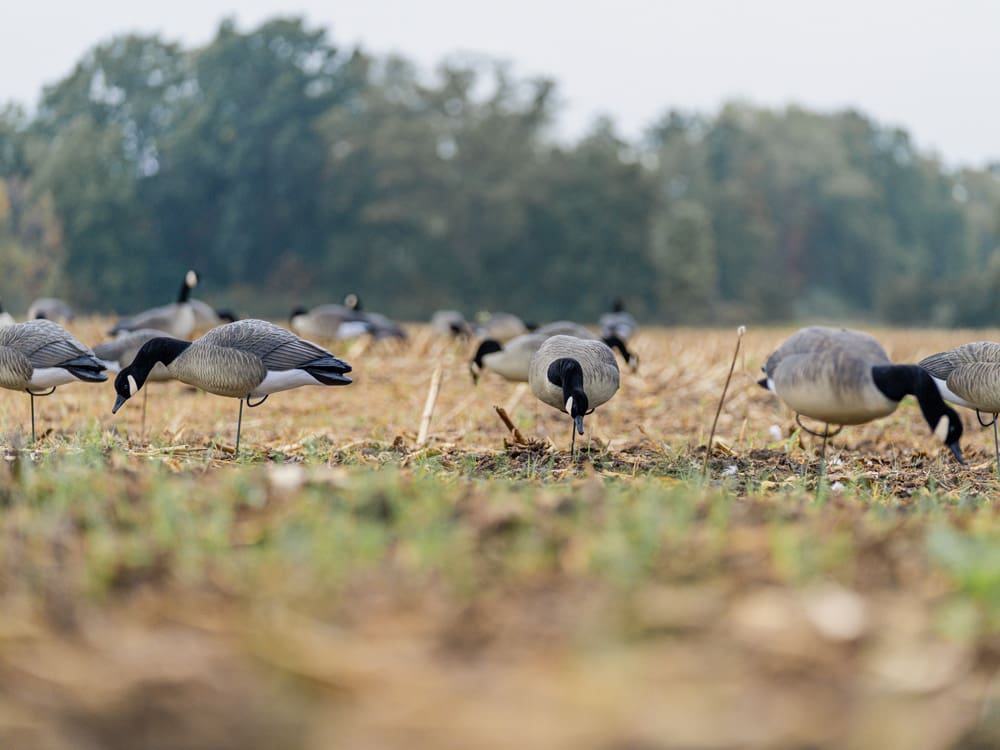
Late geese come to the field to eat. A spread that's mostly heads-down feeders looks busy and relaxed, which is exactly what a cold, hungry flock wants to see. The Feeder pack is 3 active and 3 hungry feeders, 25" long, on TruMotion™ 2.0.

Two Feeder packs for every Touchdown pack keeps the sentries in check.

Rugged Series

Full Body Canada Goose Feeder Decoys, Flocked Head

$259.99

★ 5.0 (2)

Shop now

3

Add the resting birds

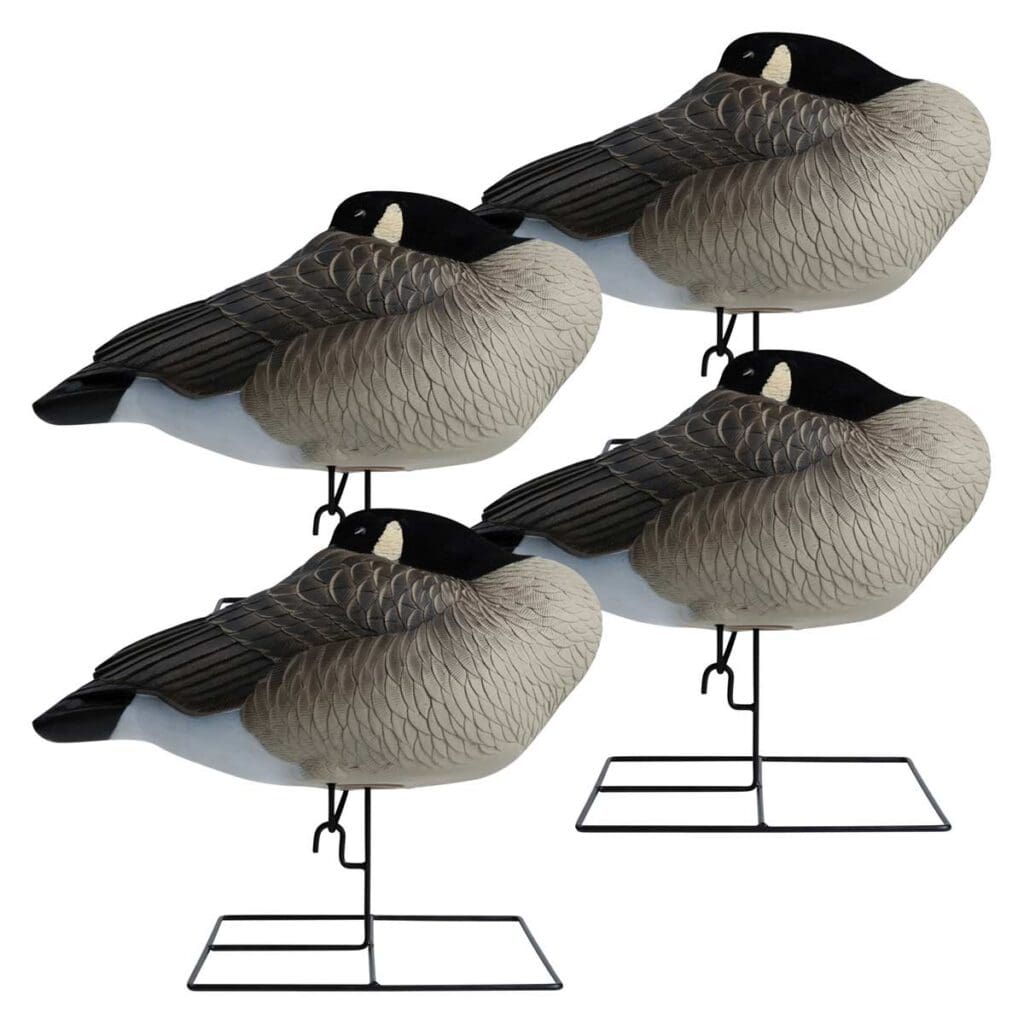
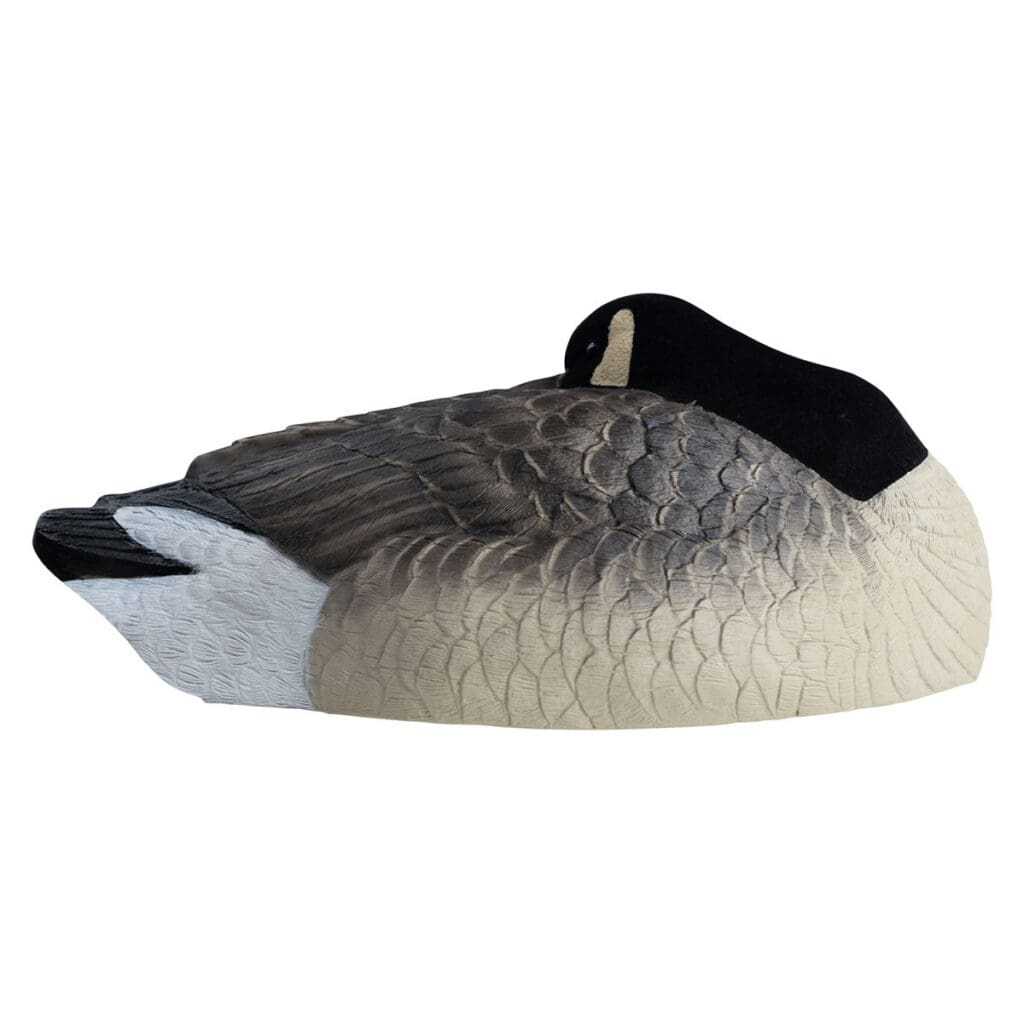
Cold geese spend a lot of the day resting. Sleepers on TruMotion™ 2.0 bases and oversized Sleeper Shells (24" x 14") say the flock is fed and safe. The shells are built for harsh conditions and frigid temperatures, and they stack flat for the walk in.

In snow, run more of them than you would in November.

Rugged Series

Flocked Head Full Body Canada Sleeper Decoys, 4-Pack

$179.99

★ 4.7 (18)

Also: Sleeper Shell 6-Pack, $149.99

Shop now

4

Cover the open water

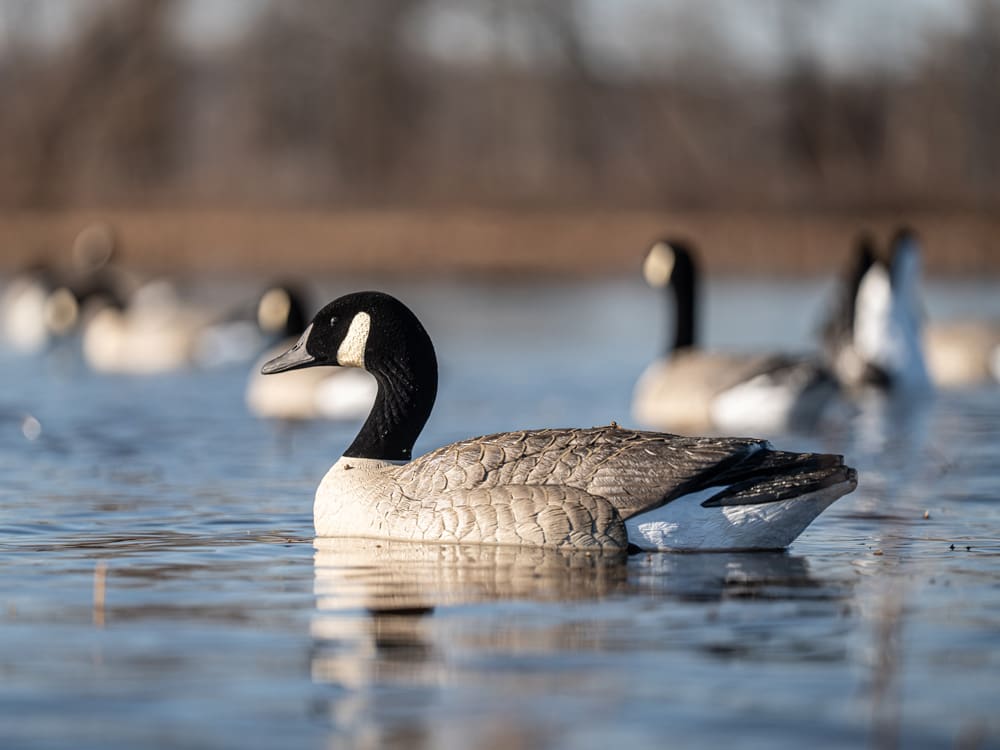
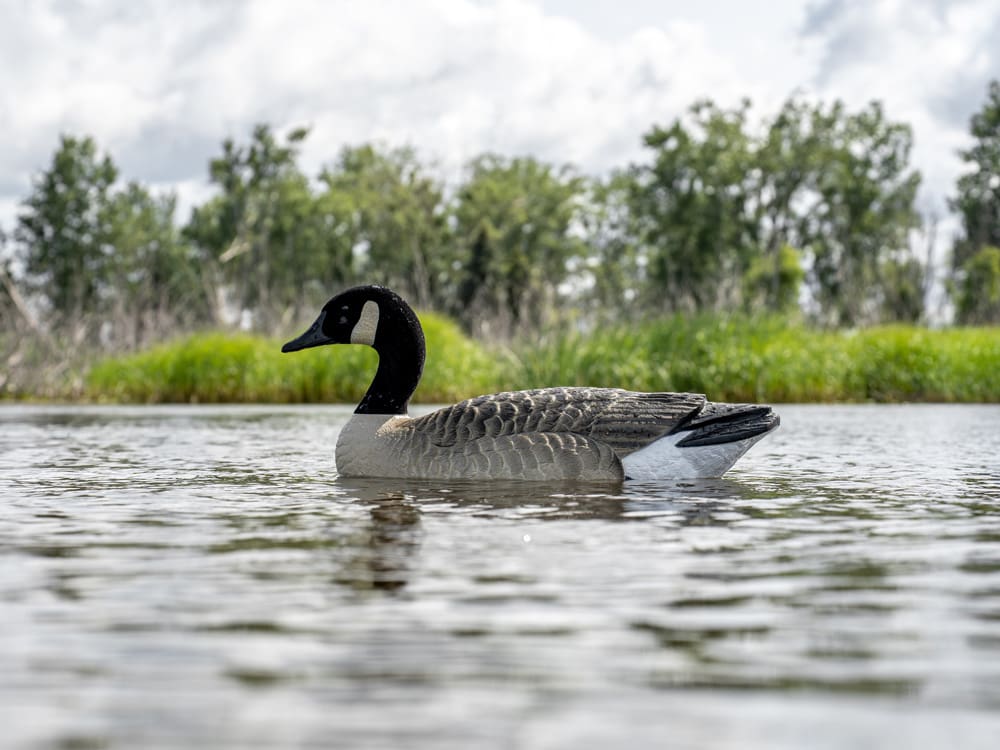
When the small water locks up, the open water that's left is where geese loaf. The Lesser Canada Floaters ride the WhaleTail™ keel, which moves with very little current, so an ice hole doesn't sit dead still. Three flocked poses: 2 active, 2 relaxed and 2 resters, 17.5" long.

Pair them with the bigger Floaters Touchdown 6-pack so the water spread has size variety.

Rugged Series

Lesser Canada Floaters Decoys, Flocked Head

$189.99

★ 4.7 (49)

Also: Floaters Touchdown 6-Pack, $239.99

Shop now

5

Mix in specks where they fly

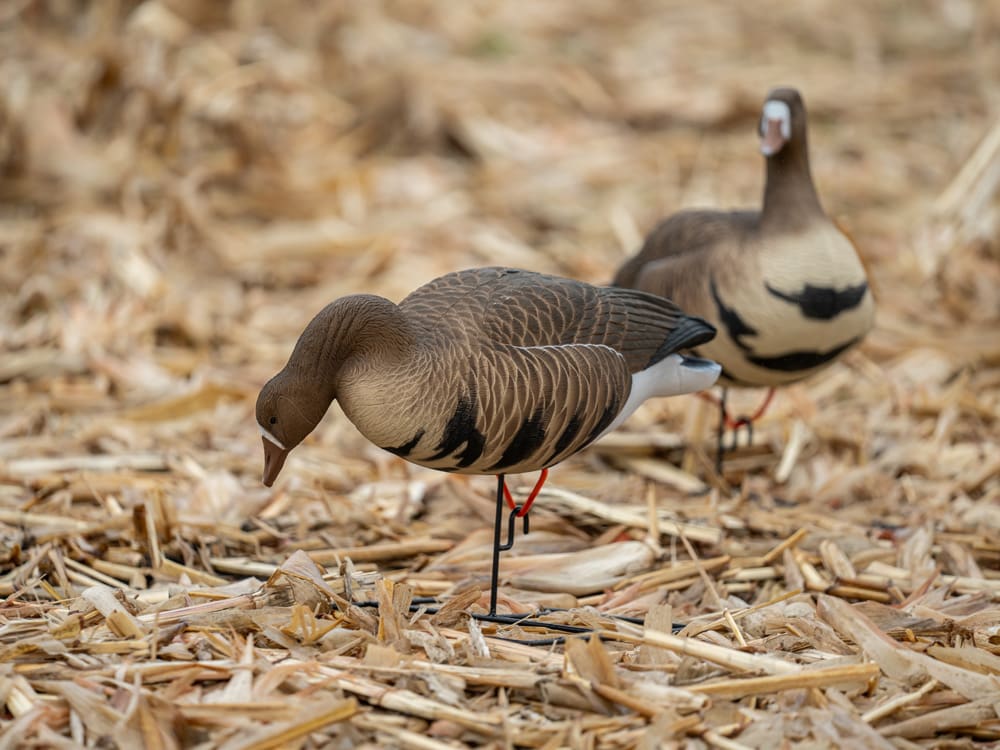
In the flyways where specks and Canadas share the same fields, a few specks mixed into a Canada spread add variety. Specks tend to land short, so keep the speck decoys and the blinds toward the downwind side. The Specklebelly 6-pack is 2 sentries (relaxed and stubby) and 4 feeders (2 active, 2 hungry), 22" long, on the same TruMotion™ 2.0 bases.

One pack is plenty to start. Specks are pressure-sensitive, so realism matters.

Rugged Series

Full Body Specklebelly 6-Pack

$259.99

★ 4.8 (4)

Shop now

Why Hardcore

Built for frozen fields

Late season is where decoys get wrecked. Frozen ground, ice, trailer loads in the dark and numb hands. Ours are built for that, and built to look like real birds while it happens.

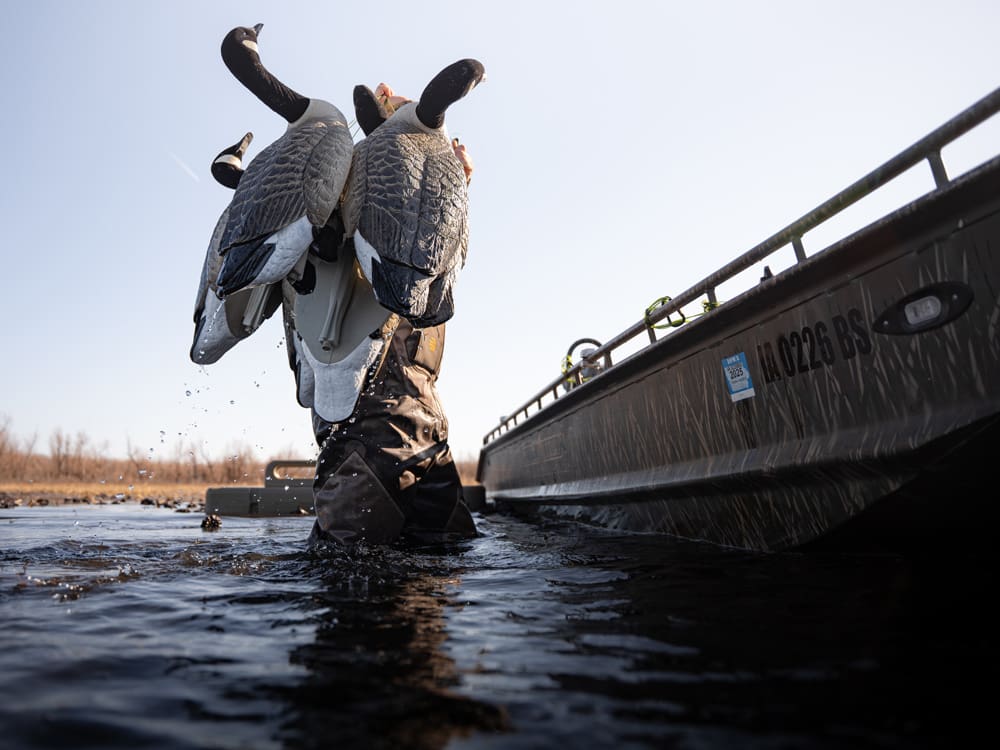
Hardcore Canada goose floater decoys slung out of the water beside a duck boat

FowlFlex™

Rugged Series full bodies and floaters

Built into every Rugged Series Canada goose and speck full body and floater on this page. It takes the impact instead of cracking, so decoys survive trailer loads, frozen fields and getting stepped on in the dark. They're virtually indestructible.

Resists cracking and breakage
Built for harsh weather and heavy use
One-piece construction
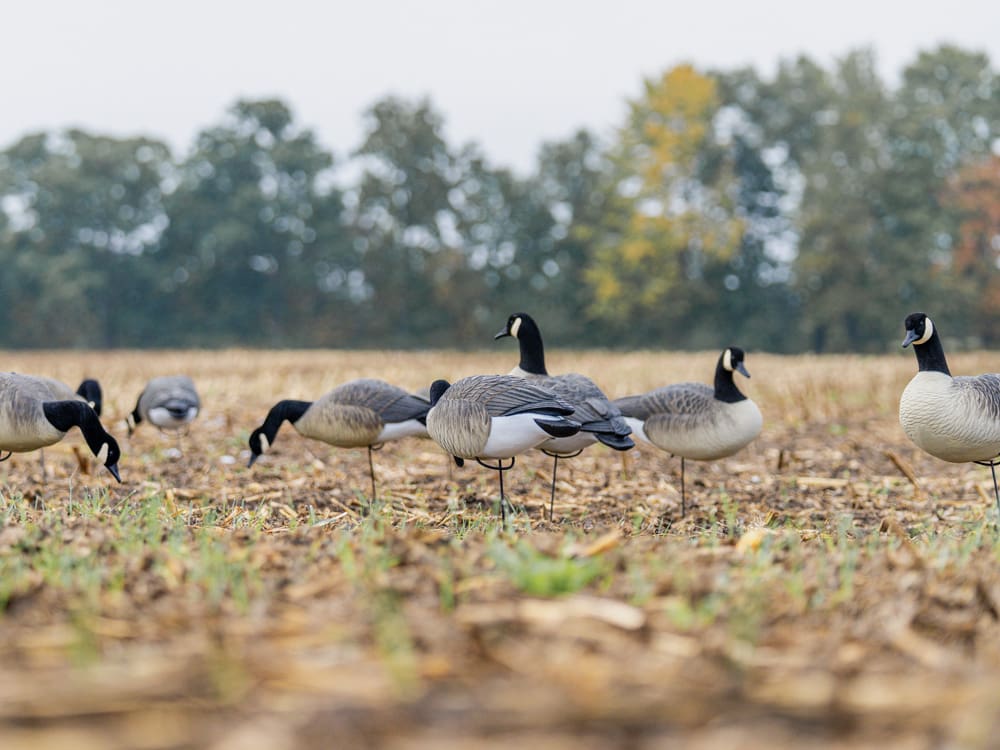
Hardcore full body Canada goose decoys on TruMotion 2.0 bases in cut corn stubble

TruMotion™ 2.0

Full bodies and sleepers

A base and field stake system that catches the slightest breeze, so full bodies pivot and sway instead of standing frozen. It's the realistic motion you need to fool pressured birds, and it comes with every Rugged Series full body pack.

Moves in light wind
Built for pressured birds
Included with full body packs
Hardcore Canada goose floater decoy riding marsh water with the spread behind it

WhaleTail™ Keel

Floaters and Feeder Butts

Creates lifelike movement with very little current, so floaters on a frozen-in hole or a slow river don't sit parked.

Moves in minimal current
Reads as feeding and resting
Helps finish wary birds
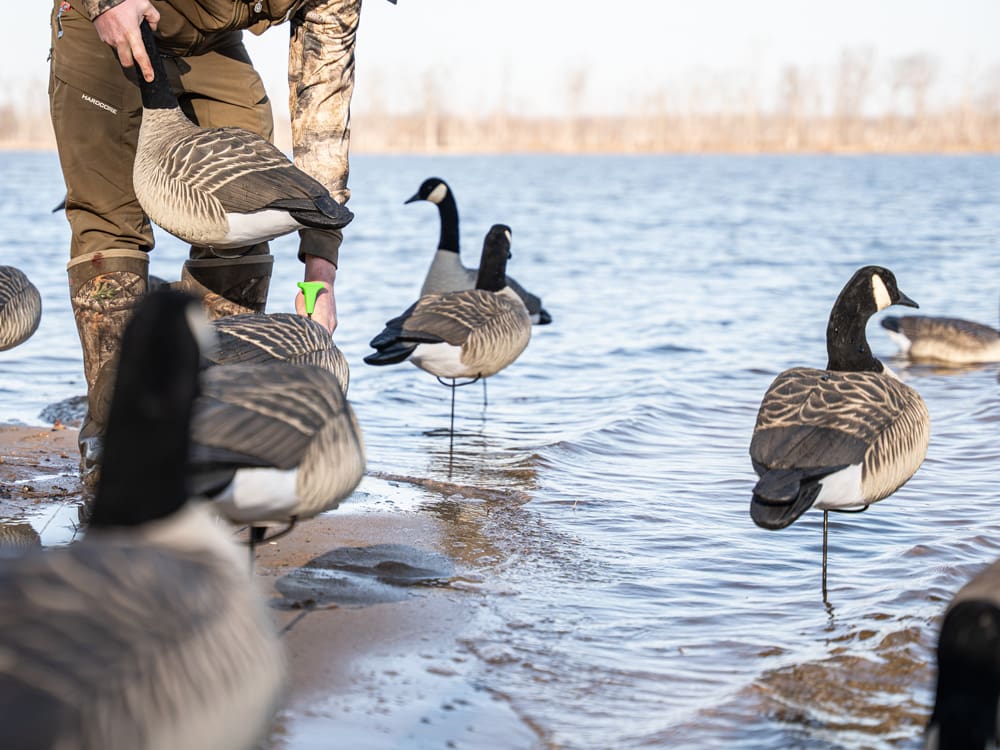
Hardcore flocked head full body Canada goose decoys standing at the water's edge

Flocked heads + true-to-life paint

The whole Canada line

Every Hardcore Canada goose decoy has a flocked head, from the Touchdown full bodies to the Sleeper Shells and Feeder Butts. Flocking takes the glare off a painted head in low winter sun, and the paint is matched to the feather detail and contrast of live birds.

Flocked heads cut glare
Natural feather detail and contrast
Works in low and flat light

Watch: FowlFlex™ technology

Finish the rig

Bags, rigging and spare parts

None of it matters until you're rigging floaters with frozen fingers in the dark.

6-Slot Goose Decoy Bag

Keeps full bodies from rubbing paint. ★ 4.7 (29)

$59.99

Mesh Decoy Bag

For shells and extras

from $10.79

12" TruMotion™ 2.0 Round Base, 6-Pack

Spares for a long season

$14.99

Snap Back Jerk String

Motion on a calm, frozen morning. ★ 4.7 (14)

$34.99

Texas Rig 36", 4 oz

★ 4.7 (54)

$34.99

Texas Rig 48", 6 oz

For deeper water and river current

$39.99

EZ Hook Weights 12-Pack, 4 oz

★ 4.9 (15)

$29.99

EZ Hook Weights 12-Pack, 6 oz

★ 4.4 (13)

$34.99

Braided Decoy Cord

Rig your own

from $7.49

Buying a full spread

Volume pricing and outfitters

Bulk pricing is standing, not a sale. It applies per decoy model, so the quantity has to be the same decoy, not a mixed cart. Guides and outfitters running more than one spread should start with the Outfitters Program.

Pricing out a big spread?

Split the order into 4 payments with Afterpay or PayPal at checkout.

Free shipping on orders over $399, Continental US only. One promo code per order, no stacking.

Example: Full Body Canada Goose Touchdown, $259.99

Quantity

Your price

Save

1 to 9

$259.99

-

10 to 19

$233.99

10%

20 or more

$207.99

20%

From the field

Rated by the hunters who use them

4.8 (78)

★ out of 5

Full Body Touchdown

4.7 (49)

★ out of 5

Lesser Canada Floaters

4.7 (18)

★ out of 5

Full Body Sleepers

4.7 (7)

★ out of 5

Floaters Touchdown

4.8 (4)

★ out of 5

Specklebelly

Top notch decoys. Great durability, carves, and about the same size as a medium sized goose. Been hunting over the rugged series since Gen 1 and have decoyed everything from lesser up to giant late season honkers.

JJB1 · Rugged Series Full Body Canada Goose Touchdown Decoys - Flocked Head

Awesome design, look great in the water. The size is perfect also they look exactly like a family group swimming around.

Kody C · Rugged Series Canada Goose Floaters Touchdown Decoys - Flocked Head 6-Pack

Great quality and helped finish the late season tough flocks!

Paul Army · Rugged Series Flocked Head Full Body Canada Sleeper Decoys 4-Pack

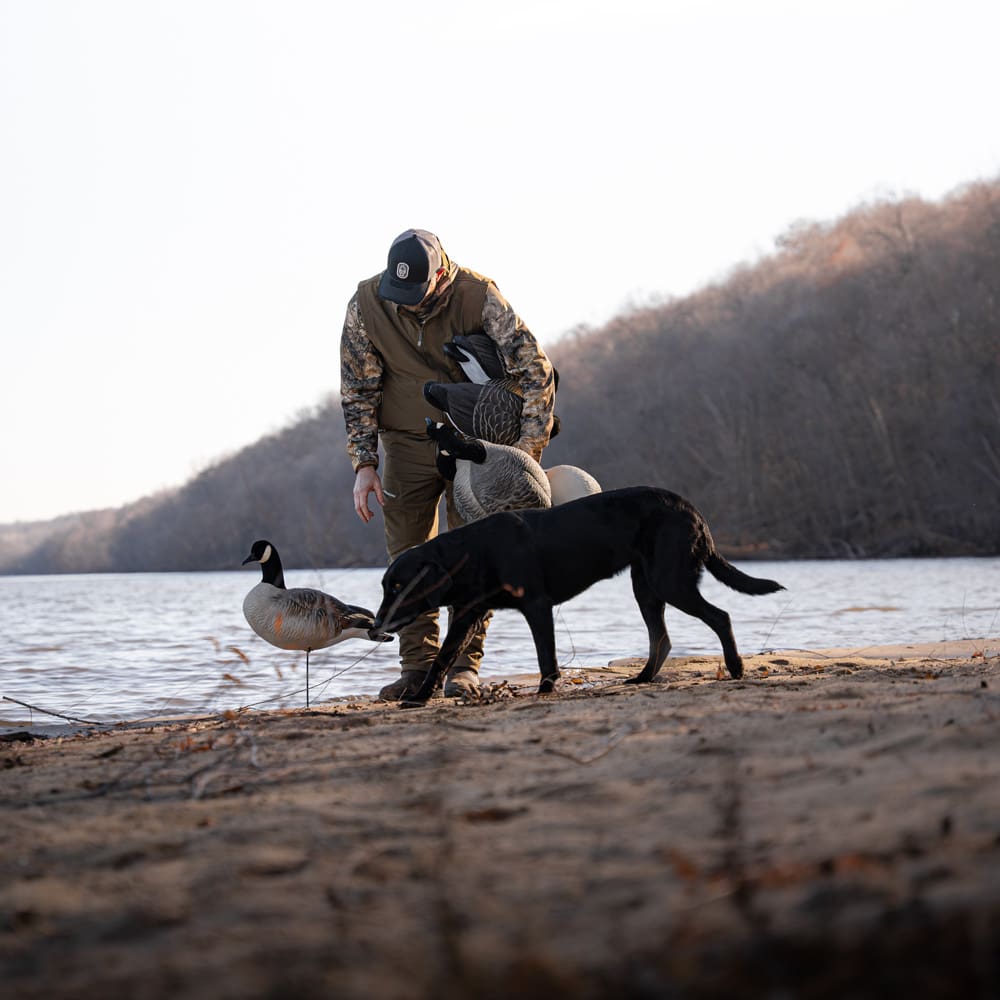
Hunter and a black lab setting Canada goose decoys on a river sandbar at last light

Questions

Late season goose hunting FAQ

When does late season goose hunting start?

There's no single date. Late season usually means the stretch after the migrators show up, roughly November through the end of the season, which runs into January in a lot of the country. Seasons, zones and splits are set state by state and change every year, so check your state wildlife agency's current waterfowl regulations before you hunt. We're not going to publish dates here that go stale.

How many decoys do I need for late season geese?

It depends on the birds. If you scouted a big flock working a cut corn field, 100 to 150 decoys isn't too many. When the birds get tough or you're hunting small groups, a dozen or two good full bodies can work better. Late geese have seen every spread on the flyway, so going bigger or smaller than the hunters around you is often what makes the difference.

What's the best late season goose spread?

Start with the food and copy the birds. On cut corn, a loose U or V that opens downwind, layout blinds at the closed end and an open landing hole 20 to 30 yards out. In snow, tighten it up and add sleepers. On open water, floaters in the hole and Sleeper Shells on the ice edge. On a river sandbar, full bodies on the bar and floaters off the edge.

How do you hunt geese in the snow?

Fresh snow pushes geese to feed and can make them less wary for a day or two. Hunt the high spots where the wind exposes grain, bury the blinds in real snow, brush the snow off your decoys, set them tighter with more sleepers, and keep your tracks and your truck out of sight of the spread. A white hat or face mask helps too.

Should I call to late season geese?

Less than you think. Fresh migrators on a windy day can take more calling. Geese that have been around for weeks usually want a few clucks and moans, then quiet. Call when they're turning away, stop when they're committed, and don't overcall on a calm day.

Do specklebelly decoys work in a Canada goose spread?

Yes, in the flyways where specks and Canadas share the same fields. A few speck decoys mixed into a Canada spread add variety. Specks are pressure-sensitive and tend to land short, so keep the speck decoys and the blinds toward the downwind side. Our Rugged Series Full Body Specklebelly 6-pack runs on the same TruMotion™ 2.0 bases as our Canada full bodies.

Do flocked heads matter on late season decoys?

They help. Low winter sun and snow throw a lot of glare, and flocking takes the shine off a painted head. Every Hardcore Canada goose decoy has a flocked head, from the Touchdown full bodies to the Sleeper Shells and Feeder Butts.

Will your goose decoys hold up in the cold?

Our Rugged Series full bodies and floaters are built with FowlFlex™, which is made for harsh weather and heavy use and takes impact instead of cracking. They're virtually indestructible. The Sleeper Shells are built to handle harsh conditions and frigid temperatures, and the Field Series Feeder Butts give you great durability at a great price.

Is there a discount if I'm buying a full spread?

Yes. Bulk pricing is standing on decoys: 10 or more of the same decoy takes 10% off, and 20 or more of the same decoy takes 20% off. It applies per decoy model, not to a mixed cart. Guides and outfitters should look at the Outfitters Program.

#HuntHardCore

Find the feed.
Find the water.
Hunt it hard.

Late season pays off for the hunters who scout, hide and keep their decoys clean. Put out a spread that looks right in the snow and holds up through the worst of it.

Hardcore Late Season Goose Closing Boat Sunrise
Search

Hardcore™ Waterfowl uses cookies to improve your shopping experience. View our Privacy Policy to learn more.

SIZING GUIDE

Use your body measurements to find your perfect fit. See our How to Measure info and diagram below the size charts.

If you measure between sizes, or prefer a loose or roomy fit, we recommend upsizing.

Men's Jackets & Tops
SizeChestSleeve
Small34"-36"33"
Medium38"-40"34"
Large42"-44"35"
X-Large46"-48"36"
2X-Large50"-52"37"
3X-Large54"-56"38"
Men's Numeric Pants
SizeWaistInseam
30 Reg30"34"
32 Reg32"34"
34 Reg34"34"
36 Reg36"34"
38 Reg38"34"
40 Reg40"34"
42 Reg42"34"
Men's Bibs
SizeWaistInseam
Small28"-30"32"
Medium32"-34"32"
Large36"-38"32"
X-Large40"-42"32"
2XL44"-46"32"
3XL48"-50"32"
Gloves
SizePalm CircLength
Medium8-8.5"7.25-7.75"
Large8.75-9.28"7.75-8.25"
X-Large9.25-10"8.25-9"
Softshell Pant Sizing
SizeWaistInseam
30 Reg30"32"
32 Reg32"32"
34 Reg34"32"
36 Reg36"32"
38 Reg38"32"
40 Reg40"32"
42 Reg42"32"
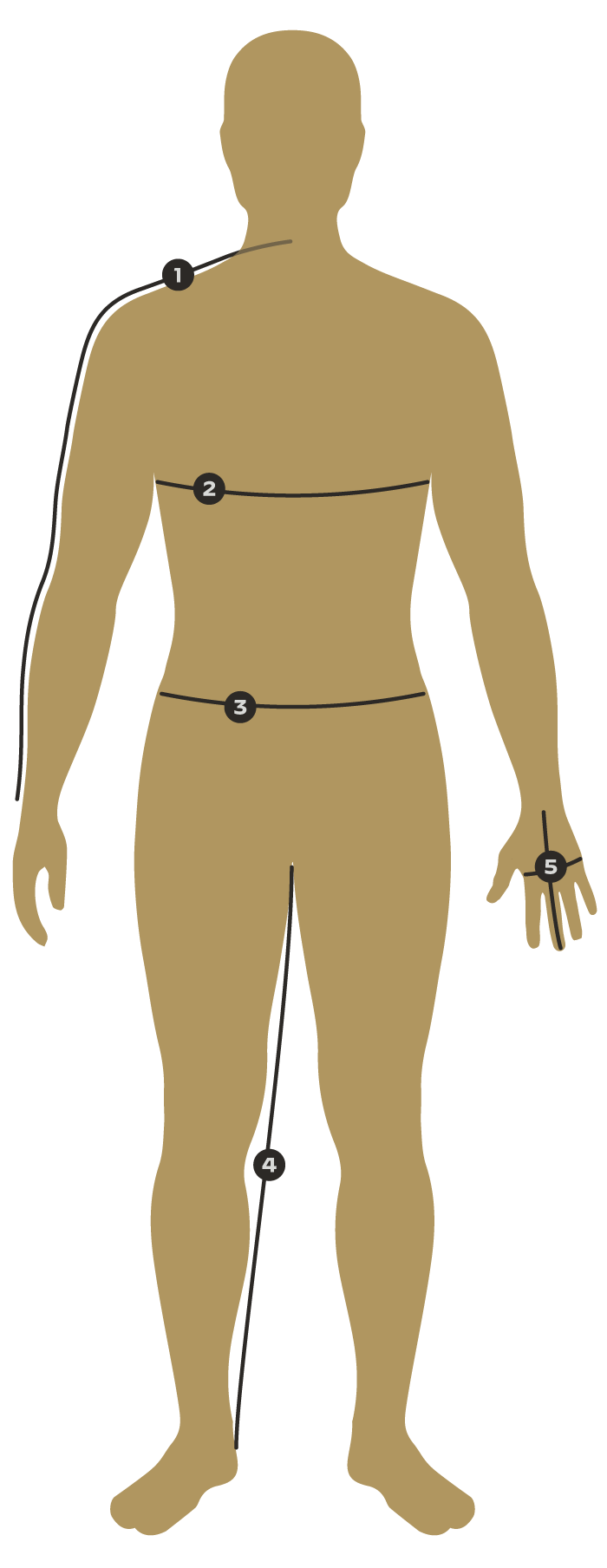
HOW TO MEASURE
1: Sleeve Measure

Bend your elbow and put your hand on your hip. Measure from the center of the back of your neck, along the shoulder and down the elbow to the wrist bone.

2: Chest Size

Measure around the fullest part of your chest while keeping the measuring tape horizontal.

3: Waist Size

Measure around your waist where your pants typically sit while keeping the tape horizontal.

4: Inseam

Measure from the crotch down to your leg where you like your pants to fit. Typically around the ankle.

5: Gloves

With hand partially closed, measure over the knuckles, around the hand, excluding the thumb.

Tuo Size Chart Silhouette Diagram.png