The Mississippi Flyway runs through the heart of the United States from the Arctic tundra to the Gulf of America. The Mississippi Flyway, the most heavily used flyway by waterfowl, is bisected by large rivers like the Mississippi, Missouri, Ohio, and Illinois. The rivers serve as travel corridors, and the river valleys provide wetlands and water for agriculture. The remaining ancient marshes and bottomland hardwood forests provide essential habitat for waterfowl and exceptional opportunities for waterfowl hunting.
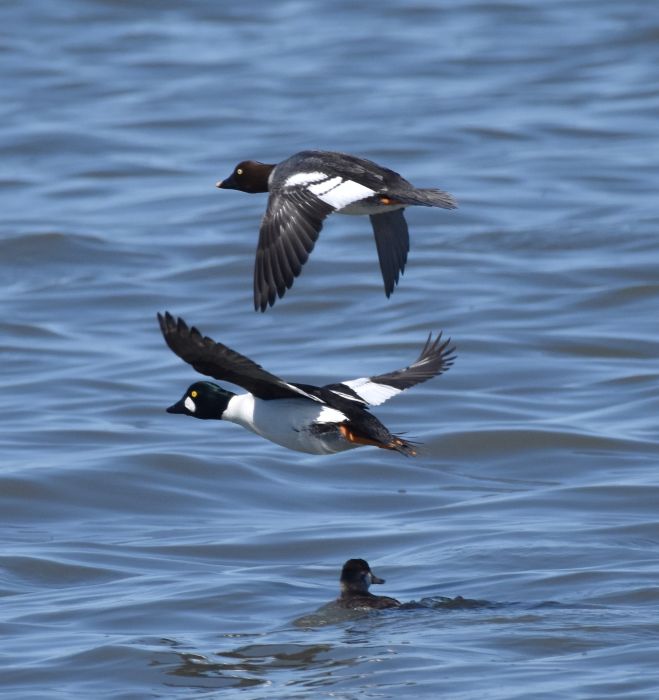
The flyway’s varied habitat and terrain support a wide range of waterfowl, including both puddle ducks and divers and Canada geese. Divers frequent the major rivers, their backwaters, and the large inland lakes along them during migration and the Great Lakes, especially when cold weather forces them south.
Famous destinations for diving ducks in the Mississippi Flyway include Catahoula Lake in Louisiana, the pools found on the Mississippi River from Minnesota to Illinois, Green Bay, Lake St. Clair, and Saginaw Bay in Michigan, and Lake Erie.
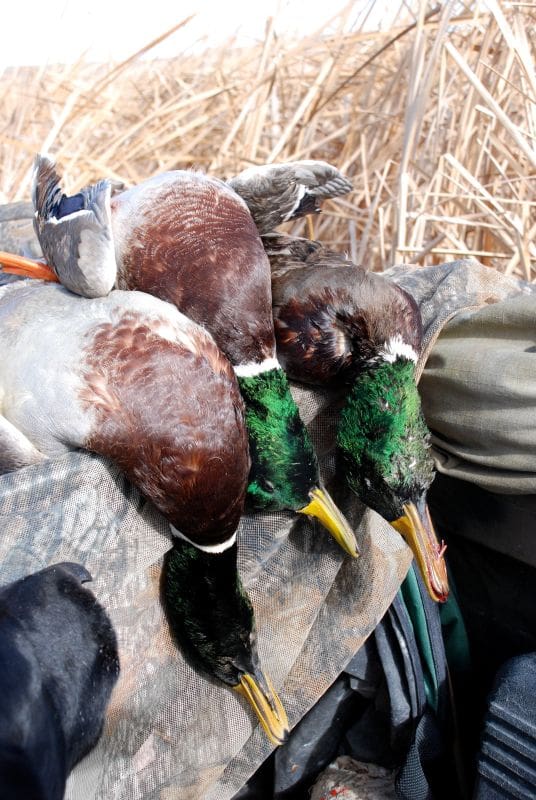
Mallards are king in the Mississippi Flyway. In a typical year, a large percentage of the mallards shot in the flyway are reproduced in the Great Lakes Region. The Mississippi Flyway also sees a big influx of mallards from the Prairie Pothole Region when mallard numbers are high as far east as Michigan. In recent years, fewer and fewer mallards in the mid-continent population seem to be using the eastern portion of the flyway.
Many see the Central Flyway as THE place to hunt mallards, but the harvest in the Mississippi Flyway dwarfs the Central Flyway harvest. Hunters in the Mississippi Flyway harvested an estimated 1,904,000 mallards in 2025 and 1,770,700 in 2024. The 10-year average is estimated at 1,479,000. So, even though mallard numbers are down, the mallard harvest in the Mississippi Flyway was up 28.7% from the 10-year average. In comparison, hunters in the Central Flyway killed an estimated 723,800 mallards in 2024 and 653,300 in 2025.
“Perhaps the biggest story in the Mississippi Flyway is the decline in mallard numbers,” said Coluccy. “The decline has been attributed to the loss of nesting habitat as a result of declining CRP enrollment and continued wetland drainage in the Prairie Pothole Region, poorer quality habitat that remains, and succession of years with poor nesting production and genetics in the Great Lakes. The contributions to the mallard population in the Mississippi Flyway from the Central Flyway have declined significantly.” And yet, Mississippi Flyway hunters enjoyed an exceptional year for mallards in 2025.
The mid-continent mallard population in the Central Flyway numbered 12 million birds as recently as 2015. That number has declined to 5.85 million in 2026, an 11% decline from 2025 and down 21% from the long-term average.
The Great Lakes states have endured a double whammy. Researchers have found that up to 67% of the hen mallards examined during studies in Michigan had genetic lineage from domestic mallards in their blood. As a result, mallards in the Great Lakes region have been dumbed down. They lack the genetics of wild birds and the instincts to nest successfully, which has had a huge impact on the number of mallards produced in the region. It is estimated that mallard numbers in the Great Lakes region have plummeted from more than 1.1 million in 1997 to just over 540,000 in 2026. Ironically, the 2026 USFWS Waterfowl Population Status report showed a dramatic increase in the number of breeding waterfowl found in Michigan versus 2025. The number of breeding ducks jumped sharply to 505,234 ducks, a 250% increase over 2025. Wildlife researchers are skeptical of the total. The 2025 survey numbers were skewed by poor weather conditions and aircraft issues that likely resulted in artificially low totals in 2025. Even with the suspect 2026 estimates, the breeding estimates in the Wolverine State remain 13% below the long-term average. Mallard numbers in Michigan exploded to 141,895 in 2026, up 61% from 2025, but still 54% below the long-term average. Compared to Michigan, 2026 mallard numbers were stable or up in Wisconsin and Minnesota, respectively, and above the long-term average. So far, hunters have not observed the huge increase in mallards during the 2026 season.
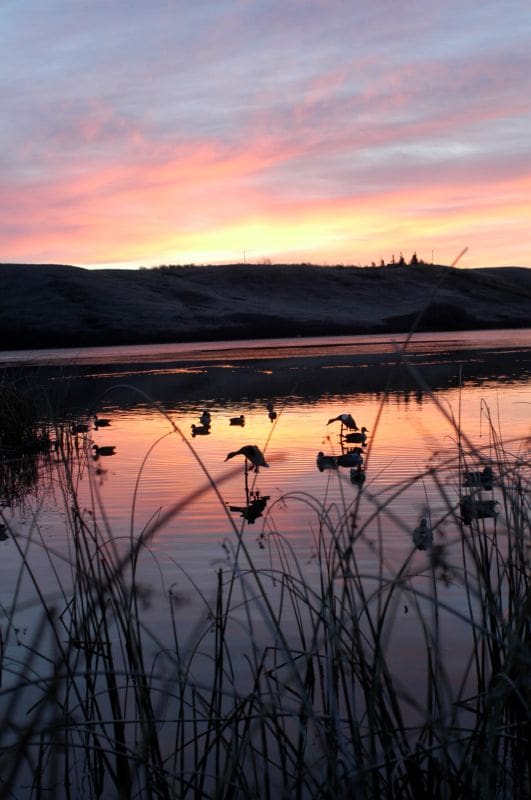
Another issue that has plagued the Mississippi Flyway in recent years is short-stopping. Short-stopping has been an issue for decades since farmers transitioned from small grains to corn and beans. This, combined with milder winters, has pushed ducks farther and farther north as long as they can find open water. States as far north as North Dakota report ducks, especially mallards, spending the entire winter there.
The short-stopping dilemma has been compounded in recent years by mass commercial operations along the flyway’s major rivers that plant and flood corn to concentrate and attract ducks during the fall migration. Although legal, the practice is controversial and has caused a rift in the waterfowl community. Many see the practice as nothing more than glorified baiting. Southern states like Louisiana and Arkansas have seen fewer and fewer mallards because the ducks no longer migrate that far south.
A bright spot for the Mississippi Flyway is Canada geese. Populations of local giant Canada geese remain strong and, in some locations, continue to expand, to the dismay of waterfowl biologists. The number of local Canada geese harvested during the early September goose season exceeds the number of migratory geese harvested during the regular season. In 2024, hunters in the Mississippi Flyway harvested 1,110,100 Canada geese during the early September season and 1,027,300 Canada geese during the regular/late goose season. The Mississippi Valley and James Bay populations that migrate through the Mississippi Flyway differ in their breeding, migration, and wintering ranges and are managed separately. The MVP population breeds mainly in the Mississippi Flyway, while the James Bay flock is confined to eastern Canada along Hudson Bay and James Bay. The two populations take a different route when they migrate down the flyway.

In 2024, researchers estimate the Mississippi Flyway Giant Canada goose breeding population at 1,423,000, and in 2025 at 1,432,000. The Southern Hudson Bay population was 95,000 in 2024 and 89,000 in 2025. The decline in the Hudson Bay/James Bay population is largely attributed to a decline in nesting habitat, driven by an expanding snow goose population. Preliminary estimates of Canada goose harvest in the Mississippi Flyway during the 2024–2025 season were estimated at 1,120,700, up 9.1% from the 1,027,300 harvest in 2024 and more than 33% above the long-term average. Canada goose harvest by state in 2024 was IL (140,829), MI (167,809), MN (149,423), OH (128,413, and WI (141,923).
While opportunities for many Mississippi Flyway duck species have declined, sea ducks have exploded and continue to grow exponentially, especially long-tailed ducks. Waterfowl hunters harvested an estimated 17,100 long-tailed ducks in 2025, up from 7,000 in 2024, a 144% increase. The 2025 harvest was well above the long-term average of 12,000. Some placed the 2025 harvest numbers closer to 30,000. The number of eiders harvested quadrupled, up a whopping 322% over the 10-year average. More hunters are gearing up to hunt sea ducks, especially on large bodies of water like Saginaw Bay, Lake Erie, and, to a lesser extent, Lake Michigan and Lake Huron.
Saginaw Bay
“Over the last five to 10 years the long-tail harvest has more than doubled,” said Kali Rush, a waterfowl specialist with the Michigan Department of Natural Resources, “and the majority of the harvest is on Saginaw Bay. We don’t have much in the way of harvest or population estimates for long-tails. We get very few wing returns for long-tails.” Wintering long-tail populations have exploded on the Great Lakes since the 1990s. Experts attribute the increase to the arrival of zebra mussels and a moderating climate.
Rush said Saginaw Bay long-tails are developing a following. More and more hunters are investing in boats and equipment to chase long-tails. Guides targeting long-tails are commonplace these days. Guides and freelancers hunt from boat blinds and deploy layout boats. Popular launch sites include Linwood on the west side of the Bay and Sebewaing on the east. Linwood offers quicker access to the 20- to 30-foot depths long-tails generally frequent.
Hen and juvenile long-tails begin showing up in October, but peak numbers arrive in November. Trophy drakes tend to hang in deeper water far from shore. Late November and early December are the best times to procure a drake for the wall. There’s no need to go to Alaska to check off the old squad on your bucket list.
Arkansas
Arkansas is a Mecca for waterfowl hunting. Its rice fields and flooded timber hunting are legendary, but things have changed in recent years. “It’s not like it used to be,” admitted avid waterfowl Tod Connor. “Guys occasionally still shoot limits of mallards in the timber, like on opening day and in the days immediately following the splits, but it’s not an everyday occurrence like it used to be. We definitely don’t see as many mallards as we used to.”
A Michigander, Connor married an Arkansas girl and got to experience Arkansas duck hunting via holy matrimony. He said the decline in mallard numbers in the mid-continent population, and the effort of short-stopping in the northern states, has been noticeable in the Natural State. “Hunting in the timber can be good early when you have a lot of wood ducks around,” he said. “But when the mallards don’t show up you have to move to the rice fields. We shoot a lot of pintails, widgeon, shovelers then and even divers like ring-necks and bluebills. There are a lot of teal.”
A succession of dry years hasn’t helped the timber hunting either. Hunting timber relies heavily on the levels of the White, Black, and Cache rivers. If it gets cold and freezes the flooded timber, hunting on the rivers can be surreal.
Stuttgart is the epicenter for waterfall hunting in Arkansas. Located 50 miles southeast of Little Rock, Stuttgart is a must-visit for any serious waterfowler. The acknowledged Duck Capital of the World, Stuttgart hosts the World Champion Duck Calling Contest and Wings Over the Prairie Festival.
Exceptional hunting exists near Stuttgart. The Bayou Review Wildlife Management Area is considered to be one of the best public hunting locations in Arkansas. At 33,700 acres, Bayou Review is the largest state-owned water management area.
Bald Knob NWR spans 12,000 acres of former rice fields and winters a significant portion of the Mississippi Flyway’s pintail population. The refuge lies just north of Stuttgart in White County, off Highway 367.
George H. Dunkin Jr. Bayou Meto Wildlife Management Area is the premier waterfowl destination in Arkansas. Spanning 33,832 acres, about 13,000 acres of Bayou Meto is flooded timber habitat and a prime wintering destination for waterfowl. Hunting pressure is intense. On opening day and after the splits, expect to be competing with 1,500 to 2,000 other hunters. On the slow days, you’ll still encounter 350 waterfowlers. Hunting success depends on the mast crop and water levels.
Upper Mississippi National Wildlife and Fish Refuge
The Upper Mississippi National Wildlife and Fish Refuge offers some of the best public waterfowl opportunities in the country. The refuge extends from Minnesota to Illinois and is a major fall migration route for waterfowl.
“95% of the refuge is open to hunting,” said refuge manager Sabrina Chandler. “It’s really a freelance heaven for waterfowlers.” The area is a huge draw for diving ducks. Up to 50% of the continent’s canvasbacks and 40% of the total duck population in the Mississippi Flyway can be found on the refuge at any given time. The open water attracts a huge number of diving ducks drawn to the prolific wild rice beds. Puddle ducks of every species imaginable frequent the marshlands and floodplain forest adjacent to the river. “We’re not a mallard-heavy refuge,” said Chandler. ”They’re certainly available, but most of the focus is on diving ducks.” The stunning bluffs covered in hardwood forests provide a striking backdrop.
There are 40 boat ramps strategically positioned on the pools along the river. The pools, numbered 4 through 14, are created by dams or locks and are technically huge lakes. This is big water subject to high winds and inclement weather that demand respect. “Pool 9 probably sees the most hunting pressure, followed by Pool 8,” shared Chandler.
Guide Matt Ellis (Dabblers & Divers Guide Service [email protected]) hunts mainly pools 8 and 9. “The cans tend to show up in late October through early November,” Ellis said they typically set up near an island (it’s illegal to hunt open water) and shoot a hodgepodge of divers and puddle ducks. Limits are the norm.
The Upper Mississippi River Wildlife Refuge offers serious waterfowl hunters one of the best freelance waterfowl hunting opportunities in America.