Please ensure Javascript is enabled for purposes of website accessibility

Mag Mallards 30% off

Through 10/6 · Priced as marked

Mallards first · Every puddler and diver after

Duck Hunting

A mallard makes up its mind in a few wingbeats. Read the wind, set where they want to land, and put out duck hunting decoys that look real and keep looking real after a season of abuse. Here's how mallards work a spread, four setups that finish them, and the Hardcore™ decoys built for each one.

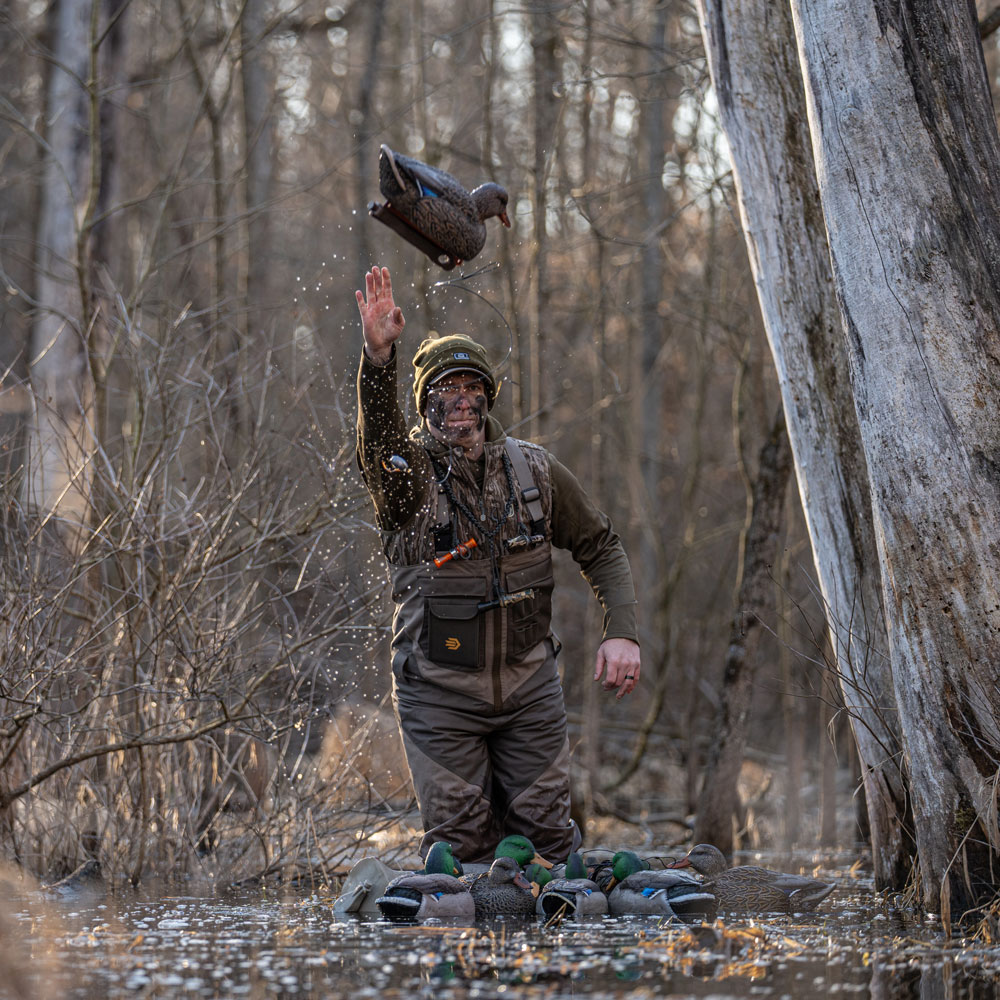
Hunter tossing a mallard decoy into a cattail marsh at sunrise with Hardcore mallard decoys on the water Hunter tossing a mallard decoy into a cattail marsh at sunrise with Hardcore mallard decoys on the water

Up to 20% off decoys

Bulk pricing on 10 or more of the same pack.

Free shipping over $399

Continental US only.

Try one first

Single decoys ship free. Hold one before you buy a spread.

FowlFlex™ Rugged Series

Built to take a beating, season after season.

Know the bird

How mallards work a spread

The mallard is the duck most hunters build a spread around. They feed in the water and in the field, they show up in every flyway, and they get harder to fool every week of the season. Get the mallard right and most other puddle ducks fall in line.

5.9M

Breeding mallards in the 2026 USFWS survey, the lowest count since 1993. Fewer birds means every flock that looks at your spread counts.

Source: USFWS via Ducks Unlimited

12 to 24

Puddle duck decoys is a good range for most hunters. Under 18 is about right if you're hunting solo.

Source: Project Upland

1 to 2 days

New ducks start trickling in a day or two ahead of a major cold front. The best shooting often comes on the clear, cold day after it passes.

Source: Ducks Unlimited

Wind

They land into it

Ducks want to finish with the wind in their face. Put the wind at your back or across your shoulder, set the decoys out front, and leave an open hole inside 30 yards so birds land right in range.

Weather

Fronts move birds

Fresh mallards ride the wind south ahead of cold fronts and stop when they hit a headwind or the wind dies. Watch the forecast, not the calendar.

Food

Water and field

Mallards are dabblers. They tip up in shallow water and fly out to cut grain to feed on what the combine left behind. That's why the same bird gets hunted from a marsh, a timber hole and a dry cornfield.

Late season

Cold changes the schedule

When it gets cold, mallards wait for the sun to loosen up frozen fields before they feed, then head back to the roost earlier to keep their water open. Leave the roost alone. Hunt the feed and the flight lines.

Movement

Still decoys flare birds

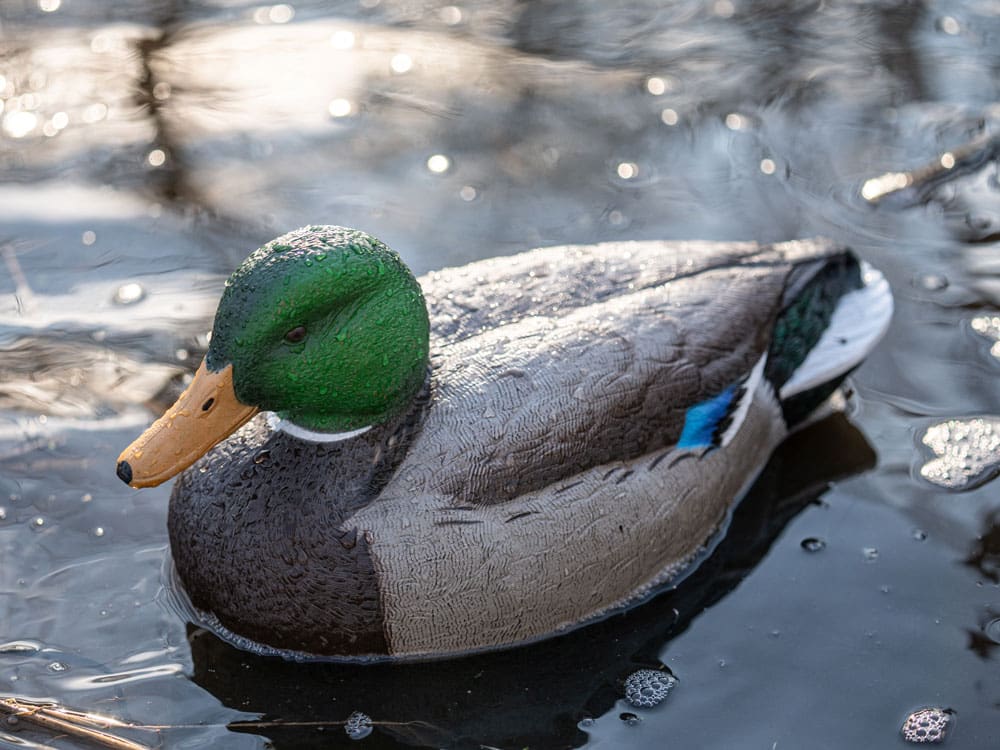
Real ducks are never perfectly still. On a calm morning a dead-flat spread is the first thing a wary drake notices. Keels that ride the ripple, a jerk string and a couple of feeder butts put life back in the hole.

Pressure

Realism matters more every week

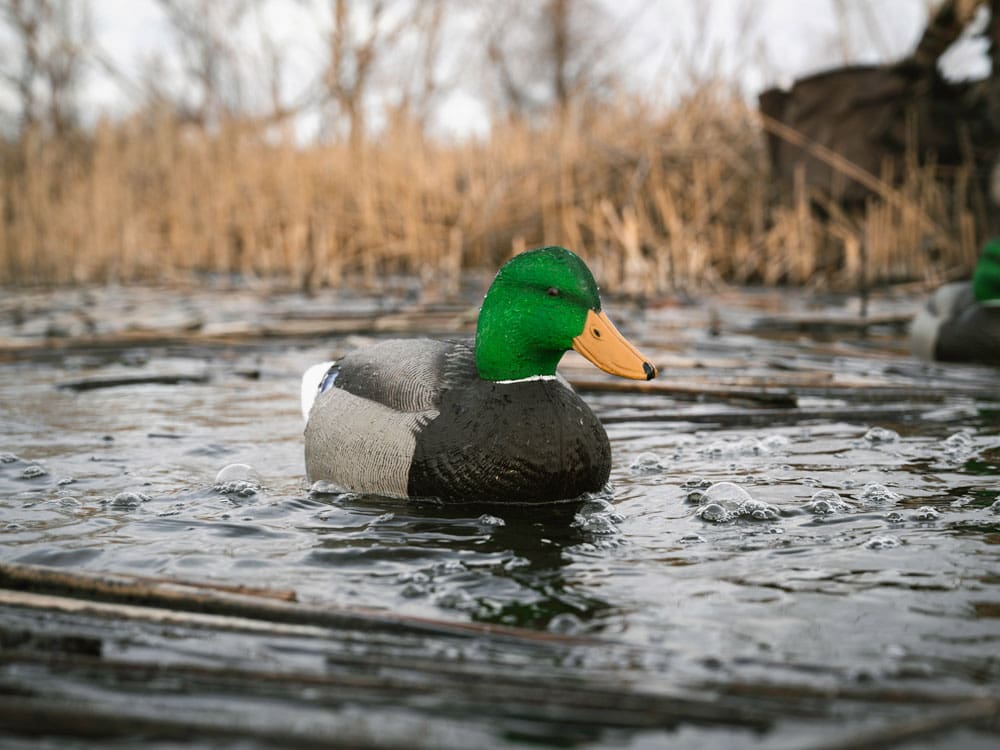
By late season, the birds looking at your spread have been looking at decoys since they left Canada. Shine, bad paint and cartoon poses get noticed. True-to-life paint and flocked drake heads hold up to that kind of look.

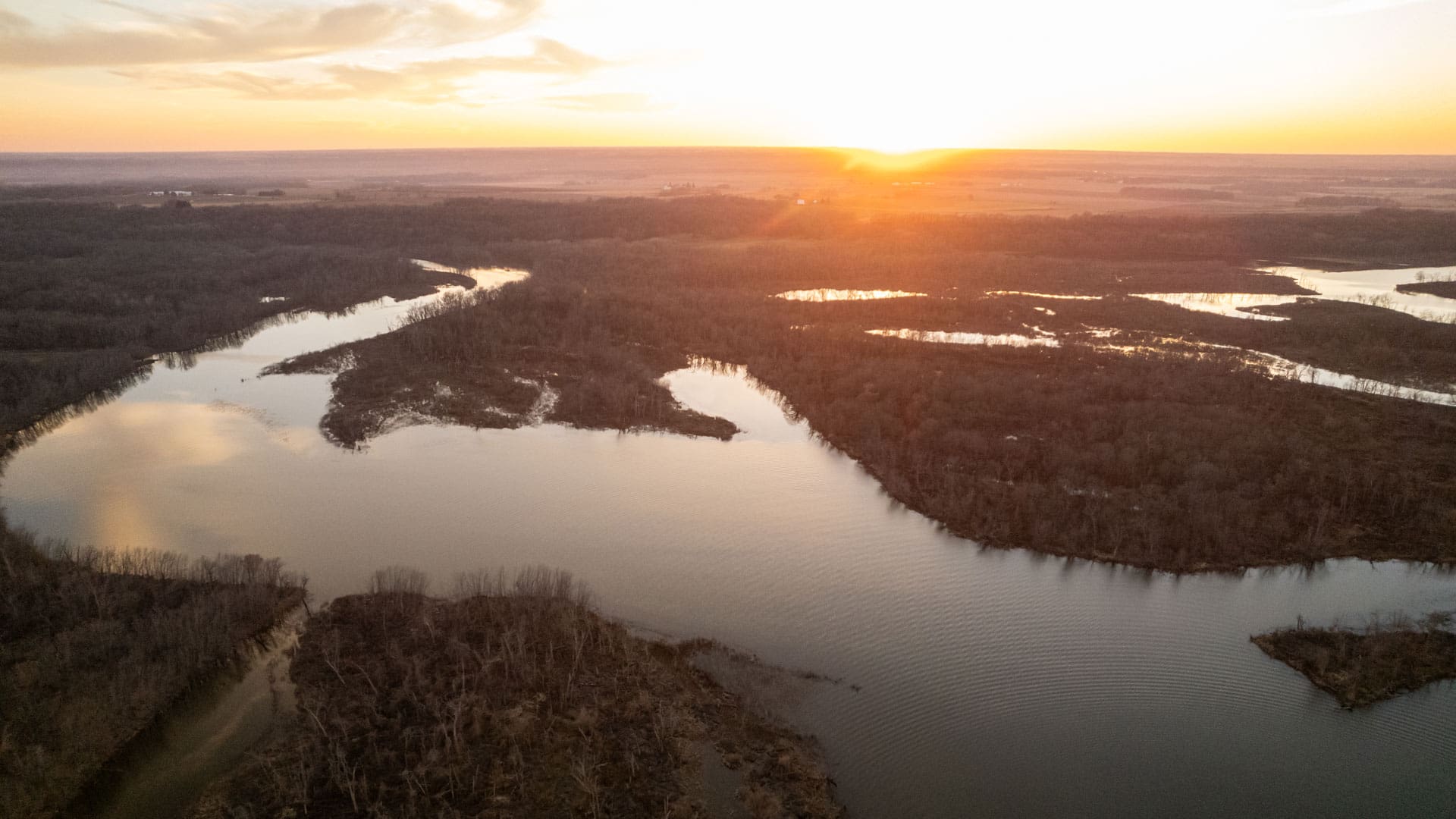
Aerial view of river backwaters and flooded timber at sunrise

Early to late

One season, three different hunts

The birds change from opener to the last week. Your spread should change with them.

Early season

Small spreads, local birds

Teal and wood ducks come through first, and most of the mallards around are local birds that know every pond. Run a small, natural spread, a dozen or two mallards with a few teal mixed in. Calm, warm mornings make movement matter.

Put out

Rugged Series Standard Mallards, Blue-Winged Teal, Wood Ducks, a jerk string.

Mid season

The migration shows up

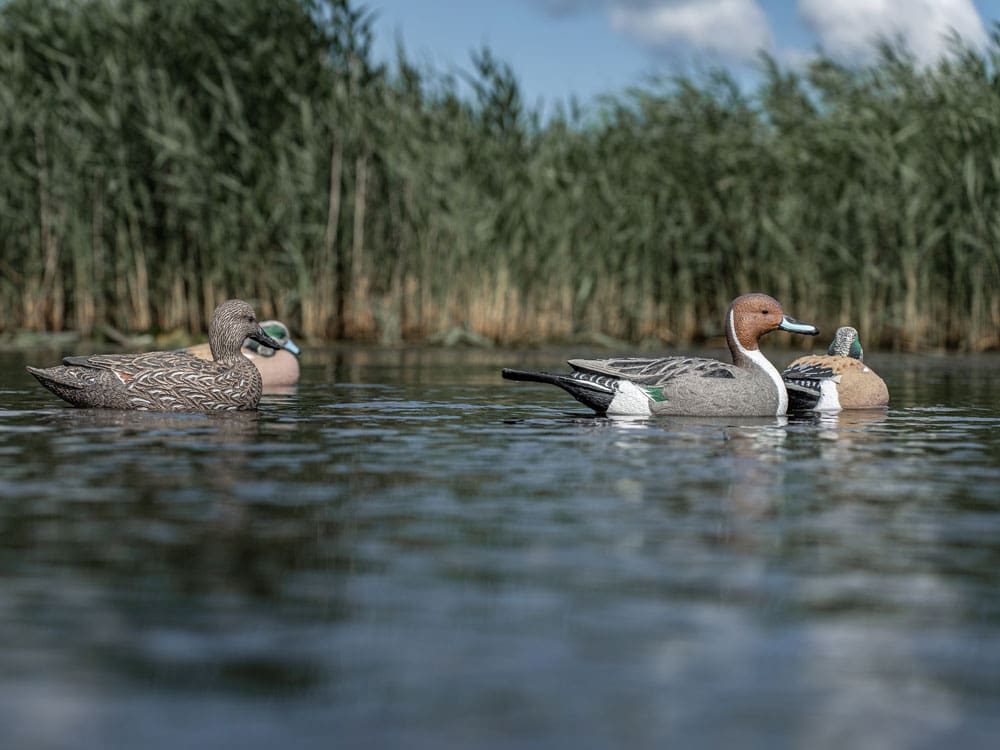
Cold fronts push fresh mallards down the flyway, mixed in with gadwall, wigeon and pintails. Fresh birds are looking for company, so this is when you add decoys and add species.

Put out

More mallards, Gadwall, Pintails or the Whistler Pack, flocked drake heads.

Late season

Big birds, hard looks

Cold, ice and pressured birds. Mallards are feeding in cut grain and loafing on the last open water. Go big and visible on open water, go tight and realistic in the field, and keep something moving.

Put out

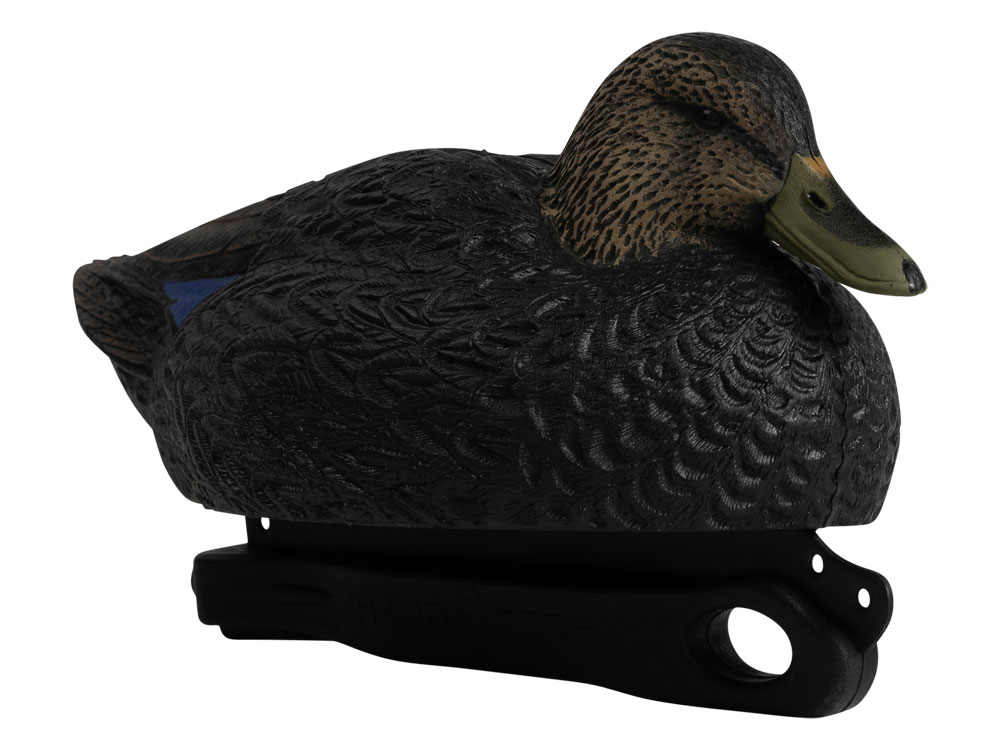
Mallard Magnums, Magnum Redlegs with flocked heads and late-season paint, Magnum Black Ducks in the eastern flyways, Full Body Mallards on TruMotion™ 2.0.

Spread setups

Four setups that finish mallards

Different water, same rules. Ducks land into the wind, they want an open hole to land in, and they trust a spread that looks like it's feeding and resting. Here's how to set each one.

WINDBLIND IN COVERJerk string + feeder buttsLANDING HOLEKeep it open. Inside 30 yards.THE TAILruns downwind,pulls birds inTHE RAFTupwind, near the blindBIRDS FINISH INTO THE WINDapprox. 30 yards
Mallard drake
Mallard hen
Feeder butt
Blind
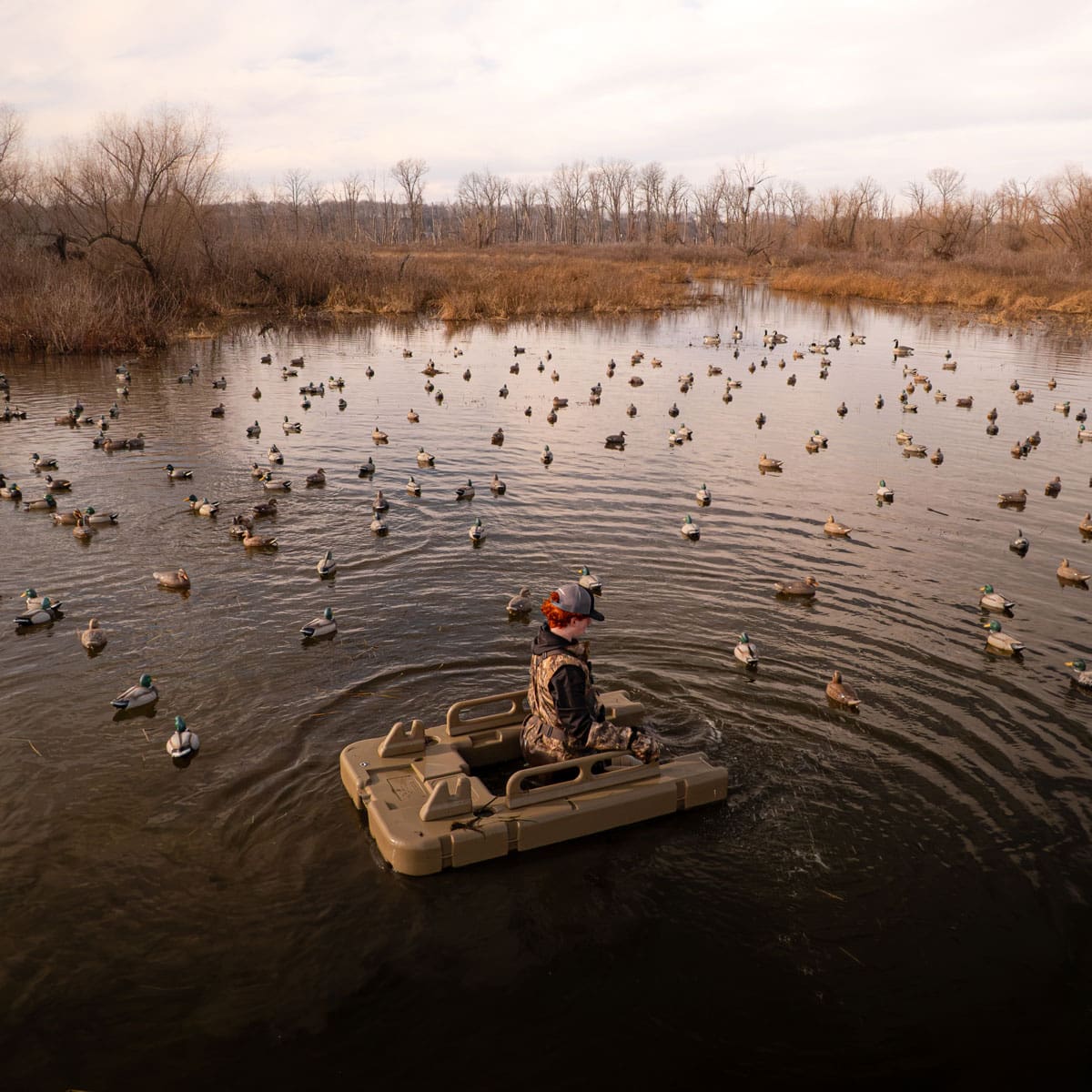
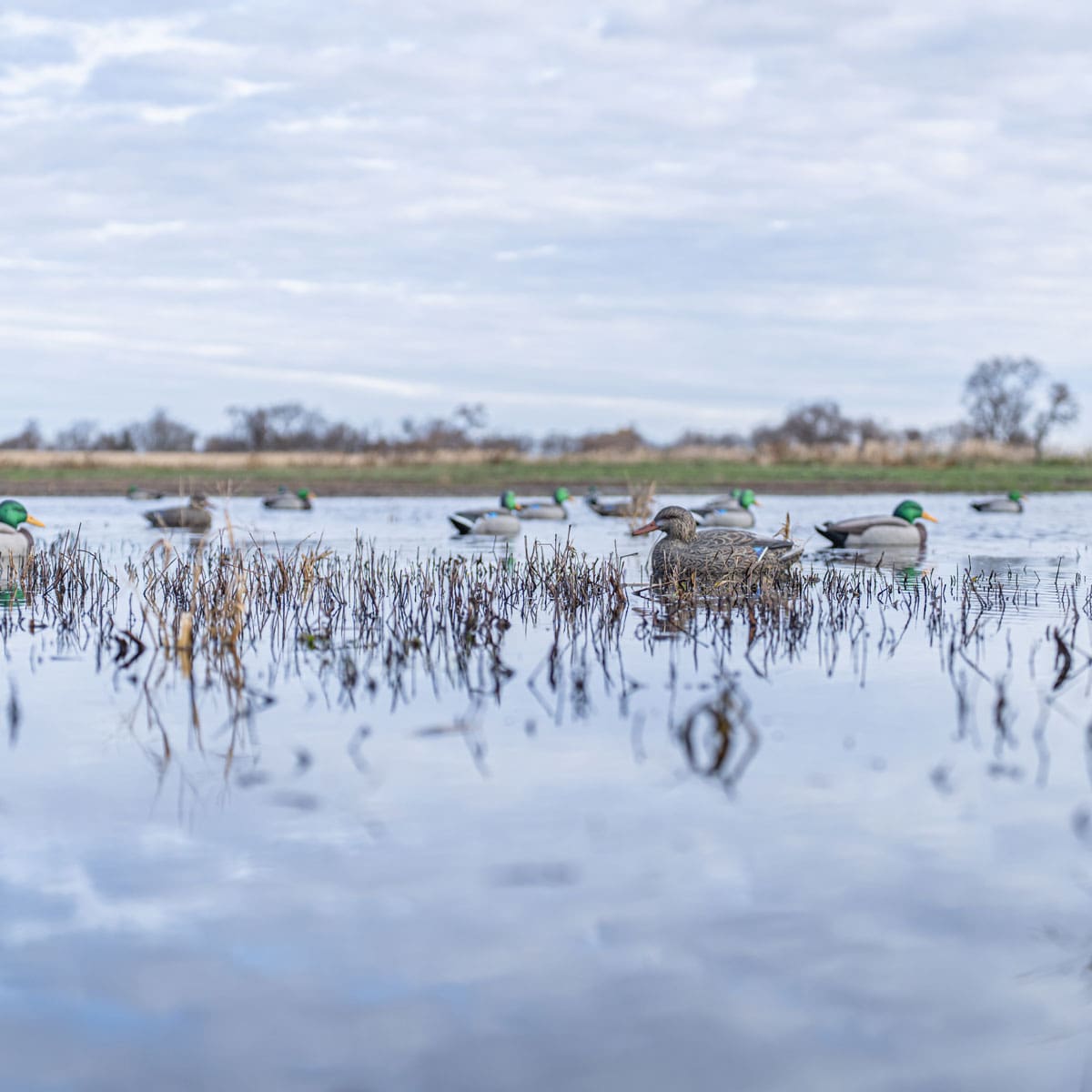
Hardcore mallard floater decoys spread across a flooded marsh

Setup 1

Marsh and small water: the J-hook

The go-to puddle duck set. Bunch your mallards upwind in a loose raft near the blind, then run a tail of decoys downwind to form a J. Birds follow the tail in and land in the open hook in front of you. A dozen and a half to two dozen decoys covers most potholes and marsh holes.

Two Standard Mallard 6-packs and a Flocked Head Drake 6-pack gets you 18 decoys and 12 green heads.
WINDLAYOUT BLINDSLANDING HOLELeave the middle openOPEN END FACES DOWNWINDBIRDS FINISH INTO THE WINDFEEDERS DO THE TALKINGEach Full Body 6-pack is4 feeders and 2 actives.approx. 30 yards
Full body feeder
Full body active
Layout blind
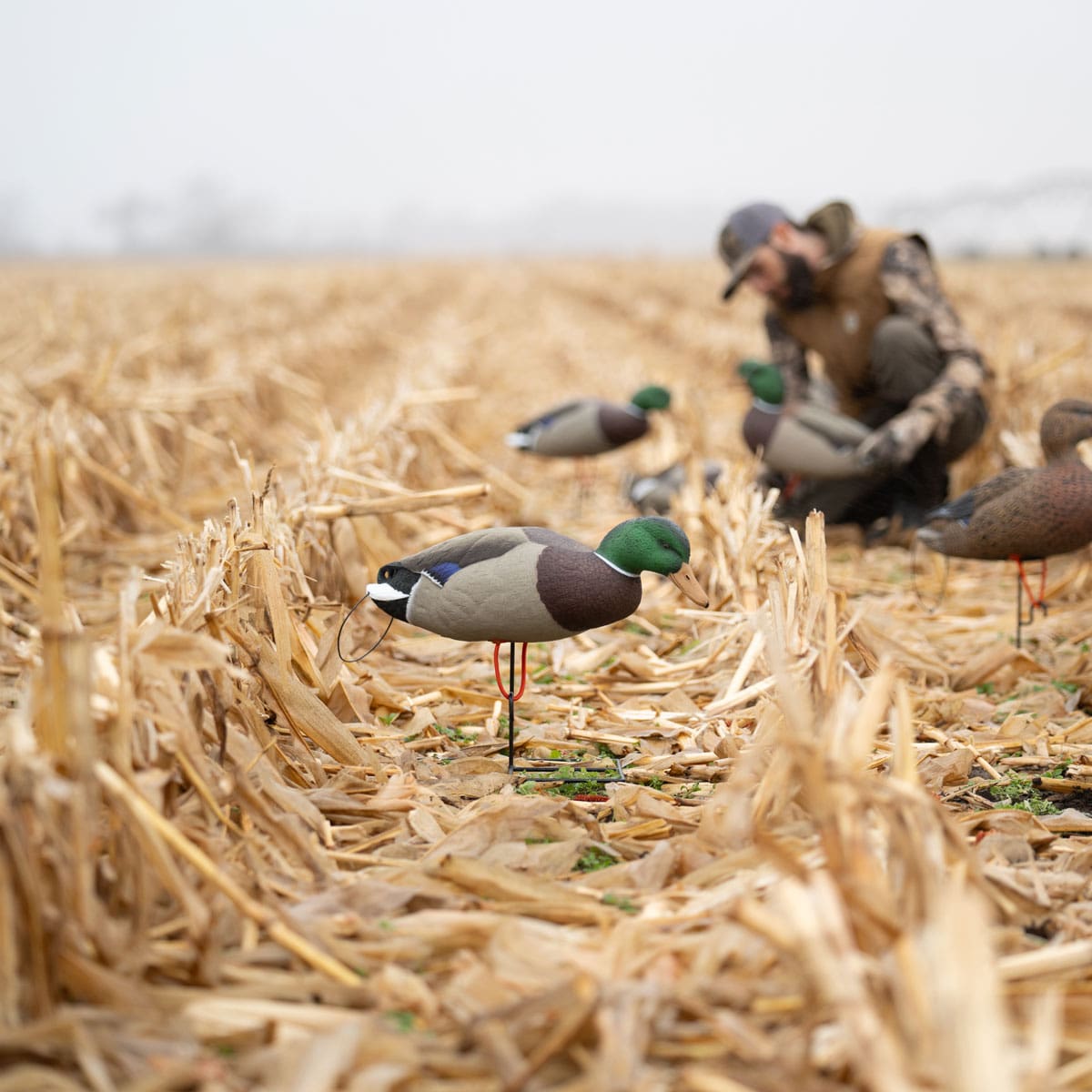
Hunter setting Hardcore Full Body Mallard decoys in a cut cornfield

Setup 2

Dry field: the open U

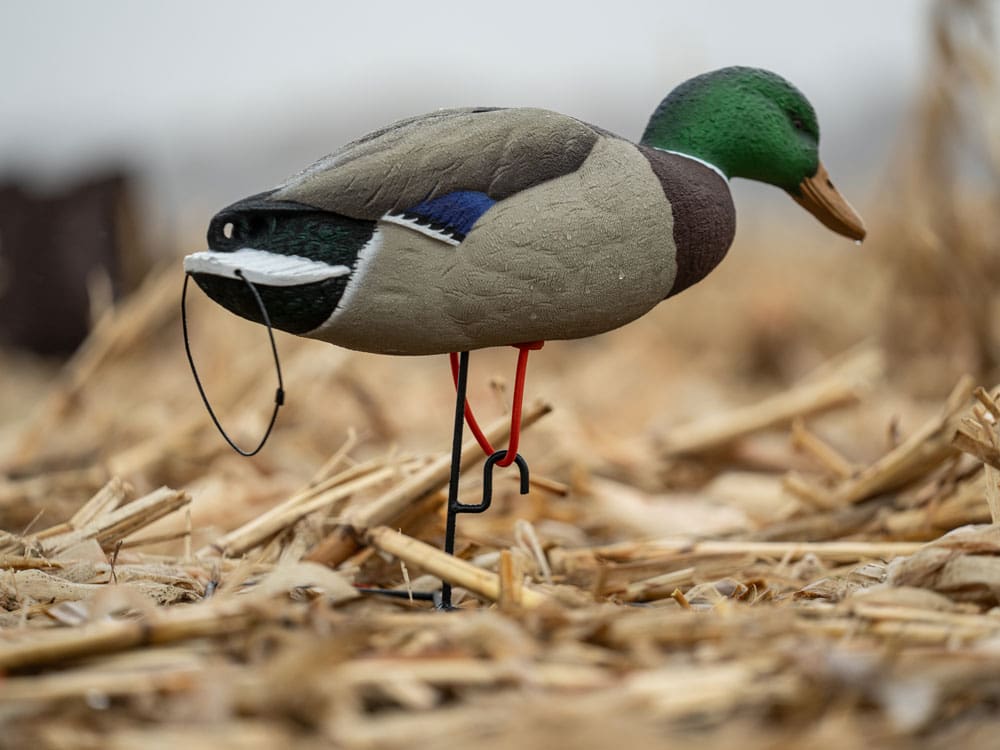
Field mallards want to see birds that are head-down and feeding. Set full bodies loose in a U that opens downwind, mostly feeders, with layout blinds tucked at the closed end. Leave the middle open. Start with a couple dozen and add more as the birds tell you to.

Each Full Body Mallard 6-pack is 4 feeders and 2 actives on TruMotion™ 2.0 stakes.

HUNTERSin the shadows, against the trunksHOLE IN THE CANOPYSet where the sun hits the waterBIRDS CIRCLE, THEN DROP INKEEP THE WATER RIPPLINGA calm timber hole looksdead from above.
Mallard drake
Mallard hen
Tree trunk
Hunter
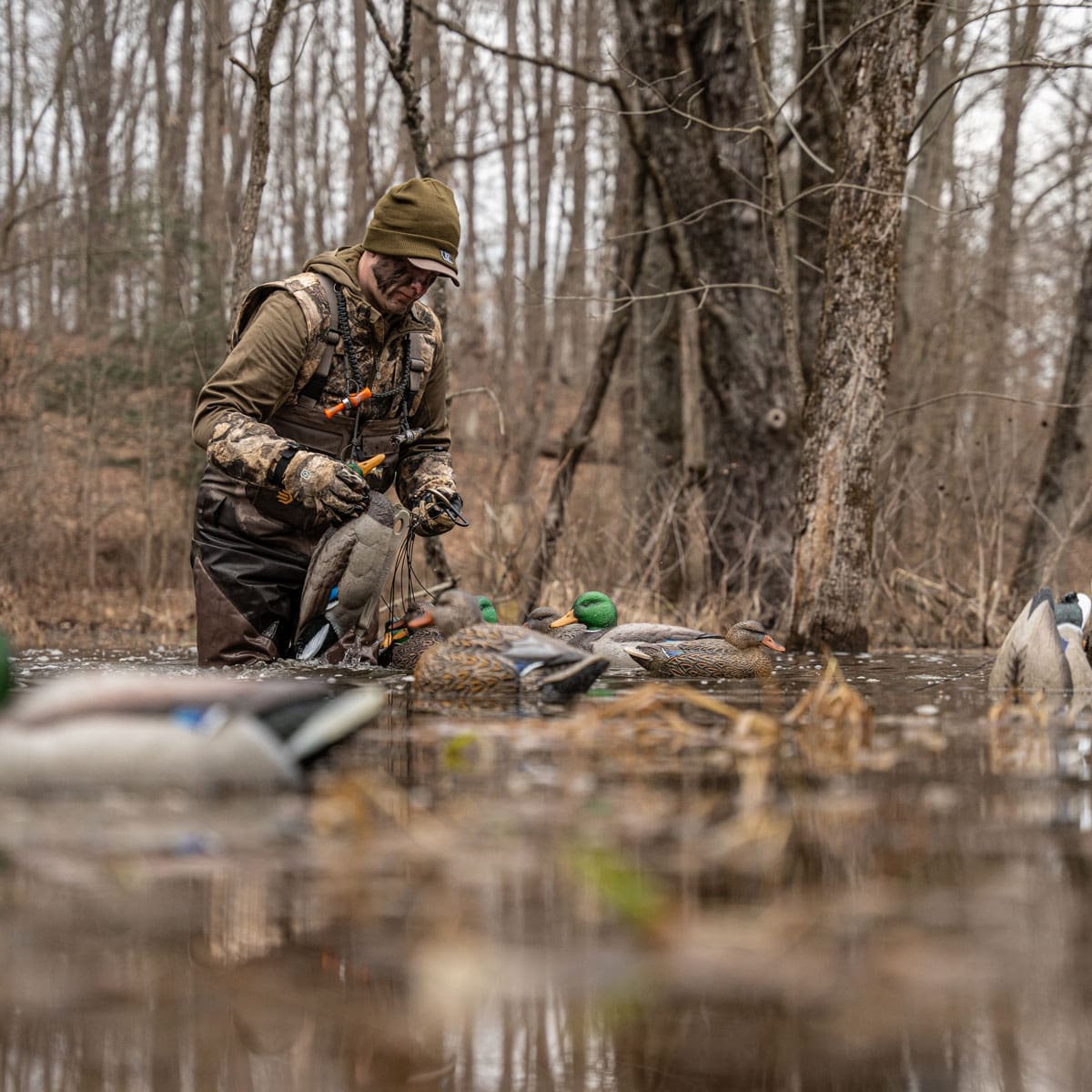
Hunter setting Hardcore mallard decoys in flooded timber

Setup 3

Flooded timber: small and moving

Timber birds drop through a hole in the canopy, so you hunt the hole, not the whole woods. A dozen or so decoys in the open water where the sun hits is plenty. Stand against the trunks on the edge of the hole and keep the water moving, because a calm timber hole looks dead from above.

Two Standard Mallard 6-packs. That's the whole rig.

SHORELINE COVERSHALLOW EDGEWINDBOAT BLINDMALLARD PODLONG LINEpast 75 yards,offset to the windLANDING HOLEBetween the raft and the lineBIRDS FOLLOW THE LINE INapprox. 30 yards
Diver
Mallard drake
Mallard hen
Boat blind
Drone view of a large duck decoy spread on open water around a boat blind

Setup 4

Big water: long line and a mallard pod

On big water, getting seen wins. Run a long line of divers out from the blind, past 75 yards and offset to the wind, to pull birds in from a distance. Raft the bulk of the divers near the blind and set a separate pod of mallards on the shallow edge. Birds follow the line into the hook. Big-water diver spreads often run 100 decoys or more.

Foam-filled Diver Packs for the line and the raft. Mallard Magnums for the pod, so it gets seen from a long way off.

Build the spread

Five steps to a mallard spread that works anywhere

Start with a core of good mallards, then add size, motion and variety as the season and your water call for it.

Hunter wading out with an armful of Hardcore mallard floater decoys

1

Start with a core of standard mallards

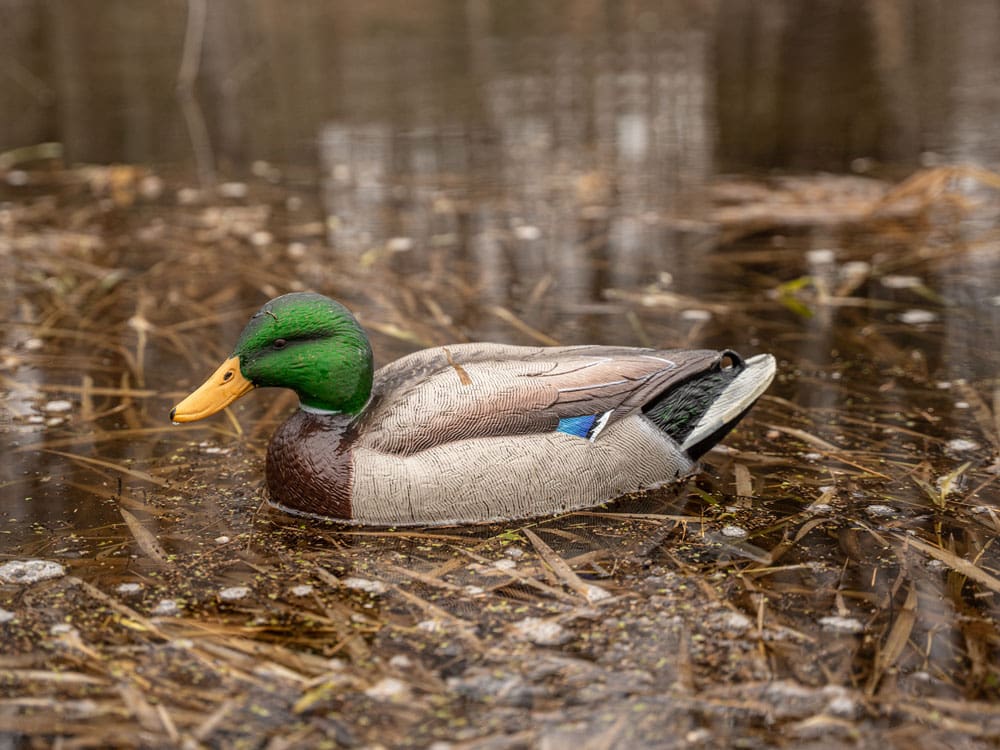
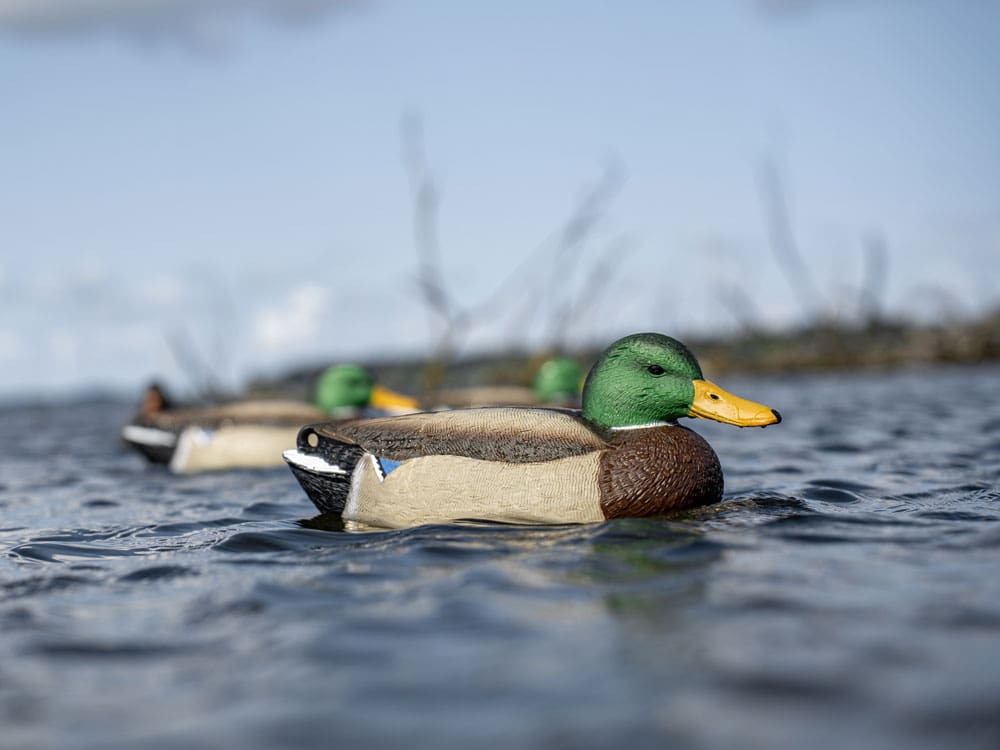
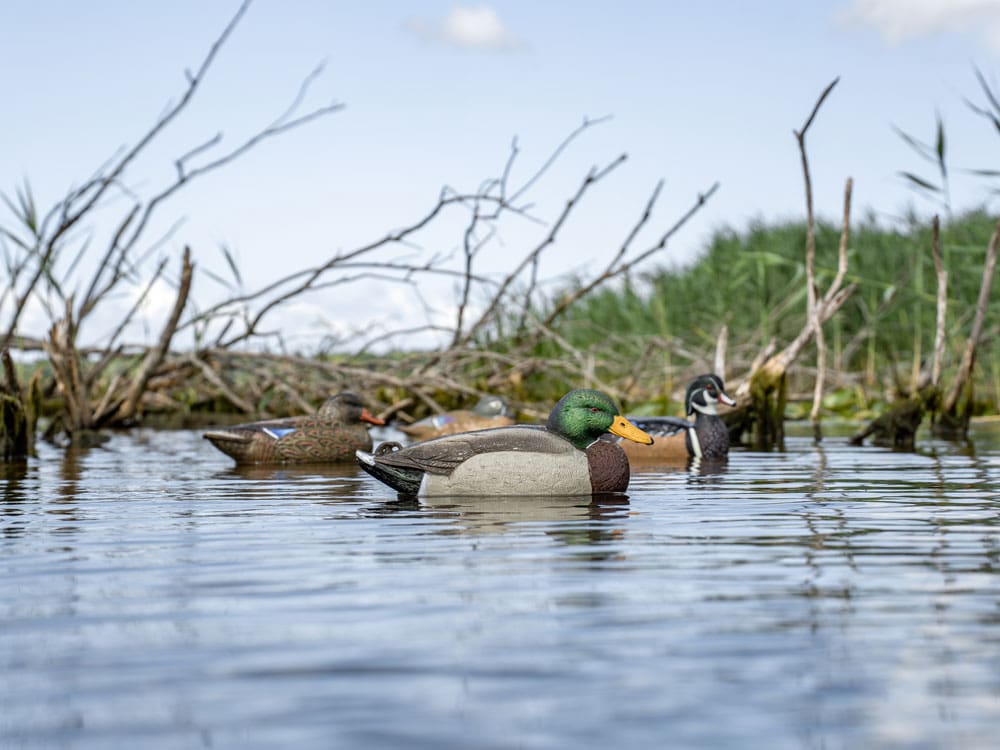
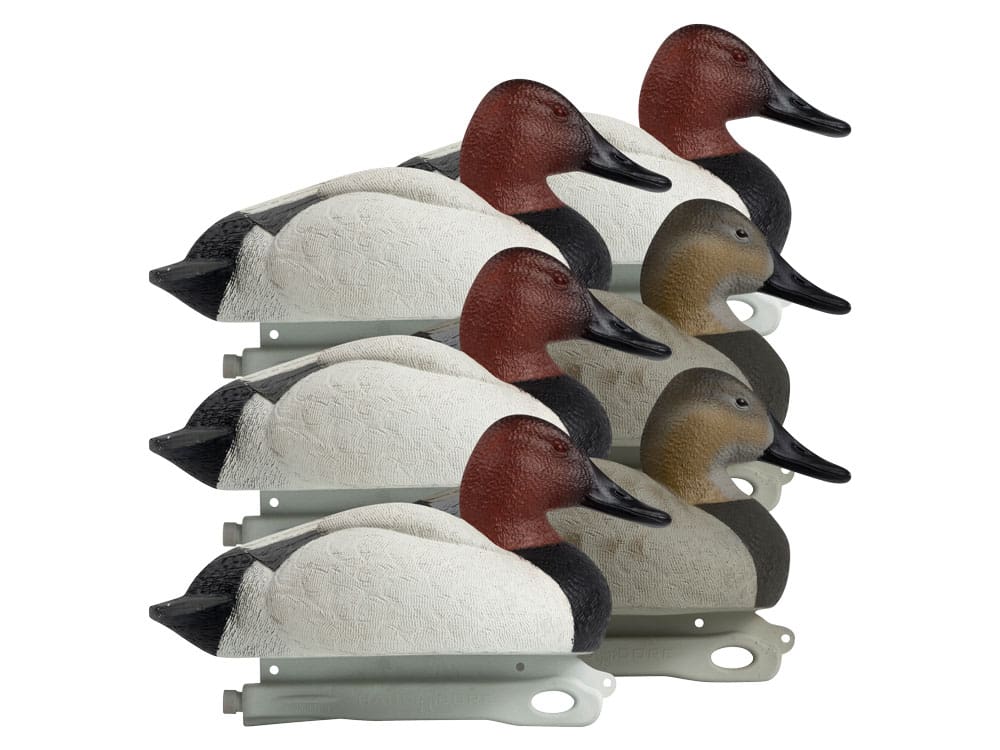
The Standard Mallard 6-pack is the foundation. You get 2 active drakes, 2 resting drakes, a relaxed hen and a resting hen, 15.5" long, riding the WhaleTail™ keel. Two or three packs covers most marsh and timber hunts.

The everyday decoy. 4.9 stars across 36 reviews.

Rugged Series

Standard Mallard Duck Decoys, 6-pack

$89.99

★ 4.9 (36)

Shop now

2

Add flocked heads where birds look hardest

The Flocked Head Drakes pack puts flocked heads on the drakes. Flocking takes the shine off, and that matters most on bluebird days and late birds that have seen it all.

Same 6-pack lineup, with the drakes upgraded.

Rugged Series

Standard Mallard Floater Decoys, Flocked Head Drakes

$99.99

★ 4.7 (31)

Shop now

3

Go magnum for visibility

Oversized decoys get seen from farther out, which matters on big water, crowded marshes and gray late-season days. The Mallard Magnum is 18" long with six one-piece poses, including a feeding drake. The Redlegs pack adds flocked heads and brighter late-season paint.

Run a group of magnums in the middle of a standard spread as your confidence birds.

Rugged Series

Mallard Magnum Duck Decoys, 6-pack

$119.99

★ 4.9 (20) · Redlegs ★ 4.8 (34)

Shop now

4

Put motion in the hole

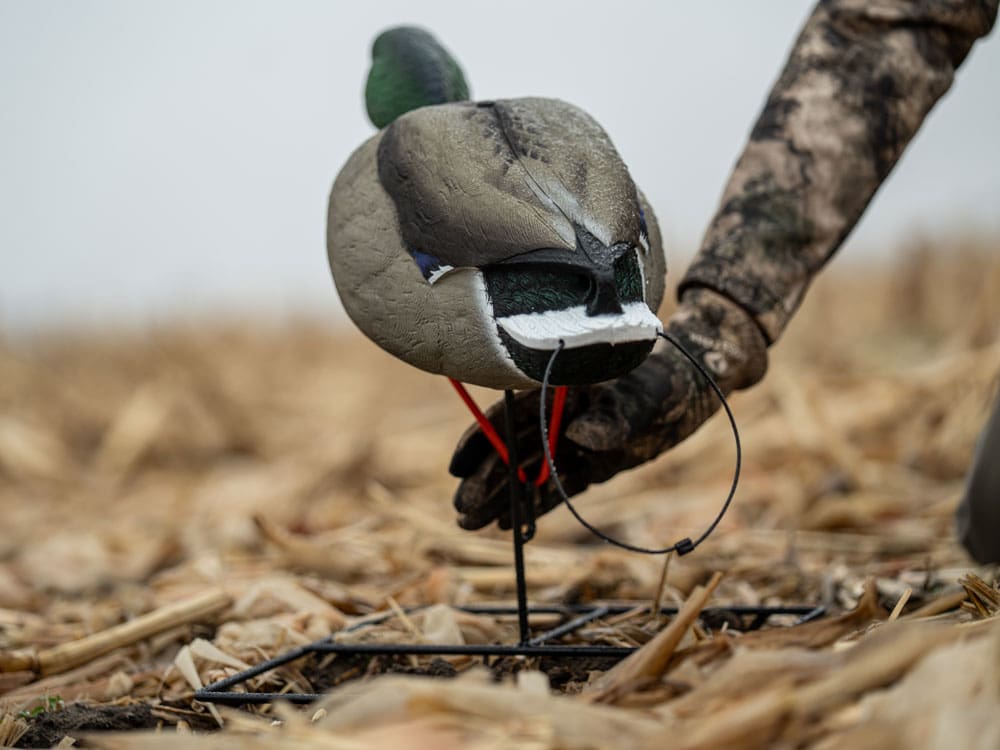
A still spread on a calm morning is a dead spread. Every Hardcore duck floater rides the WhaleTail™ keel, which moves with very little current. Add a couple of Feeder Butts on a jerk rig and the hole looks like birds are working it.

Cheapest upgrade on this page, and the one most hunters skip.

Field Series

Mallard Feeder Butt Duck Decoys, 1 drake + 1 hen

$29.99

★ 4.7 (3) · + Snap Back Jerk String $34.99

Shop now

5

Mix species, then take it to the field

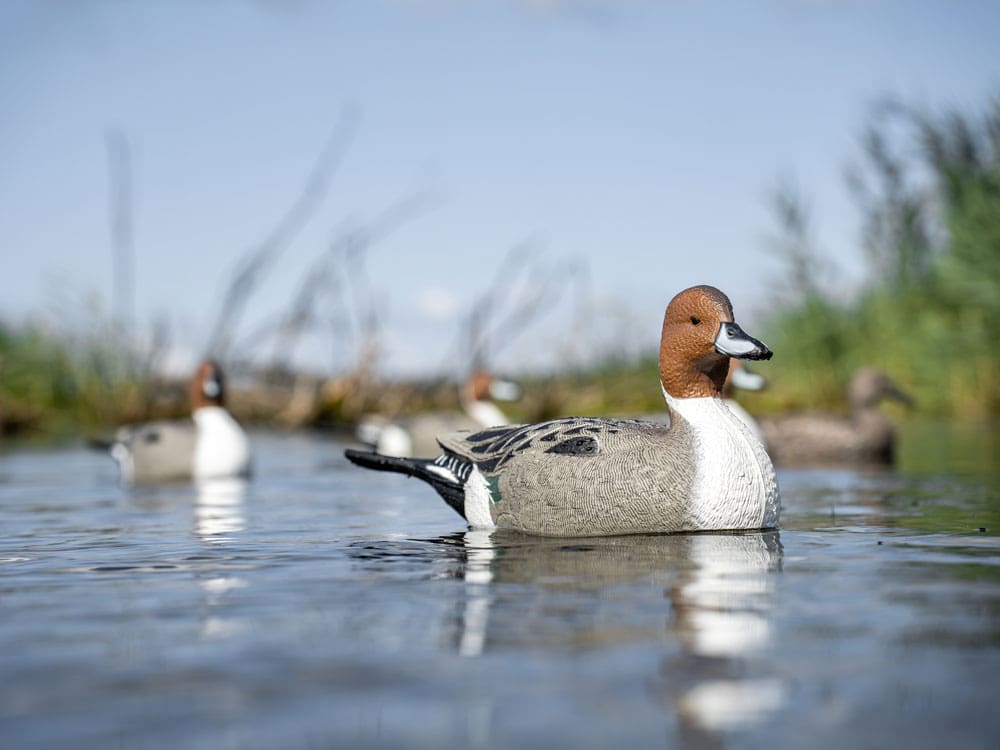
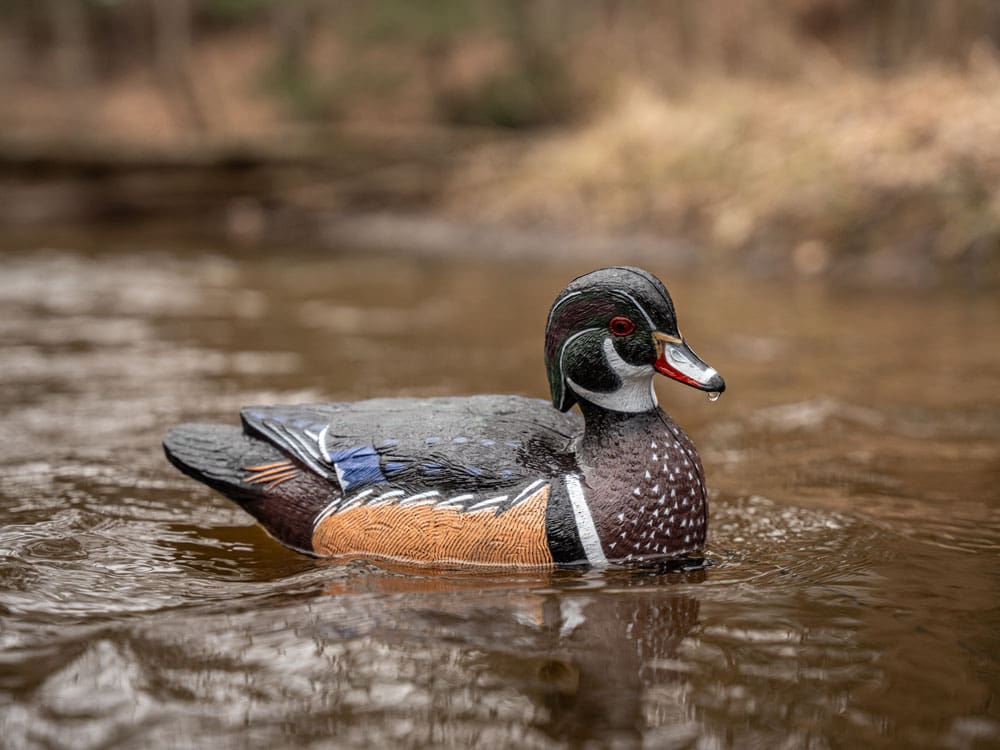
Real flocks are mixed. Run a few teal early, gadwall, wigeon and pintails through the middle of the season, and divers on big water. The Marsh Pack gives you a mallard, wood duck and wigeon pair in one box. When the birds move to cut grain, Full Body Mallards on TruMotion™ 2.0 stakes take the same look to the field.

Variety reads as safety to a flock that's looking for company.

Rugged Series

Full Body Mallard Duck Decoys, 6-pack with TruMotion™ 2.0

$189.99

★ 4.6 (5) · 21" long

Shop now

Why Hardcore

Built to take a beating

Duck decoys get thrown, dragged, stepped on, iced in and dumped in the bottom of the boat. Ours are built for that, and built to look like real birds while it happens.

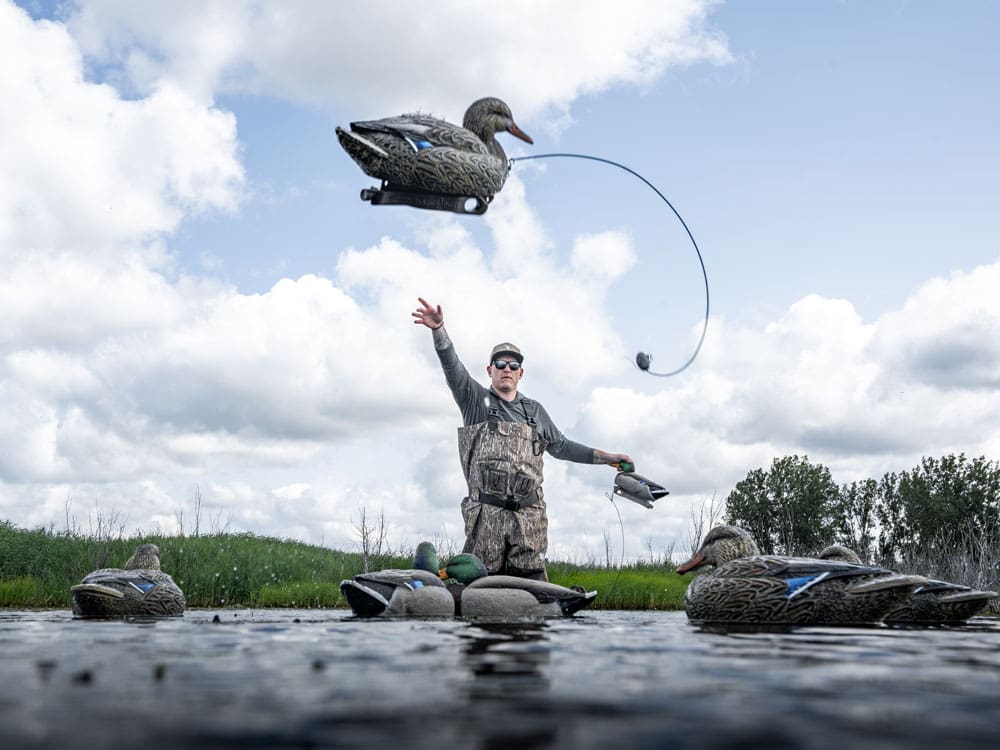
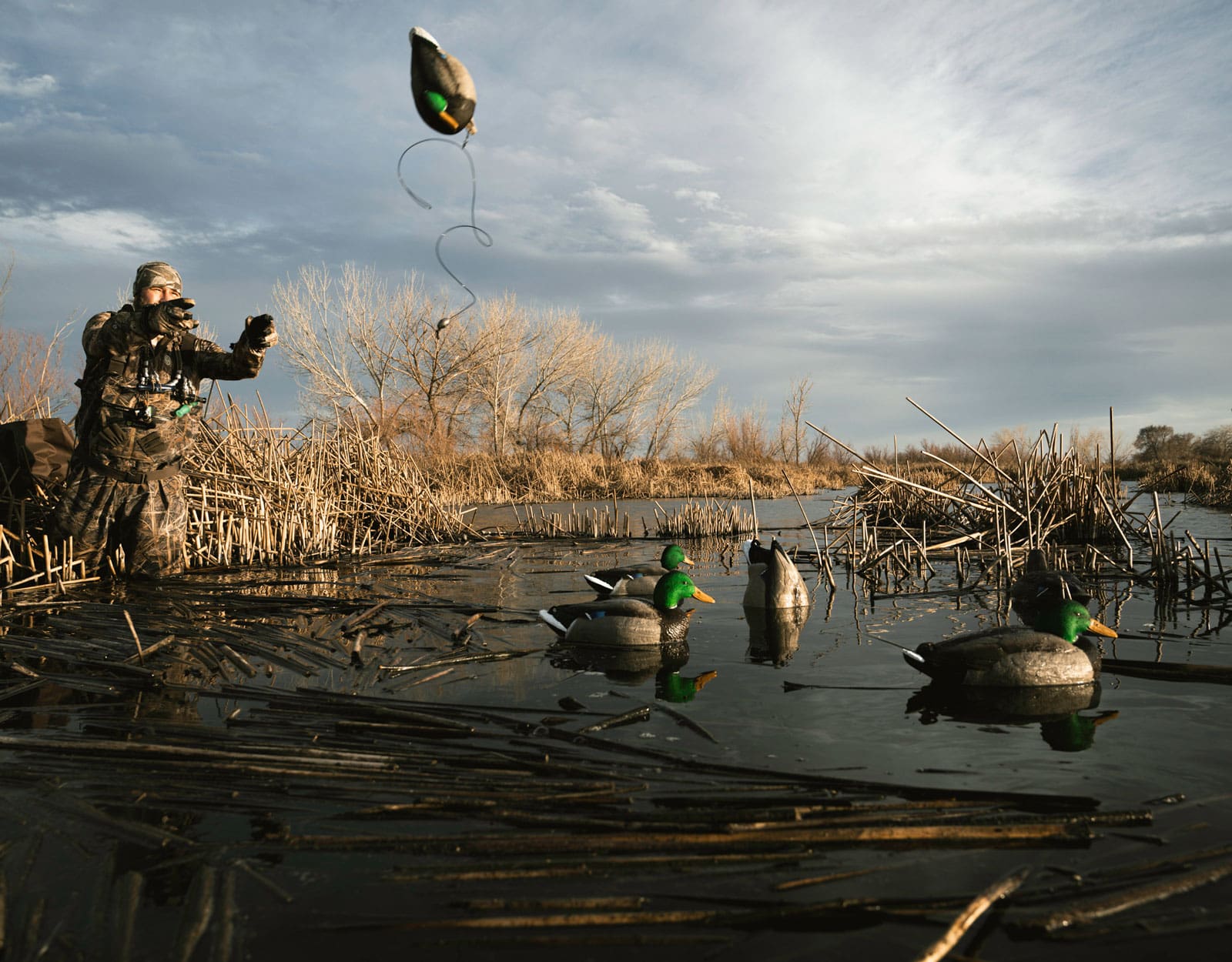
Hardcore hen mallard decoy in mid-air as a hunter throws it out on its rig

FowlFlex™

Rugged Series puddle ducks

Built into every Rugged Series puddle duck decoy, from teal to full bodies. It takes the impact instead of cracking, so decoys survive the toss, the boat floor and a frozen morning. They're virtually indestructible.

Resists cracking and breakage
Holds up in harsh weather
One-piece construction
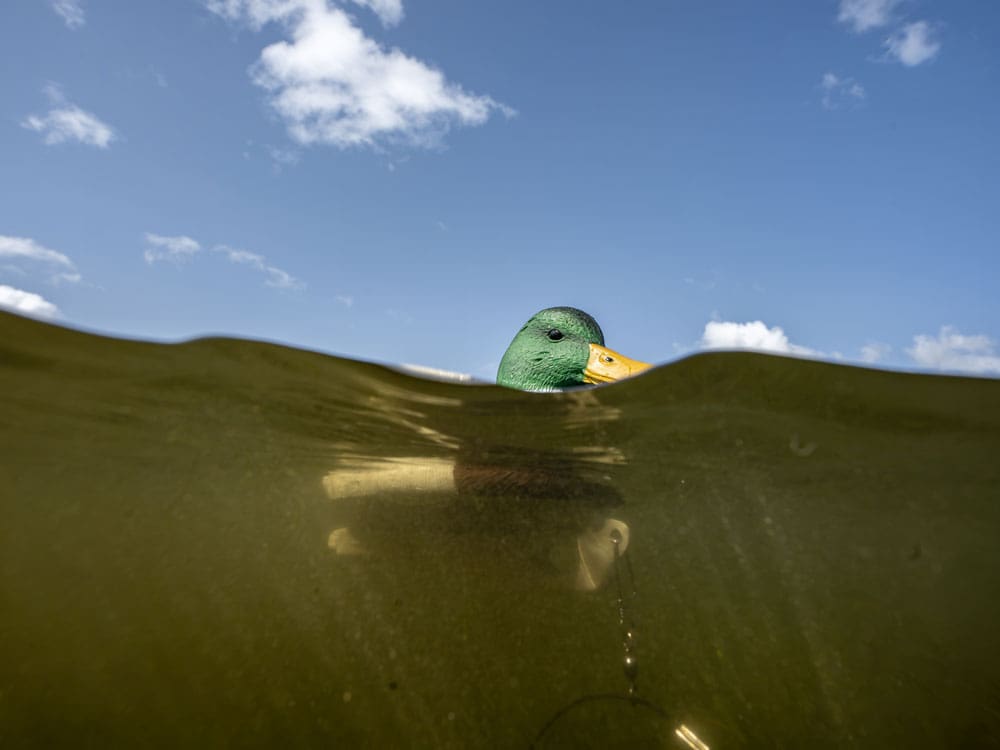
Split view of a Hardcore mallard drake decoy above the water with its keel visible below the surface

WhaleTail™ Keel

Every duck floater

Creates lifelike movement with very little current or wind, so a calm morning doesn't leave you with a parked spread.

Moves in minimal current
Adds realism to the spread
Helps finish wary birds
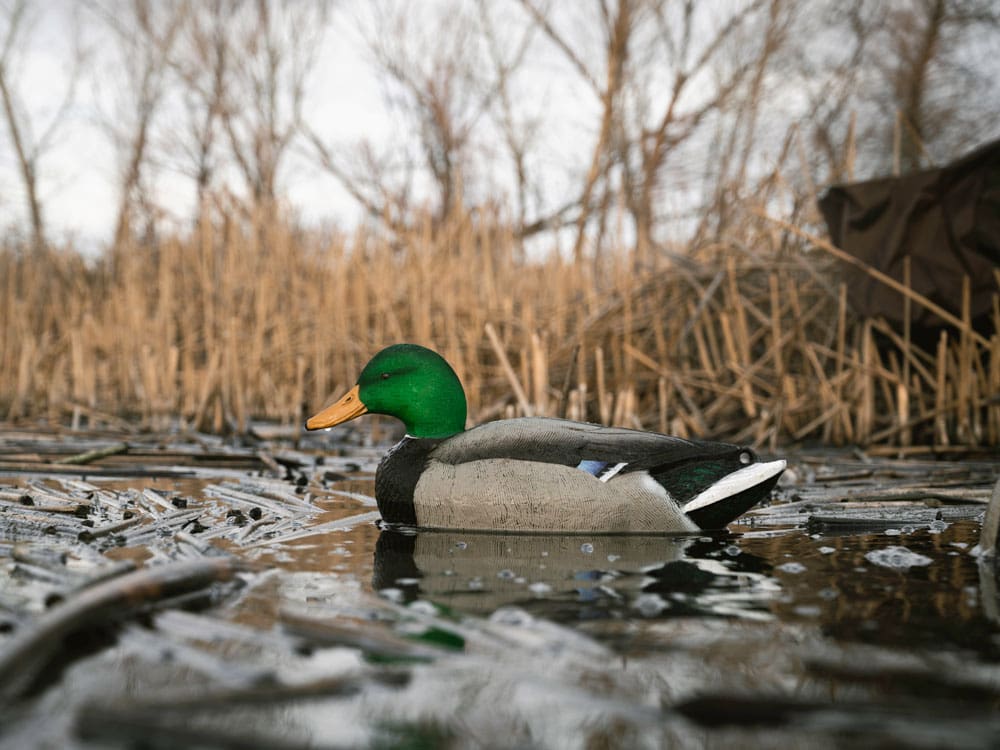
Close view of a Hardcore flocked head mallard drake decoy on marsh water

True-to-life paint

Every decoy

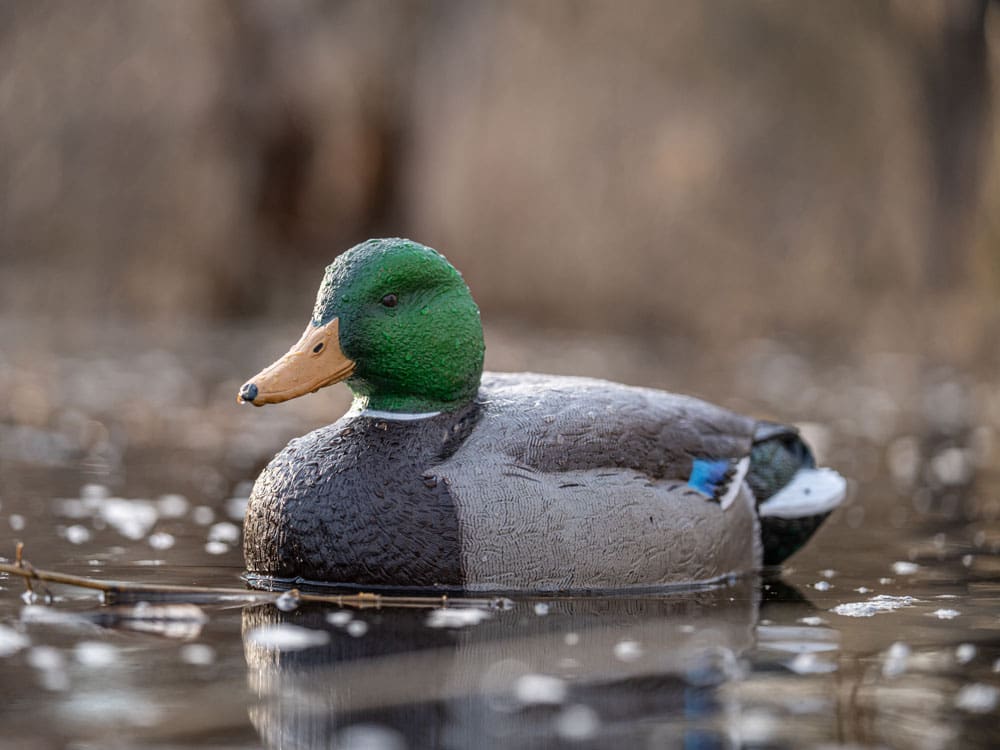
Paint schemes matched to live drakes and hens, with feather detail and contrast that read right in any light. The Flocked Head Drakes and Magnum Redlegs packs add flocked heads to kill shine.

Natural feather detail and contrast
Works in low and flat light
Flocked drake heads available
Hardcore Full Body Mallard decoys on TruMotion 2.0 stakes in a cut field

TruMotion™ 2.0

Full Body Mallards

A base and field stake system that catches the slightest breeze, so field decoys pivot and sway instead of standing frozen. It comes with the Full Body Mallard 6-pack.

Moves in light wind
Visible from a distance
Included with full body packs

The lineup

Duck decoys

Mallards first, then everything you need to fill out the spread.

Finish the rig

Rigging, bags and motion

None of it is exciting until you're untangling cord in the dark with birds in the air.

12-Slot Duck Decoy Bag

Mesh bottom drains. Slots keep weights off the paint.

$59.99

Mesh Decoy Bag

For the extras and the odds and ends.

$17.99

Snap Back Jerk String

Motion on dead-calm mornings. ★ 4.7 (14)

$34.99

Texas Rig 36", 4 oz

★ 4.7 (54)

$34.99

Texas Rig 48", 6 oz

For deeper water. ★ 4.5 (16)

$39.99

EZ Hook Weights 12-Pack, 4 oz

★ 4.9 (15)

$29.99

EZ Hook Weights 12-Pack, 6 oz

★ 4.4 (13)

$34.99

Braided Decoy Cord

Rig your own. ★ 5.0 (5)

by length

Cord Crimps, 24 Pack

Keep spares in the blind bag.

$4.99

Buying a full spread

Volume pricing, single decoys, outfitters

Bulk pricing is standing, not a sale. It applies per product, so the quantity has to be the same pack, not a mixed cart. Guides and outfitters running more than one blind should start with the Outfitters Program.

Not sure yet? Buy one.

Rugged Series Standard Mallard single, $17.99. Full Body Mallard single, $27.99. Shipping on single decoys is free.

Free shipping on orders over $399, Continental US only. Free shipping on single decoys. One promo code per order, no stacking.

Example: Rugged Series Standard Mallard 6-pack

Quantity

Your price

Save

1 to 9 packs

$89.99

-

10 to 19 packs

$80.99

10%

20 or more packs

$71.99

20%

From the field

Rated by the hunters who use them

4.9 (36)

★ out of 5

Standard Mallard

4.8 (34)

★ out of 5

Mallard Magnum Redlegs

4.8 (39)

★ out of 5

Pintails

5.0 (38)

★ out of 5

Wood Duck

4.7 (31)

★ out of 5

Flocked Head Drakes

Review slot 1: pull a verified review that talks about durability.

Reviewer name · Product

Review slot 2: pull a verified review that talks about paint and realism.

Reviewer name · Product

Review slot 3: pull a verified review about birds finishing in the spread.

Reviewer name · Product

Hunter tossing a mallard decoy into flooded timber

Questions

Duck hunting decoy FAQ

What are the best decoys for mallards?

Start with a realistic, durable floater in standard size. Add magnums for visibility and full bodies if you hunt fields. Our most-reviewed mallard is the Rugged Series Standard Mallard 6-pack at 4.9 stars across 36 reviews, built with FowlFlex™ for durability and the WhaleTail™ keel for movement.

How many decoys do I need for duck hunting?

It depends on the water. For puddle ducks on a marsh or pothole, 12 to 24 decoys is a good range for most hunters, and under 18 is about right solo. Flooded timber takes fewer, often a dozen or so. Big-water diver spreads go much bigger, often 100 or more.

How should I set up a duck decoy spread?

Ducks land into the wind. Put the wind at your back or across your shoulder, set the decoys upwind of the hole, and leave an open landing hole in front of the blind inside 30 yards. A J-hook works on most small water. In a field, set loose groups of feeders in a U that opens downwind.

Standard or magnum mallard decoys?

Standards look right up close and pack easier. Magnums are oversized for visibility, which helps on big water, gray days and late season. Plenty of hunters run mostly standards with a group of magnums in the middle. Our Magnum is 18" long, against 15.5" for the Standard.

Do flocked heads matter on duck decoys?

They help, especially in bright sun and late season. Flocking takes the shine off a painted head. The Standard Mallard Floater, Flocked Head Drakes pack puts flocked heads on the drakes, and the Mallard Magnum Redlegs come with flocked heads too.

What's the difference between Rugged Series and Field Series?

Rugged Series puddle duck decoys, from teal to full body mallards, are built with FowlFlex™, our ultra-durable technology, and they're virtually indestructible. Rugged Series divers are foam filled. Field Series decoys are built from a tough HDPE plastic that gives you great durability at a great price. They all carry true-to-life paint, and every floater rides the WhaleTail™ keel.

When does duck season open?

Each state sets its own duck seasons inside federal frameworks, with different zones and dates every year. Check your state wildlife agency's current waterfowl regulations before you hunt. We're not going to publish dates here that go stale.

Is there a discount for buying a full spread?

Yes. Bulk pricing is standing on decoys: 10 or more of the same product takes 10% off, and 20 or more takes 20% off. It applies per product, not to a mixed cart. Guides and outfitters should look at the Outfitters Program.

Can I try a decoy before I buy a spread?

Yes. Buy a single. The Rugged Series Standard Mallard single is $17.99 and the Full Body Mallard single is $27.99, and shipping on single decoys is free.

#HuntHardCore

Set it right.
Hunt it hard.

Read the wind, give them a hole, keep it moving, and put out decoys that hold up when the season gets ugly. That's the whole game.

Drone view of a duck boat running a marsh channel at sunrise
Search

Hardcore™ Waterfowl uses cookies to improve your shopping experience. View our Privacy Policy to learn more.

SIZING GUIDE

Use your body measurements to find your perfect fit. See our How to Measure info and diagram below the size charts.

If you measure between sizes, or prefer a loose or roomy fit, we recommend upsizing.

Men's Jackets & Tops
SizeChestSleeve
Small34"-36"33"
Medium38"-40"34"
Large42"-44"35"
X-Large46"-48"36"
2X-Large50"-52"37"
3X-Large54"-56"38"
Men's Numeric Pants
SizeWaistInseam
30 Reg30"34"
32 Reg32"34"
34 Reg34"34"
36 Reg36"34"
38 Reg38"34"
40 Reg40"34"
42 Reg42"34"
Men's Bibs
SizeWaistInseam
Small28"-30"32"
Medium32"-34"32"
Large36"-38"32"
X-Large40"-42"32"
2XL44"-46"32"
3XL48"-50"32"
Gloves
SizePalm CircLength
Medium8-8.5"7.25-7.75"
Large8.75-9.28"7.75-8.25"
X-Large9.25-10"8.25-9"
Softshell Pant Sizing
SizeWaistInseam
30 Reg30"32"
32 Reg32"32"
34 Reg34"32"
36 Reg36"32"
38 Reg38"32"
40 Reg40"32"
42 Reg42"32"
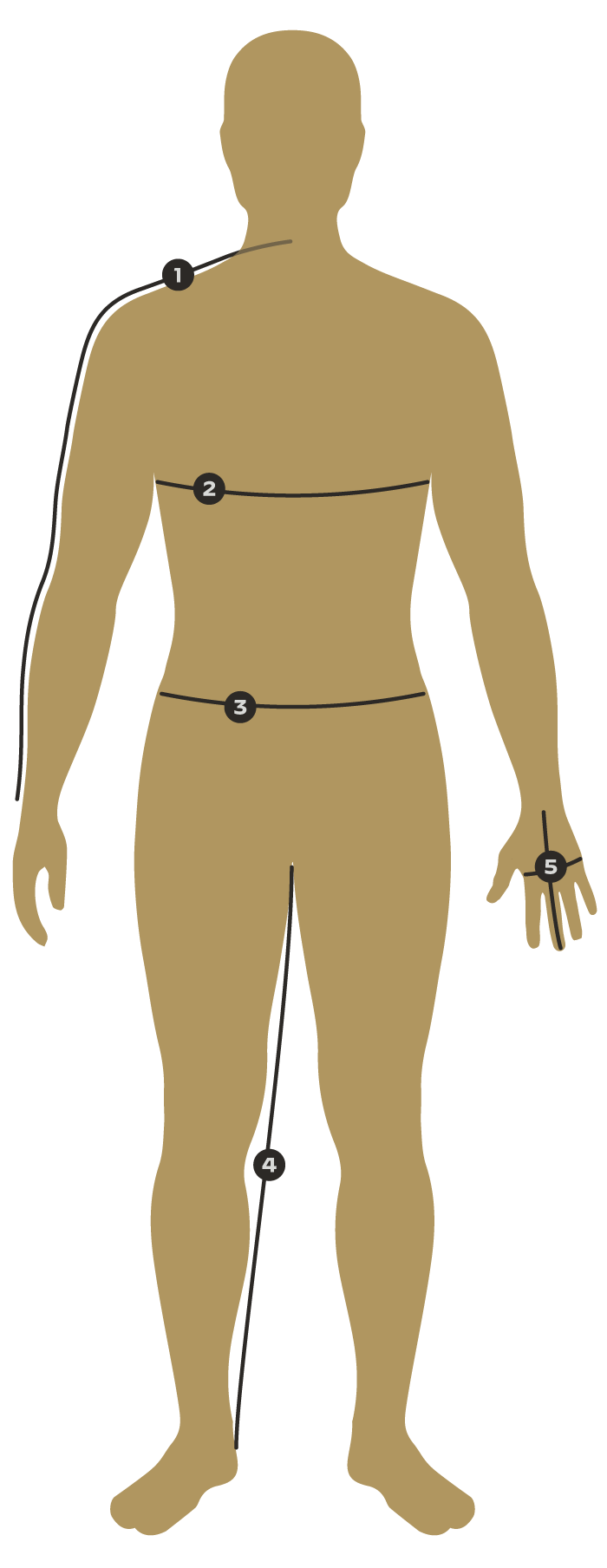
HOW TO MEASURE
1: Sleeve Measure

Bend your elbow and put your hand on your hip. Measure from the center of the back of your neck, along the shoulder and down the elbow to the wrist bone.

2: Chest Size

Measure around the fullest part of your chest while keeping the measuring tape horizontal.

3: Waist Size

Measure around your waist where your pants typically sit while keeping the tape horizontal.

4: Inseam

Measure from the crotch down to your leg where you like your pants to fit. Typically around the ankle.

5: Gloves

With hand partially closed, measure over the knuckles, around the hand, excluding the thumb.

Tuo Size Chart Silhouette Diagram.png